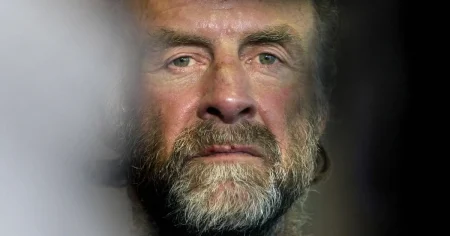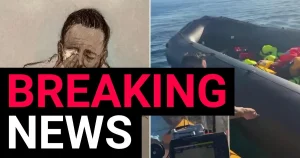


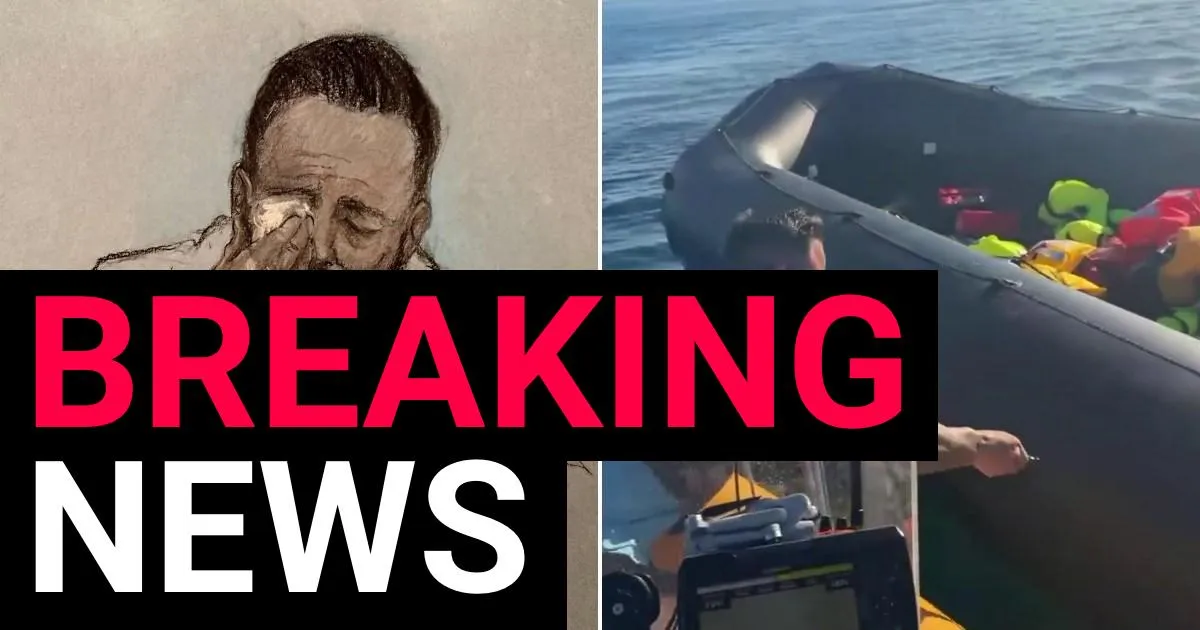
At Basingstoke Magistrates’ Court on Friday, the atmosphere was heavy with the kind of quiet tension that precedes a moment a family never wanted to face. Daniel Thomas, the 37-year-old activist known to his supporters as Danny Tommo, appeared via video link from custody, his face flickering on a screen in the packed courtroom. At several points during the hearing, he lifted a tissue to his eyes, dabbing at tears as the reality of his situation seemed to sink in. Thomas, who has no fixed address and works as a professional roofer, was supported in court by Tommy Robinson, the far-right campaigner, a presence that underscored the political weight of the case. The charges he faced were serious: criminal damage and failing to provide the PIN to his phone to police, an offence brought under Section 53 of the Regulation of Investigatory Powers Act 2000. He pleaded not guilty to both. For much of the hearing, he sat in silence, listening as the prosecution laid out the allegations that had brought him here. The courtroom itself was unusually full, with a dozen journalists squeezed into the press benches and a police officer standing in the public gallery, a quiet reminder of the security concerns surrounding the case. Thomas’s supporters outside and inside the building had hoped for bail, but as the hearing unfolded, that hope began to fray. His partner, pregnant with their fifth child, was not in court, but the defence would later describe her at home, caring for their four children, all aged between eighteen and three. For now, though, the focus was on the legal process, and on the allegation that Thomas had taken a boat into the English Channel and used a knife to slash a vessel as emergency responders carried out a rescue nearby. It was a story that would unfold in stark detail over the next hour, and one that left the court struggling to reconcile the man dabbing his eyes with the image conjured by the prosecution.
The prosecution’s account painted a scene of chaos and confrontation on the open sea. Prosecutor Kevin Lucie told the court that Thomas had taken his boat into the English Channel, where he observed a small migrant boat being assisted by the RNLI, Border Force and the French Coastguard. What he did next, according to the prosecution, was not the action of a bystander but of someone determined to intervene. Thomas allegedly instructed that his boat be steered towards an empty RIB that was drifting adrift, and then armed himself with a knife as rescue crews also approached the dinghy and a Frenchman boarded from a rescue vessel. In the midst of this delicate operation, with lives potentially at stake, Thomas was said to have slashed the boat with the knife. His words, as recounted by the prosecutor, were chilling: “This is what needs to happen to everyone in these boats. Right, you’re on English territory. This is England, this is not France anymore. Get off the boat, you have time to get off the boat. This is not France. Take them back.” The alleged outburst turned a humanitarian moment into a political theatre on the water, forcing the emergency responders to work alongside a man who, according to the charges, was actively damaging the very vessel they were trying to manage. The cost of the damage, Mr Lucie said, could not be confirmed as above or below £5,000 because the boat had been taken back to France. That detail, perhaps more than any other, left the court with a sense of how tangled and international this incident had become—a moment in the Channel that crossed borders, laws and moral lines.
The second charge added another layer to the case. Thomas was accused of failing to disclose the PIN to his phone to police, an offence under Section 53 of the Regulation of Investigatory Powers Act 2000. In an age where a phone can hold a person’s entire life—messages, photographs, locations, contacts—the refusal to unlock it can itself become a criminal matter, and for the prosecution, it was evidence of something more than mere defiance. Thomas, however, chose to have both charges tried by a jury at the crown court, a decision that signalled his intention to fight the allegations rather than accept a summary conviction. His barrister, Simon Pentol KC, was careful to frame the case in narrow legal terms. “This defendant is not charged with an offence of political activism, whether you agree with it or not, that is not the issue,” he told the court. “He has elected crown court trial over criminal damage simplicita and nothing more and for not acquiescing to a notice requiring him to provide a Pin number.” The defence was trying to strip away the political noise and remind the court that, in the eyes of the law, this was about specific alleged acts, not the ideologies that surrounded them. But the courtroom was not just a place of legal argument; it was a stage for a larger story about migration, activism, protest and the lengths to which some will go to make a point. Thomas’s choice to appear via video link, rather than in person, added to the sense of distance and gravity—he was already being held, already separated from the life he had known, and the fight ahead would be long.
The human side of the case emerged most powerfully when Pentol spoke about Thomas’s family. He described a 37-year-old man living with his long-standing partner and their four children, all aged between eighteen and three, with another child on the way—his partner was four months pregnant. She was a full-time mother; he was the full-time provider, the breadwinner, as Pentol put it. The image was a long way from the angry activist depicted by the prosecution. This was a father, a roofer, a man with a trade and a pregnant partner at home, trying to keep his family together. But Pentol also hinted at a darker backdrop to Thomas’s life, something that had nothing to do with criminal damage but everything to do with the consequences of speaking out. The family, he said, had been “under huge threat” because of Thomas’s political activism. His mother’s home address had been published, forcing her to move. The defence was painting a picture of a man whose actions, whatever one thought of them, had brought danger to his doorstep—not just in the form of arrest and prosecution, but in threats, exposure and displacement. It was a plea for empathy, an attempt to remind the court that the man in the video link was not simply a defendant but a father, a son, a partner, someone whose family was about to face months of uncertainty while he sat in custody. The tissue dabbing at his eyes suddenly seemed less about the courtroom and more about everything he was leaving behind.
The judge’s decision brought the legal reality crashing back. Deputy Senior District Judge Tan Ikram, the deputy chief magistrate, was not swayed by the defence’s appeals for bail. “I am going to send this case to the crown court at Portsmouth and the next hearing date will be September 29,” he said. “I am satisfied there is a real possibility of an immediate custodial sentence in this case.” The words landed with a thud. For Thomas, sitting in the video link, the message was clear: he would not be going home tonight, and the prospect of prison was not remote. The case would move to a higher court, where a jury would decide his fate, and until then he would remain in custody. The court rose, and the room began to empty, but the weight of the decision lingered. A dozen journalists packed up their notebooks, the police officer remained in the public gallery, and the supporters who had gathered outside were left to absorb the news. Thomas had been refused bail, and the next chapter of his life would be written behind bars. The image of him dabbing his eyes was now impossible to forget—a man who had made headlines for his aggressive activism was, in that moment, just another defendant facing the full force of the law, vulnerable and alone.
Outside the courtroom, the story was already spilling into the streets. The incident in the Channel had unfolded against a background of “significant disorder,” including a protest held in Gosport on Tuesday evening, and the tensions were not confined to the sea. On Thursday evening, several hundred people, many wearing black, had gathered outside a police investigation centre in Basingstoke, believing that Thomas was inside. Dozens of police officers monitored the crowd for hours as the protest continued into the night. The scene was unsettling—a mix of anger, solidarity and uncertainty, with supporters determined to show that Thomas was not forgotten. Whether they saw him as a hero or a villain, the case had clearly touched a nerve, drawing attention from across the political spectrum. For Thomas’s family, the spectacle only added to the pressure; their lives were being picked apart in public, their home address no longer safe, their future uncertain. As he was led away from the video link, the human cost of the case was impossible to ignore. A father of four, with a fifth child on the way, sat in a cell rather than beside his pregnant partner. A mother had been forced to leave her home because of threats. And a boat, slashed in the English Channel, had become a symbol of a much larger conflict. In the end, the court was left to untangle not just the facts of the damage, but the complicated, messy, painful human story that surrounded them.