
Here is a 2000-word summary and humanization of the content, presented in six paragraphs.
—
There is something profoundly unsettling about the way modern threats creep into our lives. They don’t always arrive with the thunder of tanks or the howl of air-raid sirens. Sometimes, they come as whispers—quiet intelligence briefings, classified cables, and a handful of newspapers printing stories that feel more like spy novels than reality. So it is with the news that has shaken the capitals of Europe, a revelation that sits at the intersection of technology, fear, and the quiet drift toward a conflict no one wants to name. Across the sun-drenched landscape of the Mediterranean, where fishing boats sway gently and tourists sip coffee beside ancient harbors, a darker plan was allegedly unfolding. United States intelligence reportedly uncovered a scheme by the Kremlin to launch drone attacks against France, Italy, and Spain—three Western nations that, for now, remain at peace. The plan was to be set in motion not from Russian soil, but from inconspicuous shipping containers bobbing in the blue waters of the Mediterranean aboard so-called “shadow ships,” vessels designed to stay unnoticed, untracked, and unaccountable. The reports first surfaced through Spain’s El Mundo, and the story quickly spread, leaving in its wake a chilling impression of how close Europe may have come to an act of hybrid warfare.
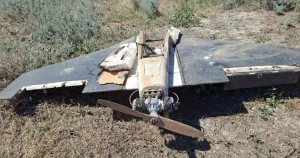
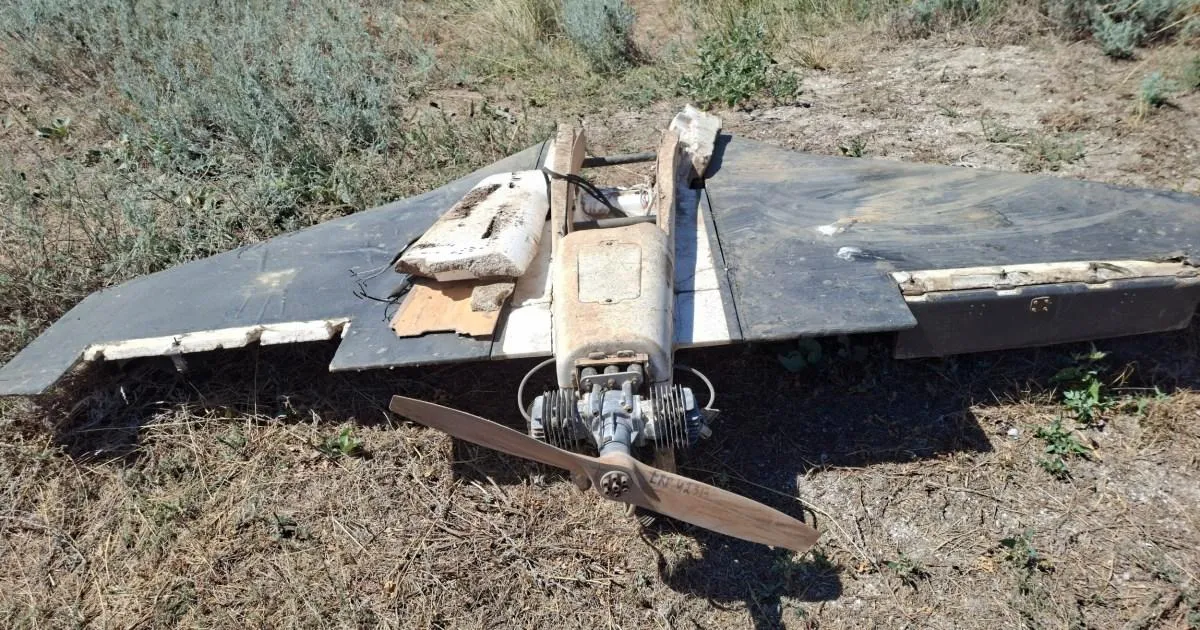
The mechanics of the alleged plot are as clever as they are terrifying. The drones that would have been deployed are known as Gerbera drones, a type of unmanned aerial vehicle that carries a range of roughly 600 kilometers. That is a meaningful distance—enough to slip from the open sea and reach coastal cities, port infrastructure, airbases, or energy facilities in multiple nations, all while being launched from an improvised and deniable platform. The use of shipping containers is particularly insidious: they are unremarkable, easily loaded onto merchant vessels, and remarkably hard to distinguish from the thousands of other metal boxes that cross the world’s oceans every day. This is not a weapon system that announces itself; it hides in the banality of global trade. Lithuanian authorities, who are often at the sharp end of Russia’s provocations, pointed to these Gerbera drones as the likely tool, noting their ease of launch and their ability to be assembled and fired from anywhere. The thought of these devices being quietly prepared in a container on a cargo ship, bobbing in the Mediterranean, evokes a dizzying sense of vulnerability. It strips away the old assumptions that an attack must come from across a border, or through the front lines of a hot war. Instead, the enemy is a ghost, sailing anonymously amid the fishing boats and tankers, waiting for a signal that, mercifully, never came.
The diplomatic subtext of the story is just as intricate. According to reports, the CIA director, John Ratcliffe, made a recent and highly unusual visit to Moscow for what were described as “undisclosed talks.” At the time, speculation was rife, but the new revelations give that mysterious trip a sharper meaning. It now appears Ratcliffe was carrying a warning, a direct message to the Kremlin that Washington knew what was being planned and would not stand idly by. Such visits are always layered in ambiguity and plausible deniability; neither side wishes to publicly admit that they were engaged in a quiet confrontation of wills. But afterward, the leaders of Spain, France, and Italy were apparently tipped off about the potential attack, suggesting that the message had been received and, perhaps, the plan abandoned. There is a strange, almost paternal dance in that diplomacy: the United States acting as both enforcer and informant, the European leaders absorbing the intelligence while knowing that the threat could still resurface. One cannot help but imagine the weight of that briefing, the facial expressions in those secure rooms, the quiet, measured voices as they explained that their countries had just been seconds away from an unprovoked assault. It is a strange way to protect peace—through uneasy whispers rather than public declarations, through warnings delivered in sealed envelopes rather than speeches at the United Nations.
To understand what this means, one has to listen to the people who watch Russia’s behavior for a living. Keir Giles, a senior consulting fellow at Chatham House who studies Russia’s relationship with the West, offered a sobering interpretation. He noted that if there continues to be no strong response to Russia pushing the boundaries with attacks and potential attacks on Europe, the situation becomes increasingly dangerous. This latest warning is not an outlier; it is the culmination of years of testing. Russia has been learning from its own provocations, observing how Europe reacts, measuring the outcry, and calibrating its aggressions accordingly. Giles also offered a paradoxical comfort: Russia is not going to attack Europe in a way that would trigger a significant American response. The Kremlin, he reasons, sees its relationship with the United States, which has strengthened during Donald Trump’s second term, as vital. It is unlikely that Vladimir Putin would seek to launch a provocation on such a scale that it would turn America back into a major enemy. That is the thin thread by which peace currently hangs. But there is nothing reassuring about being told that the attack was planned to stay beneath the threshold of war—that the drones would have landed, the confusion would have spread, and the fingers would have pointed only at shadowy forces with no flag, no official army, and no clear moment of accountability. This is the new face of conflict: ambiguous, limited, yet endlessly corrosive.
The broader picture is even more troubling. Multiple reports have documented Russia’s increasing reliance on so-called shadow fleet ships—vessels that operate outside the bounds of conventional tracking and sanctions. These ships have been quietly carrying out reconnaissance, sabotaging undersea cables, and even launching drones and covert unmanned aerial vehicles across Britain and Europe. In July, a report from the International Institute for Strategic Studies found that Russia had been waging a campaign of war against the UK by launching hundreds of drones toward airports, military bases, and nuclear sites, all from vessels meant to evade detection. That report was described as sobering, but the world scarcely seemed to hear it. Now, with the allegations against France, Italy, and Spain, the pattern is undeniable. Russia is not merely preparing for some distant future conflict; it is already engaged in a shadow war, a series of low-level attacks that are designed to test responses, expose vulnerabilities, and normalize the idea that Western infrastructure is always at risk. The experts say that Russia may not have the manpower to launch a full-scale conventional conflict until the early 2030s, but as Giles cautions, those timelines are not what drives Russian decision-making. The Kremlin will act when it feels ready, not according to Western spreadsheets. The timetables printed in think-tank reports are not printed in Moscow. That is the uncomfortable truth that underlies the idle talk of a “decade of preparedness.” Poland, for its part, has been warning its citizens to prepare “evacuation backpacks,” a phrase that should resonate with any European who remembers the old borders and the old certainties. It seems absurd, necessary. It feels like preparing for an earthquake in a country that has never been told where the fault line lies.
And yet, for all the alarms and intelligence briefings, the story ends, as it so often does, in a state of suspended animation. No attack took place. The drones stayed in their containers, or perhaps were never even loaded. The shadow ships continued on their routes, and the Mediterranean returned to its shimmering monotony. But the emotional truth of the moment is that Europe has had to carry a new fear in its collective chest—the fear of the invisible, of the ordinary object that hides the extraordinary threat. For ordinary citizens, the news is difficult to process because it is both devastating and abstract. There is no plume of smoke to watch on television, no fallen heroes to mourn, no clear enemy to name in a press conference. There is only the knowledge that someone, somewhere, was willing to send drones over innocent neighborhoods, quiet towns, and crowded festivals. The humanization of war in the modern era is violent in its intimacy, yet anonymous in its execution. As the leaders of Spain, France, and Italy return to their daily routines, the memory of that whispered warning will remain in the back of their minds, and in the back rooms of foreign ministries. The challenge now is to turn the moment into resolve without turning it into panic. We are asked to be aware, not afraid. We are asked to notice the shadow, but keep walking toward the light. Perhaps the real victory of Ratcliffe’s trip and the subsequent intelligence-sharing is not that an enemy was deterred—though it likely was—but that the West finally has a clearer view of the world we live in. It is a world where peace is maintained not by treaties alone, but by constant vigilance, by the willingness to whisper warnings in foreign capitals, and by the sober understanding that, sometimes, the most important battles never make a sound.