
Paragraph 1
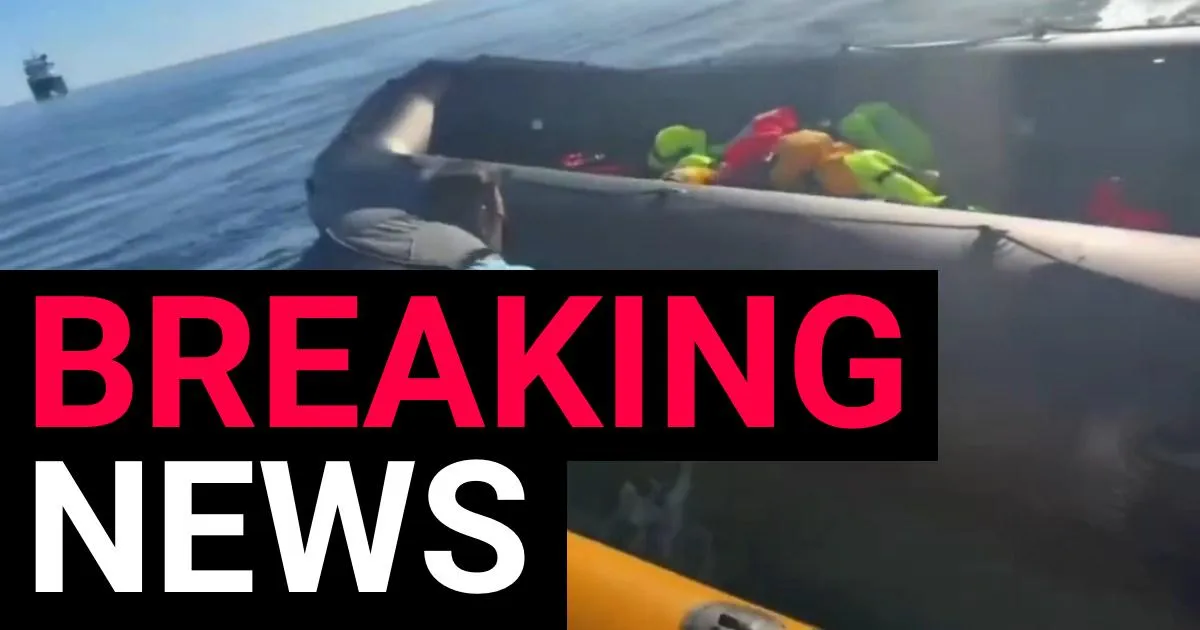
On a tense Wednesday night, a man who had built a following by turning migration into a spectacle found himself on the other side of a very different kind of attention. Daniel Thomas, known to his online supporters as Danny Tommo, was arrested at a BP petrol station after a video surfaced showing him allegedly stabbing and slashing an inflatable dinghy in the English Channel. The boat was not simply abandoned property. It had been carrying an emergency responder at the time it was damaged, according to Hampshire Police. The footage, shared through a live stream this week, showed Thomas in a moment that appeared far removed from political protest, an act that seemed more like destruction than demonstration. The vessel itself told a deeper story: life jackets and debris were scattered inside, signs that people fleeing France had recently made the perilous crossing in those same calm waters. For those who have watched the Channel for years, a calm sea is not comfort; it is opportunity for desperate people in fragile, overcrowded boats. But this time, the danger was not from weather or waves. It came from someone allegedly taking a blade to the very craft that rescue workers rely on. The arrest sent a clear signal that what Thomas is accused of doing was not a stunt to applaud but a crime that could have ended a life. As he was detained, the drama was recorded on his own phone, turning an everyday petrol station into the backdrop of a confrontation that he had invited and then attempted to control. The scene was chaotic, human, and troubling, involving a man pleading about his children, police officers trying to do their job, and a camera capturing every word. It was a strange end to a week in which Thomas had positioned himself as a patriot, while others saw something far more dangerous: a person willing to endanger rescuers in pursuit of attention.
Paragraph 2
The arrest itself unfolded like a raw, unedited scene from a life that had spun out of control. In the YouTube video that Thomas posted, he can be heard asking officers to “say goodbye to my kids,” a phrase that simultaneously seeks sympathy and acknowledges the gravity of what was happening. The officer on the scene responds with calm procedural instruction, telling Thomas to “step out of the car” and explaining the basis of the arrest. Off-camera, a woman’s voice cuts through the tension: “The cameras are on, let go of the phone.” That single line captures something important about the cultural moment: everyone was aware that the confrontation was being filmed, that the footage could be used, edited, and reshaped to fit a narrative. Yet for all the performance, the law was moving forward with inevitable seriousness. Police described Thomas as a 37-year-old man with no fixed abode, a detail that complicates the tough-online-persona image and reminds us that real life rarely fits neatly into a livestream. Hampshire Police issued a detailed statement listing an array of charges, including suspicion of destroying ships or fixed platforms or endangering their safety under the Aviation and Maritime Security Act 1990, criminal damage, criminal damage with intent to endanger life, and conduct endangering ships, structures, or individuals under the Merchant Shipping Act 1995. These are not minor offenses. They carry heavy weight because they involve the potential loss of human life. For a man who claimed to care about borders, he was alleged to have crossed a much more serious line, attacking the means of rescue rather than debating policy. The video, which Thomas himself made public, may become evidence. The audience he once sought to entertain may now see the legal consequences unfold in court. There was no barricade, no battlefield, only a petrol station forecourt and the sound of a phone call, a family, and the quiet authority of officers doing their duty.
Paragraph 3
To understand why this arrest matters, one must appreciate the nature of the vessel at the center of the story. It was not a military target or a political symbol; it was a small inflatable dinghy, the kind used by rescue teams and volunteers who go out into the English Channel to save people in distress. The fact that an emergency responder was on board makes the alleged attack even more appalling, because it transforms vandalism into potential violence against someone whose only mission was to help. The debris and life jackets left in the boat offered a haunting insight into its previous journey, suggesting that migrants had already made the crossing from France in those calm waters. That means the dinghy had served its purpose, bringing people from one shore to another, carrying their hopes as well as their exhaustion. When those same people arrived in the United Kingdom, they were met by politicians, protesters, and media cameras, but they were also met by rescuers who believed in a simple human ethic: no one should be left to drown. By allegedly slashing the boat, Thomas was not simply damaging equipment; he was attacking the infrastructure of compassion. He was making a choice to harm the people who try to prevent tragedy in one of the busiest shipping lanes in the world. The charges under maritime law are particularly significant because they recognize that the sea is a different environment, one where sabotage can have catastrophic consequences. A punctured dinghy in the middle of the Channel can sink in minutes, leaving anyone on board to face cold water, strong currents, and passing ships. It is not a game. It is not a political video. It is a matter of life and death. The legal system, whatever one’s views of migration, treats that seriousness with the weight it deserves.
Paragraph 4
For Thomas and his supporters, this may be framed as standing up against illegal immigration, but the broader community has responded with revulsion. Public commentary has made a striking point: there is nothing patriotic about slashing a migrant dinghy. Patriotism, if it means anything, should not involve endangering the lives of people who are themselves fleeing danger. The backlash reflects a growing discomfort with vigilante tactics that treat human beings as props in a performance. It is one thing to advocate for stronger borders, to debate policy, to push for political change; it is another thing entirely to take a blade to an inflatable boat with someone on board. The rescue worker inside that dinghy could have been seriously injured or killed. The migrants who had traveled in that same boat might have returned on another rescue mission, and the damage could have made the craft unsafe for them as well. The charge of criminal damage with intent to endanger life is carefully chosen, because intention matters in law, and the footage allegedly shows exactly that. The live stream was not an accident; it was a broadcast of an act that authorities now allege was criminal. It also placed Thomas’s supporters in an uncomfortable position: by cheering him on, they were aligning with a form of vigilantism that undermines the rule of law. A functioning society cannot let individuals decide which boats to destroy, which lives to endanger, and which people deserve rescue. The outrage that followed is not simply about one man or one boat; it is about the kind of country people want to live in. Is it one where fear dictates compassion, or one where elected officials and courts handle the tough decisions without violence on the water?
Paragraph 5
The human side of this story is easy to overlook because it is drowned out by the noise of the video, the angry comments, and the legal jargon. But every detail reveals a person, and every person has a story. Daniel Thomas, known as Danny Tommo, was not an abstract force; he was a man at a petrol station, asking officers to remember his children, filmed by his own camera as his world changed. The woman behind the camera, perhaps a collaborator or friend, urged him to let go of the phone, a small reminder that even those who live by viral moments are not ready for the moment when freedom is taken away. The officers, too, were human, showing restraint and professionalism while handling a volatile situation. And all the while, there were other human beings on the other side of the water: families in France, children who had crossed the sea in overcrowded dinghies, people whose names we never hear but whose lives are deeply affected by every wave of this debate. The calm waters that allowed migrants to make the crossing were the same calm waters that exposed them to the risk of sabotage. It is a terrifying thought to imagine crossing the Channel, exhausted, afraid, only to look back and see someone puncturing the very vessel that carried you. Even those who oppose migration should pause and consider that kind of vulnerability. The law, at least, offers a clearer vision: there is a right way to address political disagreements, and slashing rescue boats is not it. In a month that has already seen anti-terror police questioning figures like Tommy Robinson at airports, and after tragedies involving vulnerable children that have shaken public trust, the story of Danny Tommo adds another layer to a deeply polarized nation’s reckoning with itself.
Paragraph 6
Ultimately, the story of Danny Tommo is a cautionary tale about the difference between conviction and cruelty. It is possible to hold strong opinions about borders and immigration without resorting to sabotage. It is possible to demand enforcement without endangering those who serve on rescue missions. And it is possible to make a video without understanding that legal consequences follow real actions. Thomas remains in custody at the time of the police statement, and the courts will decide his fate, but the larger question is whether the rest of society can learn from the moment. Every migrant who steps into a dinghy is a human being, carrying memories, fears, and hopes. Every rescue worker who goes out into the Channel is someone’s parent, child, partner, or friend. And every act of violence against the means of rescue is an act against the shared commitment to preserve life. The attention given to Thomas will fade, but the waters of the English Channel will continue to carry stories of endurance and tragedy. That is why this incident matters beyond the crime: it forces us to choose what kind of society we want to be. We can be a society that watches a child lose its future because a selfish man slashed a boat, or we can be a society that sees the bigger picture. The law may punish Thomas, but the memory of the dinghy, the life jackets, and the desperate people they represent will remain. In the end, the greatest humanizing lesson is this: no political grievance justifies endangering a life. Whatever happens in court, the image of an inflatable boat, damaged and drifting, should remind us that underneath all the rhetoric, anger, and cameras, there is still the simple moral truth that every person deserves a chance to be safe. Danny Tommo has been arrested, but the real battle is not over one man; it is over the soul of compassion.