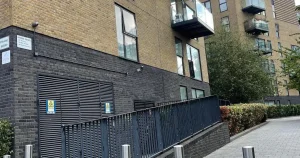

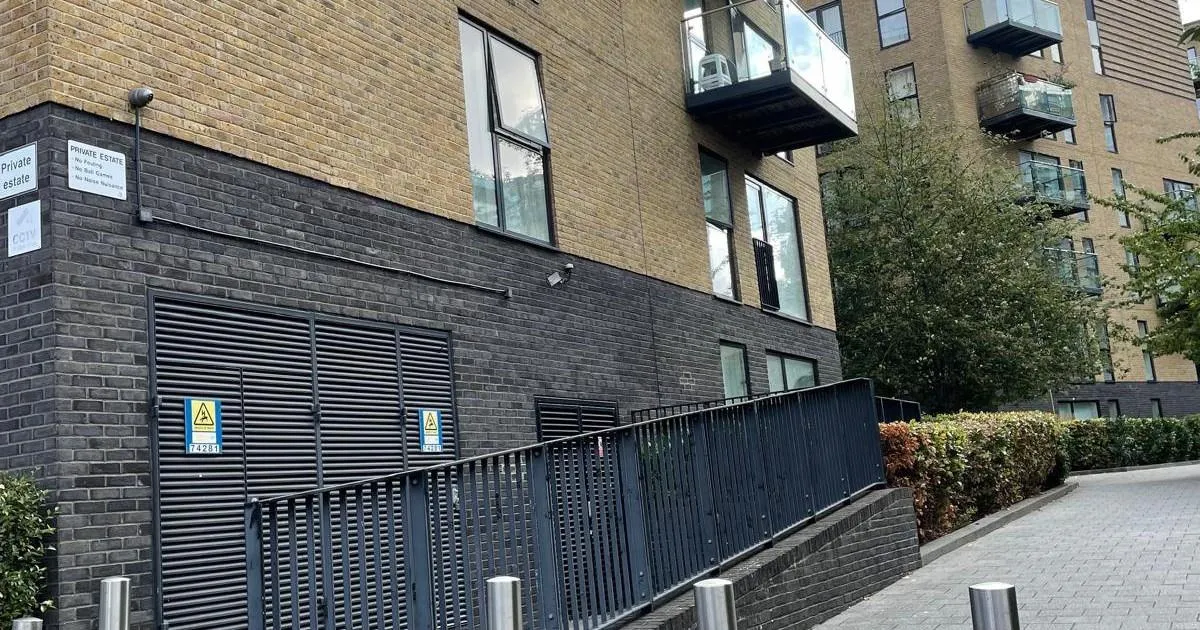
On the morning of August 5, the stillness of a residential street in Lewisham, south-east London, was broken in the most brutal way imaginable. Police were called to Conington Road at 6.15am after reports that a woman had been found unresponsive on the ground outside her apartment block. That woman was Zhane House, a 28-year-old mother, and she was already beyond help. She had fallen from the fourth-floor balcony of her flat, and despite the desperate efforts of emergency services, nothing could be done to save her. What followed was not just an investigation, but a the beginning of a long, painful reckoning for everyone who knew her. The death was officially described as unexplained, a phrase that would come to haunt those left behind. The cordons went up quickly. Police officers stood at the entrances, forensic teams moved in and out of the building, and residents watched from behind their curtains, trying to comprehend what had happened just a few metres from their own front doors. The estate on Conington Road had always felt ordinary. It was the kind of place where children played on the walkways, where neighbours knew each other by sight and sometimes by name, where people lived their lives in quiet routines. But on that August morning, the ordinary was replaced by something else. The blue lights, the tape, the hushed voices. For the people who lived there, the first sign that something terrible had occurred was the sudden presence of police. One neighbour later said they were in total shock. They had known nothing until the authorities arrived. There had been no scream, no crash, no warning. Just a young woman gone, and a community left trying to fill the silence with questions that no one could answer.
For those who had known Zhane, the memories came slowly and painfully, and they were almost all the same. She was a lovely woman, they said. She was friendly. She was good with the children. She had a smile for everyone. In a block of flats where life can often feel anonymous, Zhane was a familiar and warm presence. A worker on the estate described her as a really nice woman, very friendly, and very good with all the kids who lived there. It was a simple tribute, but it said everything. She did not walk past people with her head down. She acknowledged them, she spoke to them, she made the estate feel a little more human. A shop worker at the supermarket remembered her as a nice person who came in a lot. No one understood how this could have happened. It was a mystery, he said, and everyone was talking about it, but no one had any answers. That sense of bewilderment ran through every tribute. People did not say that Zhane was perfect, because they did not need to. They said she was kind, they said she was a mother, they said she was loved. A neighbour from the block admitted that Zhane seemed to have some personal issues, but was still a lovely woman as far as they could see. It was a delicate way of acknowledging that she was not just a tragedy, but a person, with complexities and struggles like anyone else. And above all, she was a mother. Her six-year-old daughter had been the centre of her world, and the bond between them was visible to anyone who saw them together. Now that little girl is facing a future without her mother, and the thought of it has left even strangers heartbroken.
At the centre of this storm is Michael, Zhane’s father, a builder who has been forced to confront a grief that no parent should ever have to carry. In the aftermath of his daughter’s death, Michael launched a GoFundMe page to raise money for funeral costs, and in doing so, he offered the world a glimpse into his shattered world. He wrote that Zhane had tragically died in August from a fatal fall from a fourth-floor balcony at her flat in Lewisham. She was 28 years old and had a six-year-old daughter who now lived with him. He described the incident as sudden and unexpected, and the words he used were full of a raw, unpolished pain. It had hit him for six, he said, and turned his world upside down and inside out. But what made his grief even more staggering was the loss that had already marked his family. Only nine years earlier, in 2017, he had lost Zhane’s mother after fifteen years of marriage. He had already buried the woman he loved. Now he had to bury the daughter they had raised together. Life had asked him to endure the unthinkable not once, but twice. And in the middle of his own grief, he had to be strong for a six-year-old girl who had suddenly lost her mother. The little girl had come to live with him, and he was doing his best, as grandfathers do, to hold together the pieces of a shattered childhood. Michael’s words were not polished or performed. They were the raw reflections of a father who had been knocked sideways by fate, a man who was still trying to find his footing in a world that no longer made sense. The fundraiser was not just about money. It was a call for help, an extended hand reaching out to anyone who might be able to carry a little of the weight. And in the days since, people have responded, not because they can fix anything, but because they want Michael to know that his daughter’s life mattered and that her death has not gone unnoticed.
Meanwhile, the investigation into Zhane’s death continues, and it has already taken a strange and unsettling turn. Police arrested a man in connection with the incident, and he has been released on bail while inquiries continue. The death is still being treated as unexplained, a phrase that falls somewhere between accident and suspicion, leaving the family in a terrible limbo. They do not yet know exactly what happened, and the lack of answers is making an already unbearable grief even harder to endure. An official inquest will be held at a date yet to be fixed, and the results of a post-mortem examination will be revealed at that stage. For Zhane’s family, that date cannot come soon enough. They are not looking for revenge or even blame. They are looking for truth. But the story became even more disturbing when an estate worker spoke about what happened in the days after Zhane’s death. The worker told Metro that they had found a young man inside Zhane’s flat some days after she died. When they asked him what he was doing there, and warned him that the flat was a crime scene, the man reportedly gave them a very strange interaction. The details were vague, and no explanation was offered, but the image lingers. A dead woman’s home, still sealed off, still part of an active investigation, and someone inside it. The worker and the wider community were left in the dark, and the question of why anyone would be there has only deepened the unease. Neighbours who once felt safe walking past Zhane’s building now describe a feeling of confusion mixed with sorrow. They do not know enough to call it fear, but they cannot quite dismiss it either. They walk past the spot where she fell, and they look away. The unanswered questions are not abstract. They are attached to a real place, a real balcony, a real family, a real life that ended far too soon.
In the days and weeks that followed, the estate has begun the slow and painful process of mourning. People have left flowers, not in huge public displays, but in small, quiet gestures. Some have written messages. Others have simply stood for a moment in silence. The community has been forced to talk about things they never expected to discuss, and they have done so with a tenderness that is often missing in the news reports. There are still no clear answers, and that means there is no closure. Everyone is talking about it, but no one knows what to say. The shop worker’s observation that it was a bit of a mystery felt like an understatement. It was more than a mystery; it was a rupture in the life of the estate. People were going about their days, buying milk, paying bills, walking their dogs, while a family was trying to prepare for the funeral of a 28-year-old woman who should have had decades ahead of her. The children on the estate, the ones Zhane was so good with, have been asking questions that adults cannot answer. Why did she fall? Why did she go away? Why won’t she come back? Their parents have had to find simple words for something that is anything but simple. A worker on the estate said they did not know how this happened, that they were in the dark. It was an honest admission. In a world that craves explanations, there was nothing to cling to. But the community has also shown a quieter kind of response, one that does not make headlines. Neighbours have checked in on each other. Friends have sat with Michael, even if only to make sure he was not alone. The collective grief has become a small act of resistance against the emptiness of the tragedy. They cannot bring Zhane back, and they cannot say why she left, but they can refuse to let her become just a forgotten name. They remember her smile. They remember the way she treated their children. And they hold onto that memory as tightly as they can.
As the family prepares to say goodbye, the pain is still raw, but there is also a thread of love running through the darkness. Michael’s fundraiser is a testament to that. It is not just an appeal for financial help; it is a public declaration that Zhane was here, she was loved, and she will not be forgotten. It is also a way for people outside the immediate circle to do something, to offer a small gesture of support when words are impossible. The donations that have come in are not just money; they are messages of solidarity from strangers who felt the weight of a family’s loss. In a city where people often keep to themselves, it is a reminder that grief, when shared, becomes slightly less unbearable. But the road ahead is long. There is an inquest to sit through, a post-mortem result to hear, perhaps a trial, and always the slow, painful work of rebuilding a life that has been torn apart. Michael will have to raise his granddaughter, and together they will have to learn to live with the loss of the woman who was the centre of their family. It will not be easy. There will be days when the grief is overwhelming, days when the unanswered questions return, days when the unfairness of it all feels impossible to accept. But in those moments, there is hope to be found in the kindness of others. And for anyone, like Zhane’s family, who is struggling with the darkness, there is help. The Samaritans are there to listen, day or night, 365 days a year, offering a voice on the other end of the phone for anyone who needs it. Grief is a lonely country, but it does not have to be walked alone. Zhane House was a mother, a daughter, a friend, and a familiar face in a community that will carry her memory for a long time. Her life was cut short, but it was marked by love, and that love is still here, held by the people who knew her and by a grandfather determined to give his granddaughter a future worthy of the mother who gave her life. The tragedy is not the end of the story. It is only the beginning of a different one, shaped by loss, but also by love.