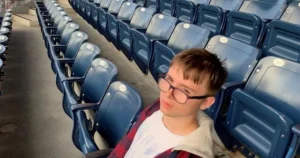

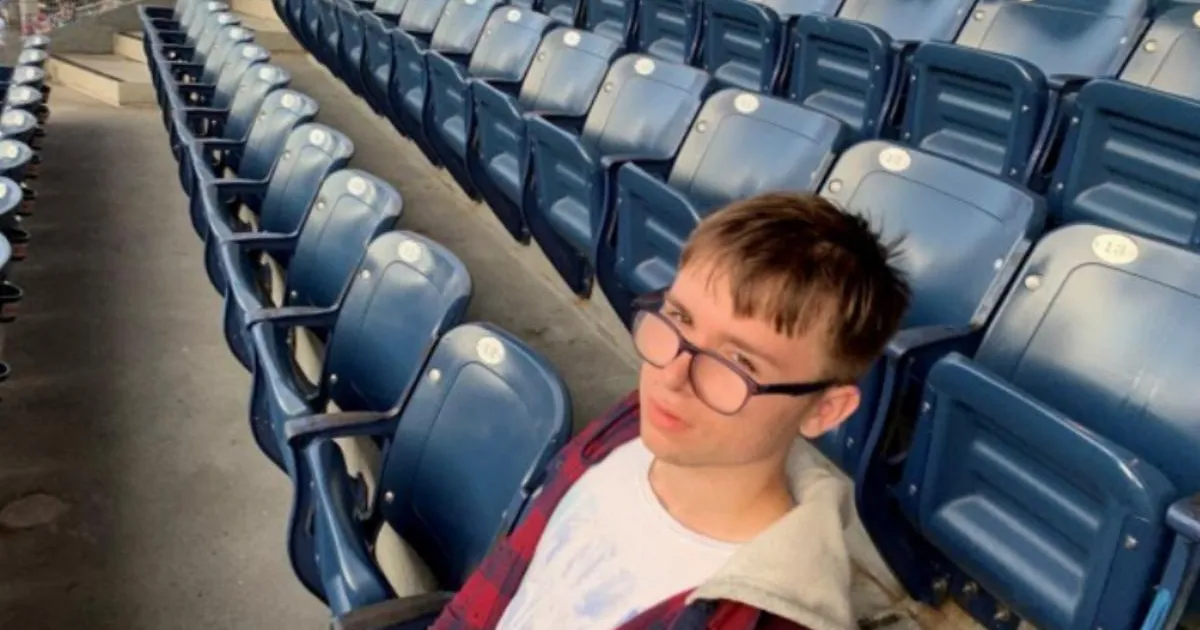
Tom Parfett was just twenty-two years old when he died alone in a hotel room in Surrey in October 2021, a loss that still defies comprehension for everyone who knew him. He was a young man of exceptional promise, academically brilliant, an A-star student who had recently moved to St Andrews to study philosophy, someone his father David describes as having a “wicked sense of humour” and a warm presence that made people enjoy being around him. But Tom had struggled with his mental health throughout his childhood, and the unique pressures of the Covid pandemic, the isolation, the pressure to succeed, and the quiet feeling of being untethered from the people who loved him, left him vulnerable in ways that were not always visible from the outside. In his distress, he did what so many young people do: he searched online for answers. What he found instead was a doorway into a pro-suicide forum, an online space that did not offer support or compassion but promoted a deadly substance and the specific means to end his life. Through that forum, Tom found Kenneth Law, a Canadian man who sold him a poison tablet for around £50. Tom took the tablet in his hotel room while, according to his father, commentators on the very platform egged him on as he died. It is almost impossible to hear David speak about this without feeling the weight of his grief. “I still can’t believe Tom was able to go onto the internet and just put in a fairly standard search, and from that he was able to understand exactly what he needed to do to kill himself,” David says, his words carrying a raw disbelief that has not faded with time. “Without Law,” he insists, “Tom would still be here and would have got through the problems he was facing.” That certainty, the knowledge that his son’s death was not inevitable, is at the heart of David’s determination to speak out, even now, as Kenneth Law faces sentencing before Canadian courts. David’s warning to the rest of us is blunt and urgent: the poison sellers have not gone away, the forums have not disappeared, and young people are still dying because no one is stopping it.
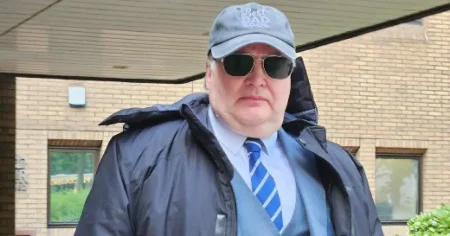
David did not wait for anyone else to investigate his son’s death. He immersed himself in the digital trail Tom had left behind, searching the same corners of the internet, visiting the same forums, and eventually doing something almost unthinkable for a grieving parent: he ordered the same poison himself, successfully, from Kenneth Law’s website. It was through that grim and painstaking investigation that David discovered who had supplied the final, fatal product to his son. His discovery helped bring Law to justice and pulled back the curtain on a macabre international network of suicide sellers who had been preying on vulnerable people for years. Law, a former chef from Canada, was eventually charged with fourteen counts of aiding suicide after admitting he met people in online suicide forums and encouraged their plans. According to authorities, Law sold around 1,200 packages of toxic substances to recipients in at least forty countries, with roughly a quarter of those packages sent to the UK. The case has been linked to a staggering seventy-nine deaths in Britain alone, a number that continues to haunt David and other bereaved families. Law will not face charges over any of the British deaths, a decision David believes is fundamentally wrong. “Just because Law was not present when my son died, that does not mean he did not murder him,” he says. The decision to drop murder charges felt to David like yet another failure in a system meant to protect the vulnerable. If a man sells lethal substances to people he knows are planning to kill themselves, aware of exactly what they intend to do, that is not a passive commercial transaction. It is a deliberate act of destruction. As Law’s sentencing hearings began, with impact statements from British families being read in court, David described the man who sold his son the deadly tablet as callous. “The man is callous,” David said. “I fear what happens when he gets out. There is very little to prevent him from doing something similar again, and it would still be difficult to detect.” That fear, more than any thirst for punishment, is what keeps David awake at night.
Kenneth Law’s sentencing marks a significant moment, but it is not, for the families of his victims, a moment of closure. Each count of aiding suicide carries a maximum sentence of fourteen years in Canada, and legal experts have suggested prosecutors could seek a total of twenty to twenty-five years, but no prison term can undo the deaths that prompted the prosecution. The first impact statements were due to be heard in court as the judge weighed how long Law should spend behind bars, and among them were words from the families of British victims whose loved ones were connected to his deadly trade. It is a gruesome and unprecedented case: a man allegedly selling sodium nitrite and other toxic substances through unassuming websites, then sitting in online forums where the people he sold to discussed their plans. Law’s own online interactions reveal someone who appears to have been indifferent to the suffering he was facilitating, and David Parfett says that coldness remains one of the most frightening aspects of the case. He is callous, David repeats, with a measured anger. The maximum sentence, even if imposed in full, may not be enough to protect others in the future, David warns, because the infrastructure of suicide encouragement and poison sales is larger than one man. Law may be behind bars, but the pro-suicide forums remain, largely unchanged, still dominated by the same kind of “helpful” advice that led Tom to an early grave. David, who has kept an account on the site, says the number of bereaved parents in his support group has grown this year. Since Ofcom began its investigation into the forum, at least three new families have joined, each carrying the same unbearably similar story. “There are other sellers like Kenneth Law who still continue to sell this stuff,” David says. This is not a single criminal mastermind, he argues; it is a widespread, transnational network of enablers who hide behind encryption, private messaging and the legal loopholes of different jurisdictions.
The failure to shut down the pro-suicide forum linked to Tom’s death has become a source of profound frustration for David. In August, a news investigation revealed that the site was still easily accessible within seconds via a VPN in the UK, despite Ofcom saying it was blocked to UK users. For David, this was confirmation that the regulatory system intended to protect vulnerable people has fundamental gaps. The site’s operator was fined £950,000 in May by Ofcom after failing to comply with duties under the Online Safety Act, but by July the regulator admitted it could not pursue further legal action. It said the changes made by the US-based forum to block access to those in the UK represented “the fullest extent of what can be achieved” under the Act. For bereaved families, that admission is difficult to hear. They point out that a VPN is a free and simple piece of software, widely used for all sorts of everyday purposes, and that anyone determined enough can use it to access exactly the same harmful content that Ofcom claimed to have closed off. David himself still has an account on the site. He has seen the continuing posts, watched as vulnerable young people are guided towards methods, and waited for authorities to act. The emotional toll of this ongoing exposure is impossible to measure. He is not a vigilante or a technologist; he is a father trying to understand why his son had to die and why nothing has been done to prevent the same tragedy from happening again. The Online Safety Act promised a new era of accountability, but in practice, the gaps are glaring. The forum operator, even after paying a significant fine, has been left intact, with only a technical adjustment for UK users, leaving the rest of the world, and anyone willing to use a VPN, exposed. “I am a member of a group with the relatives of lost loved ones,” David says, “and it has grown this year. There has been at least three new members since Ofcom began investigating the site.” Each new name, he explains, represents a life cut short, a family shattered, and a failure of the very institutions tasked with keeping people safe.
Earlier this month, the bereaved families whose children’s deaths were linked to the suicide forum took another step in their fight for accountability. They called on Andy Burnham to support their demand for a public inquiry, hoping that a full, open investigation could expose the deep failures that allowed both the forum and the poison sellers to operate for so long. David’s support for that call is unequivocal. He believes that only by examining the whole picture, from the platforms that hosted and promoted harmful content to the law enforcement agencies that failed to act swiftly, can any meaningful change be achieved. It is not enough, he argues, to prosecute a single seller, however dangerous he was. The systems that let him operate, the algorithms that surfaced suicide content in search results, the forums that treated death as a spectator sport, and the regulators who struggled to use their new powers, must all be scrutinised. David says that his own impact statement is not filled with rage. While he understands why many of the bereaved will speak with emotional and aggressive language towards Law, his focus remains practical and forward-looking. Justice, for him, is not defined by Kenneth Law’s sentence. “Justice is about making sure there are no other deaths of vulnerable people like Tom,” he says. That sentiment has driven him to speak out again and again, even when it has meant reliving the most painful details of his son’s last hours. It has also brought him into contact with other families whose children died in remarkably similar circumstances, often alone in a hotel room, often with a clear online trail. The pattern is unmistakable, and it contradicts the comforting idea that these are isolated tragedies. They are interconnected deaths, linked by shared platforms, shared sellers, and shared failures of care. A public inquiry, David and other families insist, could help uncover the true scale of the problem and produce recommendations that regulators and tech companies cannot ignore. It would also send a message to the young people currently being targeted by these forums: that society is paying attention, and that help is possible. Instead, families have been left to fight for answers on their own, with the biggest online offenders protected by geographical distance and legal roadblocks.
Throughout all of this, David has refused to let his son be reduced to a statistic. Tom Parfett was more than a case number, more than a name in an online forum, more than a tragedy. He was a bright, entertaining young man with a wicked sense of humour, a lovable presence, someone who had struggled with mental health but was still searching for meaning, still trying to build a life. He had reached university, was pursuing a degree in philosophy, and was doing what so many students do: finding his way through the world. The pandemic disrupted everything, magnifying anxiety and isolation at precisely the worst possible moment. David’s grief is not only for the future Tom lost, but also for the fact that the help he needed was not available to him. He is honest about the complexities of suicide prevention, about the difficulty of intervening in a young person’s mental health crisis, and about the seductive appeal of online spaces where, however dangerously, a struggling person may feel understood for the first time. But he is also certain that Tom’s death was not inevitable. Without Law, without that forum, without the ease with which poison could be purchased, Tom would likely have found a way through his crisis. That is why David’s message remains so urgent. “We still have people who promote suicide methods online, and there are still active UK users on these forums,” he says. The fact that Law is being sentenced is welcome, but it is not the end. There are other sellers, other forums, and other vulnerable young people searching for answers in the middle of the night. As the sentencing hearings unfold, David will be watching, not for vindication but for a signal that the world is finally taking this seriously. He knows that he cannot bring his son back. What he can do is keep speaking, keep demanding, and keep reminding everyone that Tom was not just a victim; he was a young man with dreams, with a sense of humour, with people who loved him. “It is incredibly sad to lose somebody like that to the world,” David says quietly. His fight, like Tom’s brief life, is a testament to the difference one person can make. But it should never have been necessary. And until the internet stops offering young people a path to death, no sentence will ever be enough.