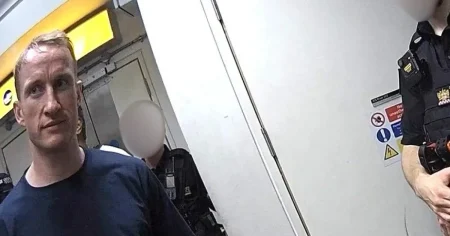



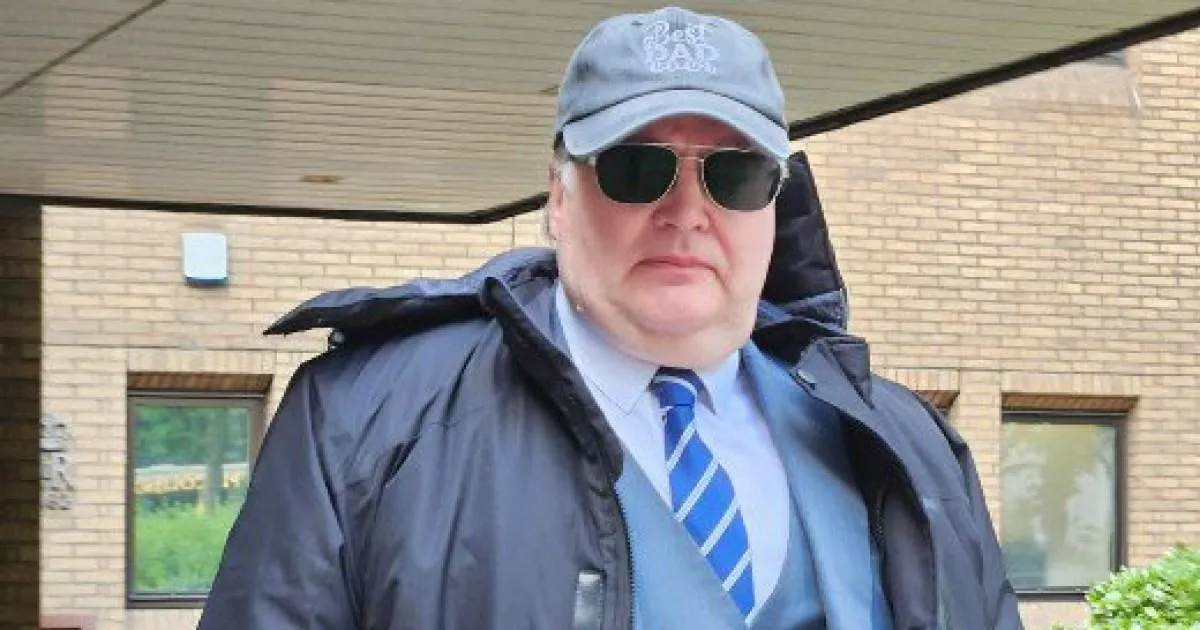
On a damp London morning, the kind of grey day that seems to drain the colour from everything, two men walked into a courtroom to learn the rest of their lives. David Greenhalgh, 68, and Christos Farmakis, 48, had spent years building carefully curated identities as respectable international businessmen. But the world that the jury at Southwark Crown Court had come to understand was very different. This was a world of secret deals, forged documents, hidden email accounts, and weapons of war flowing from the crumbling stockpiles of former communist countries to some of the most dangerous and repressive places on Earth. Between 2009 and 2016, the two men brokered illegal arms deals worth tens of millions of pounds, selling the machinery of violence to embargoed nations across Africa and the Middle East. They did so, in the words of prosecutor Edward Burge KC, with “no paperwork required and no licence from the UK applied for or obtained.” When the judge, Sally-Ann Hales KC, finally delivered her sentence, she described their offending as “deliberate, sophisticated, financially motivated and persisted over many years,” adding that the evidence established a “long-standing and mutually beneficial criminal enterprise.” The sentence was 16 years for each man. But no sentence could fully measure the human cost of what they had done.
Greenhalgh, a businessman from Croydon, was found guilty by a jury of ten counts of being involved in prohibited weapons sales. Between 2009 and 2011, while the world was still reeling from the horrors of the Darfur conflict, he supplied Russian MiG29, Su25, and Su27 fighter jets, along with Mil Mi-24V attack helicopters, to Sudan. These were not harmless spare parts or civilian aircraft. They were the tools of aerial warfare, capable of turning villages into smoking ruins and displacing entire populations. The timing is particularly damning: these were years when Darfur was synonymous with mass atrocities, camps of desperate refugees, and a regime widely accused of war crimes. The jury also heard how Greenhalgh and Farmakis discussed getting weapons to Iraq, trying to find paperwork that would not disclose the final destination to British authorities. One extraordinary email revealed Greenhalgh offering to deliver 100,000 weapons to South Sudan, along with 50 million rounds of ammunition, valued at more than $14 million. Another email showed the pair discussing how to supply ex-Soviet fighter jets to Libya, and specifically how to get those jets inspected and safely delivered without drawing the attention of the authorities. In his own correspondence, Greenhalgh referred to these deals as “sensitive projects,” a chillingly clinical phrase that reduced fighter jets, missiles, and rifles to bland commercial transactions. The sheer scale of what they were willing to trade is difficult to absorb. This was not a couple of stolen rifles sold at a backstreet market. This was a military supply network, brokered from offices and meeting rooms, with the kind of calm professionalism that might otherwise have been building bridges or railways.
What makes the story even more unsettling is how ordinary Greenhalgh appeared on the surface. The judge noted that he presented at trial as “someone who is something of a wheeler and dealer,” a man with genuine experience and ability, someone who had been involved in projects ranging from exporting second-hand clothing to Africa to building a sugar refinery, a copper mine, or even a theme park. Those are the projects of a man with vision and energy. They are also the achievements of someone who, as the judge put it, made “your conscious decision to engage in serious criminal conduct all the more disappointing.” Greenhalgh used a network of companies under the Airservices banner, registered in multiple countries including the UK, Greece, North Macedonia, and South Sudan, to strike his deals. He attempted to use this international web to get around British sanctions and trade embargoes. He was not ignorant of the law. He was not a naive middleman who stumbled into a dangerous world. At a meeting with HMRC in January 2012, he was told clearly that because of his British nationality he needed to obtain UK licences for military exports. His defence barrister, James Hines KC, argued that Greenhalgh believed the same obligation did not apply to his Greek co-defendant Farmakis. But the court was not convinced. Prosecutors argued that he knowingly and repeatedly circumvented controls, forging documents and routing deals through overseas companies to evade detection. This was not a lapse in judgment. It was a business model. And it was a business model built on suffering.
Farmakis, for his part, used his position as an adviser to Greater London Enterprise, a body with local and Government funding, as a respectable facade while conducting the illegal deals. It is a particularly bitter irony that public money and public trust helped give him cover for activities that would send weapons to places where public life was under assault. While Greenhalgh stood trial and faced the evidence, Farmakis did something else: he absconded. He vanished before the proceedings began, leaving behind his reputation, his supposed respectability, and any chance to defend himself face-to-face. He was convicted in his absence of nine similar charges and sentenced in his absence to the same 16 years. There is something haunting about that. The law did its part, but the man himself was not there to hear his fate. His empty place at trial is a reminder that justice, however powerful, is not always complete. The two men were partners in crime, but in the end their paths diverged dramatically. One stood in the dock, perhaps waiting for the verdict with the same cool calculation he had used for years. The other became a fugitive, a figure whose name now carries the stain of conviction but whose face might still be seen somewhere in the world, living quietly, pretending none of it happened. For the victims of the conflicts their weapons helped feed, there is no such escape.
The case was the result of a seven-year investigation by HMRC into breaches of arms embargoes, and it stands as one of the most significant allegations of weapon sales to reach a UK court. For seven years, investigators followed the money, the emails, the company registrations, the shipping routes, and the paper trails that the pair had tried so hard to obscure. The trial lasted two months, and jurors were shown the cold, unvarnished conversations between Greenhalgh and Farmakis. They saw the calculations, the euphemisms, the careful attempts to conceal the ultimate destinations of weapons that could kill hundreds or thousands of people. Edwige Hill, deputy director in HMRC’s Fraud Investigation Service, put it plainly: “Strict export licensing controls exist to protect the UK and to ensure that military equipment does not fall into the wrong hands. Greenhalgh knowingly and repeatedly circumvented those controls, forging documents and routing deals through overseas companies to evade detection.” That is the core of the offence. It was not just about breaking rules. It was about breaking the only safeguards that exist to prevent arms reaching regimes and armed groups who have no respect for human life. The 16-year sentences reflect how seriously the courts treat such crimes. But they also raise a question that lingers long after the courtroom empties: how many weapons were already delivered? How many rounds of ammunition were already fired? How many families were already destroyed before the law finally caught up?
In the end, the story of David Greenhalgh and Christos Farmakis is not really about two businessmen in tailored suits. It is about the people they never met and probably never thought about. It is about children in Darfur whose village was attacked from the air. It is about civilians in Libya and Iraq who woke up to explosions in their streets. It is about refugees fleeing violence that was made possible, in some small but real way, by contracts signed in comfortable offices thousands of miles away. The men did not personally fire a single bullet. They did not fly the jets or load the missiles. But they were the enablers. They were the ones who made it easy for armed groups and repressive governments to obtain the tools of terror. They told themselves, perhaps, that they were just fulfilling a demand, just doing business, just moving products. But weapons are not ordinary products. They do not exist to build things. They exist to destroy. Every AK47 offered to an embargoed nation is a potential funeral. Every fighter jet delivered to a regime accused of atrocities is a promise of more bombed hospitals, more orphaned children, more shattered communities. The sentence handed down in Southwark Crown Court cannot bring back any of the lives lost. It cannot undo the damage done in the wars that these weapons helped to fuel. But it carries a message, however imperfect, that there is a line between commerce and complicity, and that crossing it has consequences. Perhaps the most sobering thought is this: for every arms dealer who gets caught, there may be others still operating, still keeping their hands clean on paper, still telling themselves that they are not responsible for the blood. But the law, and history, will remember differently. They will remember the names Greenhalgh and Farmakis, and the weapons they sold, and the suffering they left behind. That is the human truth hidden inside this long and complicated case: the greed of a few can become the grief of millions.