

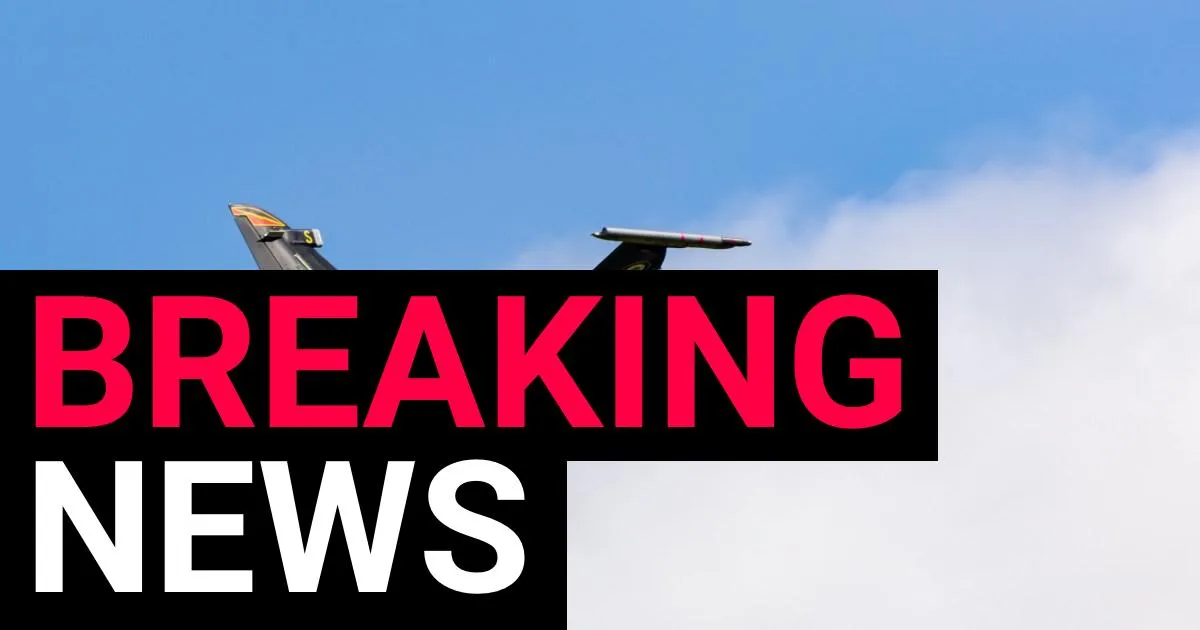
On a quiet afternoon in Anglesey, the skies over RAF Valley were filled with the familiar sound of jet engines. For the people who live on this mostly rural island off the northwest coast of Wales, the roar of military aircraft taking off and returning to the nearby Royal Air Force station is woven into daily life. RAF Valley has been a place of training and preparation for decades, and the sight of a Hawk climbing into the clear air is as normal as the tide moving along the coast. But on this particular afternoon, that ordinariness was broken apart in a matter of seconds. Multiple witnesses said they saw flames appear on the aircraft as it began its ascent, a terrifying sight that immediately set this flight apart from the hundreds they had watched before. The jet, a Hawk T2 advanced training aircraft, had just left the runway and was gaining altitude when something went wrong. Instead of continuing its smooth climb, it began to pitch violently, not once but twice, as though fighting against forces far beyond its control. Then, in a moment that left onlookers frozen, two ejector seats fired. The pilots were thrown clear of the broken aircraft, their parachutes snapping open as they began their descent toward the ground below, while the Hawk yawed and plummeted, crashing about a mile from the airfield. Within minutes, a major incident had been declared. Black smoke began to rise from the crash site, visible from homes and roads far away, and the sound of emergency sirens filled the air. The two pilots had ejected safely, but the full picture of what had happened was still unknown, and no one was yet ready to take a relieved breath. For those who had watched the scene unfold, the world seemed to stop in a strange, suspended moment between the flames in the sky and the smoke on the mountain.
Emergency services reacted with speed and professionalism, but that did nothing to ease the tension in the community. Fire crews reached the crash site quickly, working to control the blaze that had broken out among the wreckage, while an air ambulance was scrambled and appeared on flight tracking systems as it moved toward the scene. The declaration of a major incident meant that local police, military personnel and medical teams were all mobilised at once, turning the normally controlled atmosphere of the airfield into the centre of a large and urgent operation. Around the crash site, which lay roughly a mile from the runway, officers established a cordon to keep people away from the debris and to give the emergency services room to work. For the first hour or so, very little official information was available. The Ministry of Defence was contacted, and a full statement was expected, but in that tense interim, news spread mostly by word of mouth and through social media, where half-formed details mixed with genuine concern. The condition of the two pilots had not yet been confirmed. They had ejected from the aircraft, which was a strong sign that they were alive, but until they had been examined by medical staff, no one could be certain that they were not seriously injured. Ejecting from a fast-moving jet is an incredibly violent experience. The body is slammed through the canopy and into the airflow at high speed, subjected to forces that can cause back injuries, fractures, dislocations and more. Even in the best of circumstances, it is not a gentle way to leave an aeroplane. For the families waiting at the base or in their homes nearby, every additional minute without news was agonising. Every siren that passed, every helicopter that appeared on the horizon, was a reminder of how fragile the situation truly was. The RAF community is close-knit, and when a training jet goes down, the shock reaches far beyond the crew members themselves, touching instructors, students, engineers and all those who play a part in putting aircraft into the sky.
For the witnesses who saw it happen, the memory will not easily fade. One person, speaking to North Wales Live, described watching the jet climb after takeoff and then noticing that something was deeply wrong as it came parallel with where they were standing. “We watched it climb, then as it was parallel with us it started to pitch up violently twice… then both pilots ejected, and the Hawk crashed about a mile away,” they said. The image of the nose pitching upward again and again was one of mechanical distress, but it also carried a sense of human desperation, of pilots fighting to control a machine that no longer wanted to fly. Another witness, Pete Bennett, turned to social media with a message that mixed shock and relief in equal measure: “Just witnessed a RAF Hawk crash after takeoff, both pilots ejected safely.” The simple structure of the sentence hid the intensity of the experience behind it. In just a few short seconds, Bennett had seen a sophisticated military jet transformed into a burning wreck on the ground, and yet he was also able to confirm that the two people who had been aboard it were still alive. That combination of catastrophe and rescue is difficult for the mind to process, especially when it happens right in front of you. Donna Jones, another resident, described the moment she saw a “massive black cloud of smoke off a mountain; it looked like a jet had gone down.” Her words captured the visual shock of the disaster, the way an ordinary landscape can suddenly be marked by a column of smoke that refuses to be ignored. These witnesses were not attending an air display, and the crash was not a spectacle. It was a real event, happening in real time, with real lives at stake. They could do nothing but watch, wait and hope, and that helplessness was one of the most difficult parts of the afternoon.
The aircraft involved in the crash, the Hawk T2, is one of the most important training tools in the Royal Air Force. It is used for advanced jet training, a critical phase in the development of a military pilot, when students learn to handle high-speed, high-performance aircraft and begin to understand the complexities of the tactical environments they will one day face on operational missions. The Hawk T2 is far more than a basic trainer. It is designed to prepare pilots for the demands of front-line combat aviation, teaching them how to conduct low-level navigation, how to manage cockpit systems, how to make decisions under extreme pressure and how to respond to unexpected emergencies in the air. It serves as a bridge between the elementary stages of flying and the high-stakes world of modern air power, where pilots fly machines like the Typhoon and the F-35. RAF Valley itself is the home of No. 4 Flying Training School, where the UK’s future fighter pilots learn to operate the jets that protect British airspace and support military operations around the world. For generations of aircrew, Valley is where they learned not only how to fly, but how to become military aviators, how to handle fear, how to stay calm in a crisis and how to turn years of training into split-second action when it matters most. The two pilots who ejected from the stricken Hawk on that fateful afternoon may well have been experienced instructors or students still working through that demanding process. Either way, their ability to respond to the emergency and to use their ejection seats correctly was a direct product of the training that RAF Valley exists to provide. There is a painful irony in the fact that a machine designed to teach pilots how to survive in the air had to serve as a reminder of the importance of one of its primary safety systems. That is the nature of military flying, however. No matter how advanced the technology, no matter how carefully plans are made, there is always a moment where the human being inside the aircraft is the last line of defence.
As the initial chaos subsided, the focus shifted from rescue to investigation, and from shock to solidarity. Fire crews worked to extinguish the last of the blaze that was consuming the wreckage, while military investigators prepared to examine the site with forensic care. Every piece of the Hawk would be recovered and analysed in the hope that data from the aircraft’s systems and the physical evidence left in the wreckage would reveal what had caused the violent pitching motion and the eventual crash. Weather conditions, mechanical failure, maintenance history and the actions of the pilots would all be considered in the months to come. The two ejection seats, likely among the first items to be recovered, would be examined to confirm that they had functioned as designed. While the technical work began, the human response to the crash was already taking shape throughout the region. The community around RAF Valley shares a long and close relationship with the military, and many residents have friends, neighbours or family members who work at the base or who have served there in the past. A crash involving a training jet is not something they read about in the news; it is something that happens in their own skies, on their own mountain slopes, to people they might see in a local shop or school. On social media, messages of support began to appear, offering gratitude to the emergency services, relief at the survival of the pilots and quiet encouragement to the families waiting for confirmation. In the coming days, a formal inquiry would get underway, and the RAF would be expected to publish its findings with the transparency that aviation accidents demand. But for that evening, the most important fact was simple and profound: two lives had been spared, and a potential tragedy had been turned into a difficult but survivable incident. The work of the fire crews, air ambulance and military personnel was a reminder that while the accident itself was sudden and frightening, the response was swift and effective.
When the smoke finally settled and the emergency sirens fell silent, what remained was a complex mixture of emotions. There was relief, of course, because both pilots had ejected safely and no one on the ground had been hurt. There was sadness, too, at the loss of a sophisticated aircraft and the disruption it would cause to the training programmes that rely on every available jet. But above all, there was a profound respect for the skill and courage of the aircrew who, in a moment of extreme danger, had done exactly what they had been trained to do. Ejecting from a broken aircraft is not a simple act of instinct. It requires clear thinking, an honest recognition that the situation is beyond recovery, and then the physical courage to trigger a sequence of events that will throw the body through a canopy and into the sky with incredible force. The witnesses who watched the parachutes open will never forget the sight. The families who waited for news will never forget the feeling of sitting by their phones, not knowing whether their loved ones were safe. And the RAF, which lost one of its training aircraft, will never forget the lessons this crash has to teach. It will investigate, adapt and, wherever necessary, change its procedures so that the same mistakes cannot happen again. For the pilots, the road back to the cockpit may take time, depending on the injuries they suffered and the psychological weight of what they experienced. But if their ejection proved anything, it proved that the system worked. They walked away from a falling jet. The aircraft that crashed near RAF Valley will eventually be replaced, and the base will continue to prepare the next generation of fighter pilots, carrying on a mission that has remained unchanged in essence for decades. The echoes of this afternoon, however, will remain in the stories told by those who saw it happen, in the memories of the emergency teams who responded, and in the gratitude of a community that understands, sometimes more clearly than the rest of us, the price that can be paid by those who fly in the service of their country.