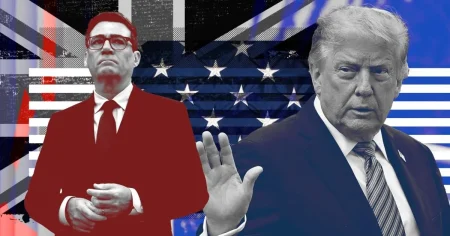
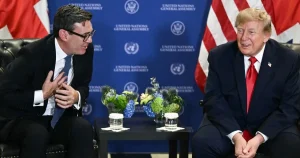

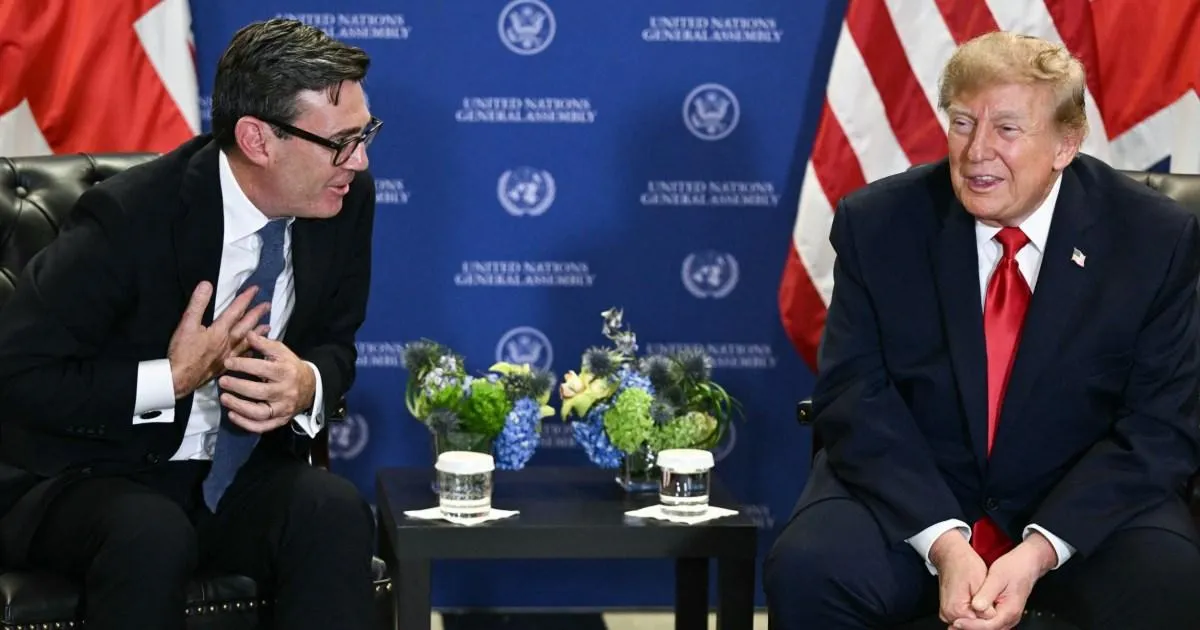
Four months ago, the most pressing concern for Andy Burnham was the potholes in Manchester, the scheduling of the Metrolink, and the eternal battle with Westminster over transport funding. He was a regional leader, a familiar face in British politics, but a world away from the gilded corridors of global power. It is a safe bet that Donald Trump, a man whose attention span is notoriously selective, could not have picked him out of a lineup. Yet, in a dizzying twist of political fate that feels ripped from a fast-paced political thriller, Burnham now finds himself occupying the highest office in the land. Yesterday, he sat shoulder-to-shoulder with the American President at the United Nations headquarters in New York, facing a wall of cameras for their first joint press conference. The sheer surrealism of the moment was palpable. For Burnham, the weight of history and the immediate anxiety of the present must have felt crushing. He knew the statistics; he knew the graveyard of British Prime Ministers who had come before him, attempting to charm or reason with the mercurial Trump. Starmer had his famously tense, awkward Oval Office encounter. Others had been dismissed, mocked, or simply outlasted. The fear in the room was that Burnham, the new kid on the block, might just be the next casualty, a footnote in the Trumpian saga of disposing of foreign leaders. The stakes felt incredibly high, not just for his own political survival, but for the perception of Britain on the world stage. He had to walk a tightrope, projecting strength and respect without appearing sycophantic or weak. The contrast between his previous life—attending local council meetings, cutting ribbons at new tram stops, and dealing with the gritty, unglamorous realities of urban governance—and this new reality of international summits and nuclear briefings was stark enough to induce vertigo. Yet, there he was, representing the United Kingdom, with the weight of a nation on his shoulders, facing the most unpredictable leader in the free world. The journey from the Town Hall to the UN podium is not just a geographical leap; it is a leap into a different dimension of pressure and scrutiny.
As the cameras rolled and the microphones were adjusted, the atmosphere was thick with anticipation. The initial pleasantries were exchanged, but the body language was telling. Trump, leaning back in his chair, exuded his usual casual dominance, while Burnham sat upright, a slight tension in his jaw. The first question was thrown to the President, and the room held its breath. What would Trump say about this unknown British leader? The answer, when it came, was surprisingly benign, almost disarming. “I think he’s a natural business person,” Trump declared, offering a compliment that, while perhaps backhanded in its simplicity, was exactly the lifeline Burnham needed. It was a signal, perhaps, that Trump didn’t view him as a threat or a pushover. For Burnham, that single sentence must have felt like a release valve, letting out the pent-up pressure of the previous weeks. It wasn’t the easy rapport of old friends—that was never going to happen given their vastly different personalities and political leanings—but it was a foundation of mutual, albeit cautious, respect. The brief, forced smiles and the polite nods were the choreography of international diplomacy, a delicate dance where every gesture is scrutinized. In that moment, the human need for validation clashed with the stoic demands of statecraft. Burnham, a man known for his emotional intelligence and connection with the public, had to suppress his natural instincts and play the game. The relief in the room was almost tangible; No. 10 officials, watching from the wings, allowed themselves a quiet, internal exhale. The first hurdle had been cleared. The compliment also served a strategic purpose for Trump; by praising Burnham’s business acumen, he was framing the relationship in terms he understands—transactional, competitive, and focused on the bottom line. It was a subtle way of saying, “I can work with you, as long as you play by my rules.” Burnham, ever the astute politician, likely understood this subtext, accepting the compliment while mentally preparing for the battles to come. The press conference, however, was far from over, and the next topic was a minefield.
A reporter raised the thorny issue of immigration, the very cornerstone of Trump’s political identity and his path to the presidency. This was the moment where the entire meeting could have derailed spectacularly. Trump has built a career on aggressive, often inflammatory rhetoric regarding borders and migration. When Burnham began to speak, offering a defence of legal migration, arguing that the British public are “not against” it and understand the vital role migrants play “in the NHS and in the care system,” the tension spiked. Every instinct told the observers that Trump would interrupt, that he would seize the opportunity to lecture the British PM on the dangers of open borders, or perhaps launch into a tirade about the Great Replacement Theory. But he didn’t. He sat there, listening—or at least appearing to listen—letting Burnham finish his point. Burnham, to his credit, pivoted smoothly to his own government’s efforts to tackle the small boats crisis, demonstrating a firmness that appealed to the President’s “law and order” instincts. This moment of restraint from Trump was unexpected. Perhaps he was genuinely curious, or perhaps he recognized that picking a fight with the new PM on day one served no purpose. For Burnham, it was a baptism of fire. He had stood his ground on a policy he believed in, faced the most powerful man in the world, and emerged without being steamrolled. The human element here was the sheer nerve required to speak truth to power, to articulate a nuanced position in front of a man who despises nuance. It was a test of character, and Burnham passed. The topic of immigration is deeply personal for both leaders. For Trump, it is the fuel that powers his political machine. For Burnham, it is a matter of social cohesion and economic necessity. The fact that they could discuss it without sparks flying is a testament to the diplomatic skills of both men, or perhaps to the sheer exhaustion of the campaign trail that had brought them both to this point. The silence in the room during Burnham’s answer was deafening, as journalists held their breath, waiting for the inevitable explosion. When it didn’t come, a wave of relief washed over the assembled press corps.
The second potential flashpoint came when a reporter asked about the UK’s recent sanctions on Israeli settlements in the West Bank. This was a major policy shift for Britain, and a topic where Trump holds very strong, opposing views. The question hung in the air. Trump’s response was bafflingly honest: “Well, I don’t know about the move.” The silence that followed was deafening. The most powerful man in the free world was admitting ignorance of a major diplomatic action by his closest ally. Then, in a moment of pure, unscripted theatre, he turned to Burnham and asked, “Do you know about the move?” It was a bizarre, almost childlike moment of delegation. Burnham, ever the composed politician, confirmed he was aware of the move, and gently reminded the President that he had actually called him to explain the reasoning behind the decision. It was a subtle, yet masterful, flex of diplomatic muscle—a reminder that communication had occurred, even if Trump had forgotten. What followed was an interruption from Trump, but an entirely helpful one. As Burnham spoke about the UK’s condemnation of the Hamas attacks on October 7, Trump interjected, “That is true, very strong condemnation.” This was Trump offering an olive branch, a way to align themselves on a shared enemy and deflect from the uncomfortable reality of the sanctions. The human dynamic was fascinating: the seasoned diplomat patiently guiding the erratic leader through the nuances of policy, while the erratic leader provided a clumsy but effective assist. It was a glimpse into the strange, often absurd reality of modern geopolitics, where the fate of nations rests on the ability of two men to manage a conversation in real-time, covering for each other’s lapses and finding common ground in the chaos. The exchange also highlighted the vast difference in their approaches to global affairs. Trump operates on instinct and personal relationships, while Burnham operates on institutional knowledge and diplomatic protocol. Yet, in that moment, they managed to sync up, creating a narrative of unity despite the underlying disagreement. It was a masterclass in crisis management, albeit a crisis of Trump’s own making.
Beyond the glare of the cameras, the real substance of the meeting occurred in the hour before the press conference. Behind closed doors, the two leaders drilled into the issues that matter. According to official readouts, they covered trade, the sovereignty of the Falkland Islands, and the case of imprisoned Hong Kong activist Jimmy Lai. Notably absent from the agenda was AI regulation, a subject where their views diverge sharply—a curious omission that speaks to a desire to avoid unnecessary friction. However, not everything was smooth sailing. Trump’s language regarding the Chagos Islands deal was less than welcome, though hardly surprising. He has railed against the deal before, and the UK’s Defence Secretary, Wes Streeting, has now confirmed that the agreement will be re-examined under pressure from the US. This is the harsh reality of the “special relationship”—it is often transactional, with the UK forced to bend to American will. For Burnham, this private meeting was a crash course in the brutal pragmatism of international politics. He had to balance the UK’s interests with the need to keep Trump onside. The conversation about Jimmy Lai would have required delicate handling, given Trump’s unpredictable stance on China. The atmosphere in the room would have been a mixture of intense focus and fatigue, as aides shuffled papers and interpreters whispered. The presence of figures like Ed Miliband and Marco Rubio in the room added another layer of complexity, as their own political agendas and historical baggage weighed on the proceedings. It was here, away from the cameras, that the true measure of the relationship was taken. It was a test of endurance and strategic thinking, where every word carried weight and every concession was calculated. Burnham had to navigate the delicate balance of being a loyal ally while also asserting British sovereignty and interests. The Chagos Islands issue, in particular, is a sore point, as Trump sees it as a giveaway of British territory, while Burnham sees it as a necessary diplomatic compromise. The private meeting was a microcosm of the entire relationship: a mix of shared interests, conflicting ideologies, and the constant need for compromise.
In the final analysis, Downing Street officials will likely chalk up this first in-person meeting as a win. It could have been a little less awkward, perhaps, but it could have been a lot worse. The fact that Burnham survived the press conference without a major gaffe or a public dressing-down from Trump is a significant achievement in itself. The meeting established a baseline of mutual respect, which is the essential currency of international diplomacy. The human story, however, lies in the small details. One can imagine Burnham leaving the UN building with a mix of relief and exhaustion, perhaps a little disappointed that Trump didn’t compliment him on his distinctive Northern accent—a small, human vanity that reveals the man behind the statesman. He had walked into the lion’s den and emerged intact. The political theatre we witnessed was a reminder that behind the grand titles and the weighty responsibilities, these are just people. They have egos, they have anxieties, and they have moments of genuine connection and awkward silence. The meeting was a testament to the resilience required to lead in the modern age, where a single press conference can define a premiership. Burnham has set the tone for his relationship with the United States: respectful, firm, and pragmatic. He has shown that he can hold his own on the world stage, and that is no small feat when facing a force of nature like Donald Trump. The journey from Manchester’s town hall to the UN’s podium is a remarkable one, and yesterday, Burnham proved he belongs there—for now, at least. The real test, of course, will come in the months ahead, as they navigate trade deals, security alliances, and the ever-present threat of global instability. But for now, Burnham can breathe a sigh of relief. He has faced the dragon and lived to tell the tale, and in the brutal world of international politics, that is often the best one can hope for. The “Alright Gov” era of diplomacy has begun, and so far, it is off to a surprisingly solid start.