


The morning after the discovery, the quiet streets of Falmouth were transformed into a scene of controlled urgency. Hundreds of residents woke to the unmistakable sound of police knocking on doors, delivering a message no one ever expects to hear: leave your home now, take only what you truly need, and do not look back. The cause was a ghost from the past — a suspected World War Two missile, believed to be an American device, found inside Falmouth Docks the previous afternoon. By the time the sun was fully up, a 750-metre cordon had turned the heart of this historic Cornish town into an exclusion zone, with 339 homes falling inside its reach. What had once been a busy waterfront community was suddenly hushed, apart from the murmur of officials, the rumble of military vehicles, and the distant cry of gulls. Streets that should have been filling with commuters and schoolchildren were empty. Trains were halted. Shops and cafes closed their shutters. And in the homes still within the blast zone, ordinary people faced an extraordinary task: deciding what to carry out of their front doors in a matter of minutes. The instruction from authorities was clear — do not delay to gather non-essential belongings. Yet for many, the weight of that choice was overwhelming. Family photographs, passports, a child’s favourite stuffed animal, a laptop full of work, a bag of medication — these were the things that filled car boots and carrier bags as residents streamed toward safety. University students, many far from home, were turned out of their accommodation with little more than their phones and chargers. Elderly residents leaned on the arms of police officers. Parents held their children’s hands and tried to keep their voices steady. The bomb, whatever it was, had not yet exploded, but it had already shattered the calm of an ordinary morning.
The evacuation was organised with a mixture of firmness and compassion, but the uncertainty was impossible to hide. Cornwall Council and Devon and Cornwall Police urged everyone inside the cordon to make their way to All Saints Church along Killigrew Street, or simply to any area outside the evacuation zone. Superintendent Ian Thompson from Devon and Cornwall Police spoke honestly to the press, acknowledging that no one knew exactly how many people would need help. “We don’t know how many people will be evacuated,” he said. “We expect some residents to go to work and go about their daily lives and come back later. But be prepared to have to come to a meeting point like All Saints Parish Church.” His words captured the strange reality of the situation: life continues, even as a wartime relic threatens to disrupt it. Residents were asked to bring essential medication and medical equipment, phones and chargers, keys, and anything their families might need while away from home. The advice was practical, almost mundane, yet it carried an undercurrent of danger. No one was told to pack clothes for a week or to prepare for the worst, but the phrase “do not delay leaving to gather non-essential belongings” lingered in the air like an unspoken warning. For those who could not leave without assistance, the message was equally clear: let the emergency services know when they knock on your door. No one would be forgotten, no one would be left behind. Businesses and accommodation providers were instructed to pass the evacuation orders on to staff, customers, and guests, ensuring that even visitors unfamiliar with the town understood the seriousness of the situation. In a place known for its warmth and hospitality, the sudden emptiness of the streets felt deeply unnatural.
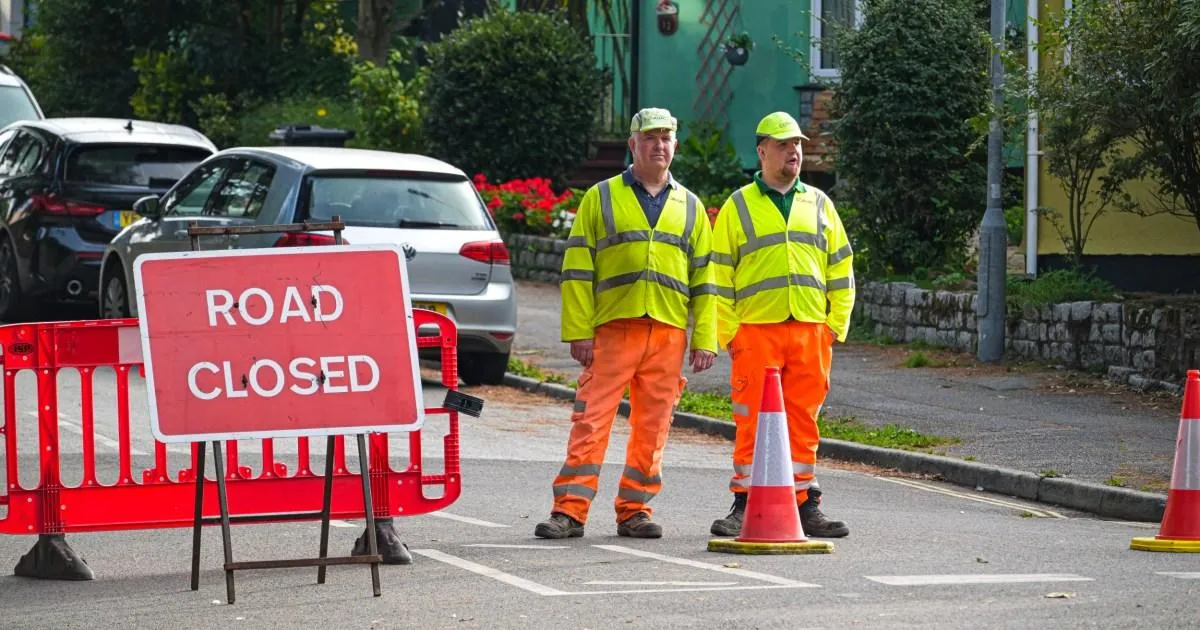
The logistical impact of the discovery rippled far beyond the immediate cordon. Multiple roads were closed, and train services were suspended, with Great Western Railway announcing that it would halt services between Falmouth Town and Falmouth Docks from 8.45am. Commuters found themselves stranded at stations, and visitors hoping to explore the Cornish coast were turned away. The closure of the docks, a vital hub for the local economy, added another layer of anxiety to an already tense morning. But the most pressing concern remained the device itself, and the military Explosive Ordnance Disposal team was soon on the scene, carefully assessing the suspected missile. Superintendent Vicky Howell provided a steady public presence, explaining that the cordon had been extended following the discovery of the suspected unexploded ordnance. “Specialist Explosive Ordnance Disposal officers are on the scene and we are working closely with our partner agencies to manage the incident safely,” she said. She thanked residents, businesses, and members of the public for their patience and cooperation, and asked everyone to continue avoiding the area and to follow any instructions given by emergency services personnel. Her words were measured, but the underlying tension was unmistakable. The team assessing the device were not merely dealing with a piece of scrap metal; they were handling a weapon designed to kill, one that had survived decades beneath the earth or sea, its mechanisms still potentially active. The operation required precision, calm, and time — three things that are difficult to summon when a whole community is waiting on the edge of danger.
For the people of Falmouth, the wait became the hardest part. Those who had gone to work early in the morning returned to find their homes sealed off, their streets lined with tape, their lives placed on hold. Some stood at the edges of the cordon, clutching phones and staring at the rooftops they could no longer reach. Others gathered in the church, trying to find comfort in familiar surroundings while strangers in high-visibility jackets moved between them with clipboards and radios. Children, too young to understand the danger, asked when they could go home. Teenagers worried about coursework left on laptops. Parents fretted about the pets they had managed to bring along, and the ones they had not. The evacuation had been swift, but the aftermath was slow, and the silence of the empty streets was broken only by the occasional crackle of a police radio or the distant hum of a drone overhead. For many, the experience was a stark reminder of how fragile ordinary life can be. One moment, you are making coffee and planning your day; the next, you are standing on a pavement with a bag of belongings, waiting for someone else to decide when it is safe for you to return. The community, though, began to show its strength. Neighbours checked on neighbours. Cafés just outside the cordon offered free tea to evacuees. Local residents opened their homes to friends and strangers alike. In the face of a threat that belonged to another era, the people of Falmouth responded with the kind of solidarity that no bomb could ever destroy.
The discovery of the suspected American missile inevitably stirred memories of the past, and of the role Cornwall played during the Second World War. Falmouth Docks were not just a picturesque harbour; they were a vital military asset, a launching point for convoys, a repair yard for warships, and a staging ground for the D-Day landings that changed the course of history. The waters off the Cornish coast were crowded with vessels carrying troops, tanks, and supplies, and the skies were filled with aircraft heading toward occupied Europe. It is not difficult to imagine the chaos of that time, the constant threat of air raids, the desperate urgency of a nation at war. To find an unexploded American missile in the docks today is to be confronted with the physical remains of that struggle — a reminder that the past is never truly gone. It lies beneath the surface, buried in the mud, waiting to be disturbed. For younger residents, the evacuation may have seemed like something from a film, an absurd interruption to the routines of modern life. But for older generations, and for anyone who has studied the history of the region, the bomb was a solemn echo of a time when the people of Falmouth lived with danger every day. The missile, once dropped or jettisoned by an aircraft, had spent decades in silence, slowly becoming part of the landscape. Now, it had returned to the surface with a message: history does not fade away quietly.
As the hours passed, the mood in Falmouth remained one of cautious patience. The authorities repeated their appeals for people to stay away, to let the specialists do their work, to trust in the careful, methodical process of making a decades-old weapon safe. There was no panic, no anger — just a quiet determination to get through the day. The evacuation of 339 homes was a massive undertaking, but it was carried out with a humanity that spoke well of the emergency services and the community alike. Police officers went door to door, ensuring that even the most vulnerable residents were helped out of their homes. Fire crews and ambulance teams stood by, ready to respond if the worst happened. Council workers set up rest centres and answered endless questions from worried families. And the residents themselves, scattered across the town and beyond, waited for news with a mixture of anxiety and hope. They thought about the lives they had temporarily left behind — the half-finished cups of tea, the unmade beds, the washing still on the line. They thought about the missile lying somewhere in the dock, its secrets being slowly uncovered by men and women in protective gear. And they thought about the moment, hopefully soon, when the cordon would be lifted and they could walk back through their front doors again. Until then, all they could do was wait, support one another, and hold on to the belief that this strange interruption would end safely. Falmouth had faced storms, shipwrecks, and war before. It would face this too. When the all-clear finally came, the town would return to its usual rhythms — the ferry crossing the harbour, the shoppers filling the streets, the laughter in the pubs — but the memory of this morning, and of the wartime visitor that turned ordinary life upside down, would remain for a long time. For now, the people of Falmouth were doing what people have always done in times of uncertainty: looking out for each other, keeping hope alive, and waiting for the moment when they could finally come home.