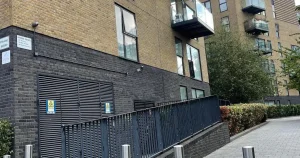


In the vibrant, spray-painted heart of Bristol, a city renowned globally as a living gallery and the hallowed birthplace of the elusive street artist Banksy, a new piece of public art has ignited a firestorm of controversy. This isn’t a provocative new stencil by a world-famous artist, nor a bold, hand-painted statement from a local talent. Instead, it’s a large vinyl mural—a product of artificial intelligence—that has been slapped onto the side of the Jolly Colliers pub. The community, known for its fierce support of authentic, handcrafted creativity, has reacted with a mixture of fury, disappointment, and sheer disbelief. The artwork, intended to celebrate the city’s iconic landmarks, has instead become a symbol of a much larger, more existential battle between human artistry and the encroaching tide of automation, leaving many to feel that the city’s very soul has been compromised in the process.
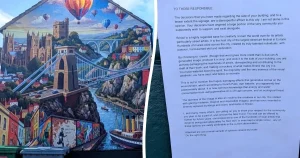
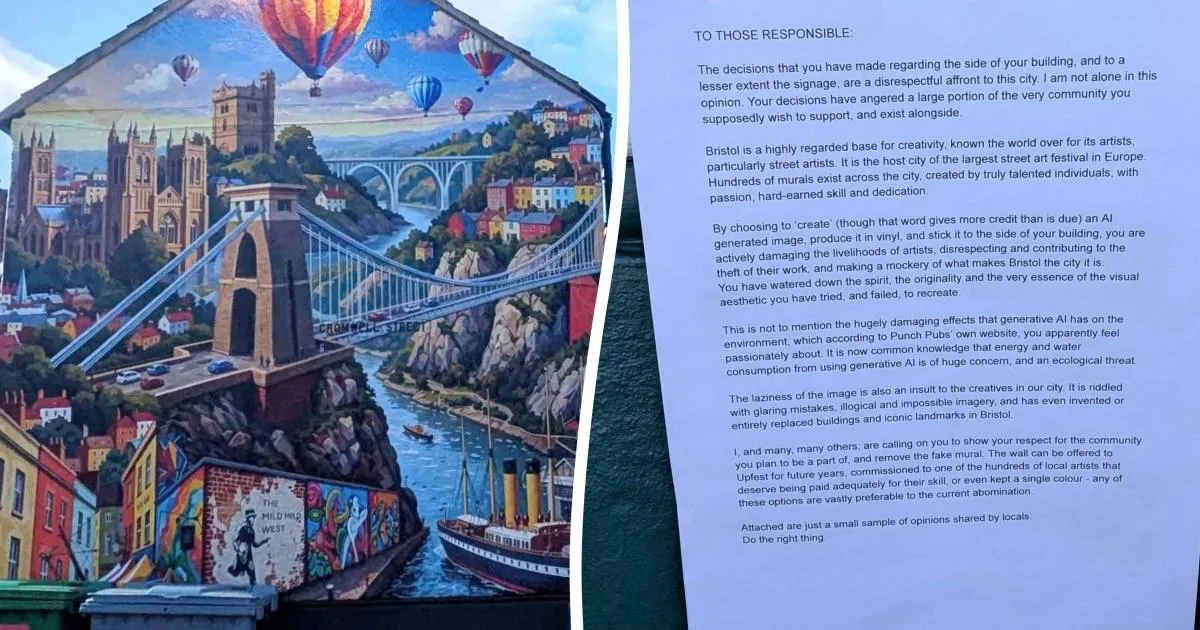
The offending mural is a chaotic montage of Bristol’s most famous sights, but its execution is riddled with glaring inaccuracies that have become a source of ridicule and anger. Cabot Tower, a beloved Victorian landmark, is rendered as an unrecognizable, misshapen structure that barely resembles the original red sandstone monument. Perhaps even more insulting to local sensibilities is the depiction of the SS Great Britain, the revolutionary ship designed by Isambard Kingdom Brunel. In the AI’s interpretation, this majestic, record-breaking vessel—once the largest passenger ship in the world—has been reduced to the likeness of a humble, steam-powered tugboat, completely losing the grandeur of its epic sails and sleek hull. But the most personal affront is reserved for the tribute to Banksy himself. Instead of recreating the famous Mild Mild West mural—which features a teddy bear poised to throw a petrol bomb at riot police—the AI has produced a bizarre, one-legged figure pointing into the distance, a nonsensical and disrespectful mangling of a piece of Bristol’s cultural heritage. For locals, this isn’t just bad art; it’s a mockery of the very symbols that define their city’s identity.
The reaction from Bristol’s artistic community has been swift, passionate, and overwhelmingly negative. Caroline Maggs of the Bristol Mural Collective (BMC) articulated the collective anger, stating that “AI designs not only devalue but undermine the work of artists.” She expressed that the collective was “saddened and angered” by the pub’s decision, highlighting the irony that a small business should fail to support other small, local businesses. Maggs emphasized that this choice is “not only an aesthetic choice but a political one,” pointing to the disconcerting trend of humans being replaced by algorithms. She even went as far as to say that having no mural at all would have been preferable to the AI-generated eyesore. The sentiment is echoed by fellow artist Emily Tuffen, who called the mural a “slap in the face” to Bristol, adding with dark humor that “Brunel would be turning in his grave” over the botched representation of his engineering marvel. The anger is not just about aesthetics; it’s about livelihood, respect, and the preservation of a creative culture that has put Bristol on the world map.
The animosity toward the AI mural escalated further when an anonymous letter, penned by a local artist, was discovered pinned below the artwork before being swiftly removed. The letter, described as a “disrespectful affront to this city,” articulated the deep-seated frustration of the creative community. It pointed out that Bristol is home to hundreds of murals created by “truly talented individuals, with passion, hard-earned skill and dedication,” and that the pub’s decision to use an AI-generated image actively damages the livelihoods of these artists. It accuses the pub of “watering down the spirit, the originality and the very essence of the visual aesthetic” of Bristol. By choosing to “create” (a term the writer felt was giving too much credit) an AI image, the pub has committed an act of “intellectual property theft” and made a mockery of the local culture. The letter’s existence, and its rapid removal, suggests a community ready to fight back, with one artist even suggesting that someone should circle all the AI’s mistakes in red paint, turning the flawed mural into a genuine piece of interactive street art and a powerful statement.
This controversy extends far beyond the walls of a single pub. It touches on the deeply unsettling question of what happens to human creativity in an age of increasingly sophisticated artificial intelligence. As Tuffen ominously noted, the mural is a “very large, very public display of something that is fast becoming a very clear and real threat to the existence of humanity.” The artists view this not as one isolated incident, but as a dangerous precedent—a giant green light signaling to other businesses and institutions that AI-generated art is an acceptable, cheaper alternative to commissioning human work. The Bristol Mural Collective’s offer to commission a real artist to “rectify their mistake” underscores the solution they see: return to the source. The fact that the mural is a disposable vinyl sticker, rather than a hand-painted piece, feels almost sacrilegious to a community that values permanence, skill, and the physical act of creation. For them, the AI art is not just visually “naff”—it represents a profound devaluation of their craft and a worrying glimpse into a future where the algorithm replaces the artist.
The Jolly Colliers pub, however, has defended its decision. A spokesperson for Punch, the company that owns the establishment, explained that the mural was a “temporary measure due to the condition of the external wall.” They insisted that the wall requires minor structural works, which would make a permanent, hand-painted mural difficult to maintain at this time. According to their statement, they opted for a “temporary solution” and are looking forward to collaborating with local artists and the community in the near future to create a permanent piece. This corporate explanation does little to placate the critics. Artists argue that if the wall isn’t suitable for a permanent mural, a simple, clean paint job would have been a more respectful and neutral choice than plastering a flawed, AI-generated vinyl over it. To the community, the choice feels less like a practical stopgap and more like a lazy, tone-deaf gamble that prioritizes cost and convenience over supporting local talent, a decision that has deeply wounded the pub’s relationship with the very community it serves.
Ultimately, this incident in Bristol has become a global flashpoint in the debate around AI and art. It serves as a stark warning about the social and cultural consequences of unchecked automation in creative fields. The people of Bristol, a city built on a rich history of counter-culture, musical innovation, and world-class street art, are refusing to accept this silent, algorithm-driven takeover of their public spaces. The AI mural at the Jolly Colliers is a testament to how technology can replicate an image but cannot capture the soul, the nuance, or the cultural context that makes art meaningful. It is a collage of references that the algorithm failed to understand, a hollow imitation of a spirit it cannot comprehend. As the artists and residents of Bristol rally against this affront, their collective voice sends a clear message that resonates far beyond the city limits: true creativity is irreplaceable. It is a human endeavor—messy, passionate, and deeply personal—and while AI may be able to imitate it, the community will always recognize the difference between a copy and an original. This “wonky mural” may have been intended as a temporary decoration, but it has inadvertently become one of the most powerful pieces of activism for human art the city has ever seen, a defiant stand against the dehumanization of our cultural landscape.