


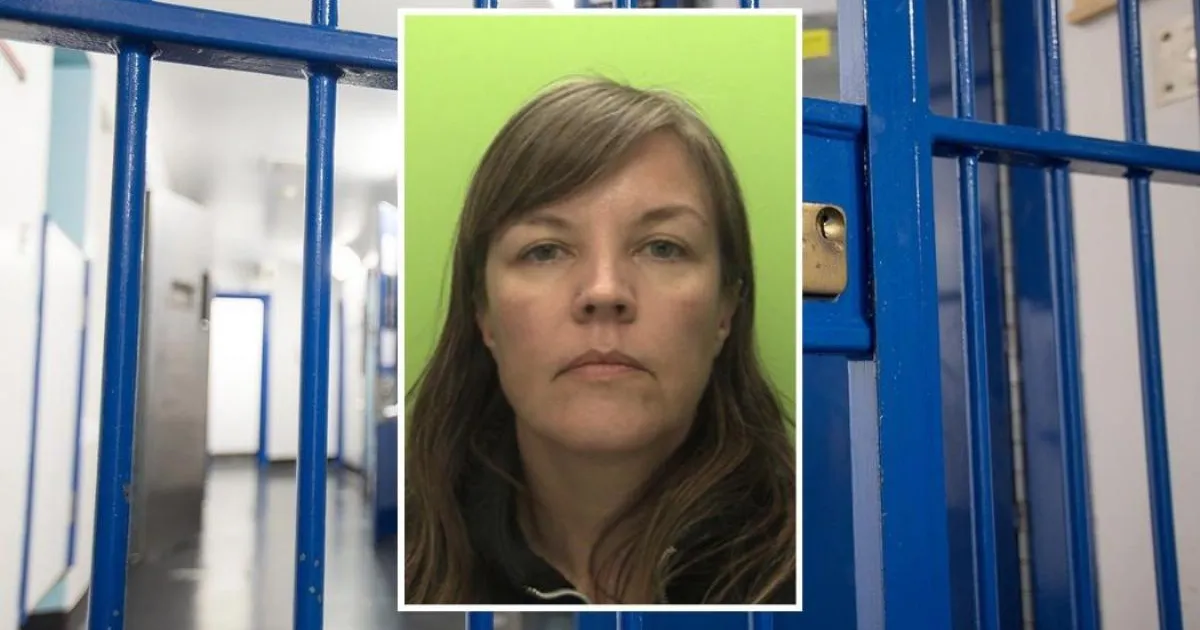
In the unassuming Nottinghamshire parish of Warsop, on the edge of Sherwood Forest, there stood a house that seemed to belong to a woman doing well for herself. Catherine Walker was 47, a member of staff at Nottinghamshire Police, and lived in relative luxury. Neighbours may have seen a professional woman, a settled home, perhaps a person who would be expected to know right from wrong. But behind one door in that house, a door that could only be locked from the outside, a nine-year-old boy was being hidden away in conditions of shocking squalor. The rest of the home was comfortable, furnished, warm. His room was nothing like that. It had no curtains at the window, an electric socket hanging dangerously off the wall, no radiator, and no signs of care. The boy was not a visitor or a lodger; Walker was his legal guardian. She had taken on the responsibility of protecting him, and instead she oversaw a slow, cold, secret decline. In that single room, the difference between a comfortable life and a child’s suffering was only a locked door away. In the village of Warsop, with its ordinary streets and the dense, old woods not far away, such a secret is especially unsettling. Sherwood Forest is a place of folklore, of Robin Hood and outlaw heroes, but no hero came for this boy. The contrast between the outside world and the hidden room could not have been starker. While Walker continued with her job at the police, the child she was legally bound to protect was living without the simplest things that make a childhood human: light through curtains, warmth from a radiator, a room that opened to the rest of the house. Instead, his door was designed to keep him in and keep others out. Every detail of that room suggests deliberate isolation. A socket hanging from the wall is not just untidiness; it is a danger left in place. A missing radiator in an English December is not just an omission; it is a sentence of cold. And a door that locks from the outside is not simply a door; it is a cage.
The tragedy came into the open on 16 December 2024. On that morning, the boy was found unresponsive in the room. Whatever time he had left, he did not have long enough. He was rushed to hospital, but doctors could not save him, and he died later that day. The precise cause or circumstances have not been fully detailed in public accounts, but the description of his room has painted an unmistakable picture. Imagine a small boy waking up day after day in a room with no curtains. In winter, the cold would have settled on the glass. There was no radiator to fight the chill. The only adult in the house, his legal guardian, did not seem to care. There is something unbearably quiet about this kind of cruelty. There were no screams, no chaos, nothing loud enough to break through walls. The neglect was carried out in the ordinary rhythm of a household. A child was slowly dying in one room while the rest of the house lived on. The fact that the door was lockable from the outside tells us that the fear of discovery was built into the arrangement. It was not a room for a child; it was a place to put a child away. By the time someone opened the door that morning, it was already too late. Whatever errors or crimes had been committed, they had been building for a long time. The boy’s death was not sudden; it was the final, avoidable end of a process. A child should not be found in such a state. A child should not have to share a home with a guardian who could pass him every day and see nothing worth changing. In the aftermath, investigators would describe the room as squalid, a word that suggests filth, decay, and neglect. But the deeper horror is emotional: the boy was isolated, dehumanized, and treated as if he did not deserve what every child is owed. His absence from the family life of the house was probably deliberate. He was hidden, and being hidden is a form of dying before death.
When police and social services began to investigate, Catherine Walker attempted to explain the state of the boy’s room by saying that renovations had been taking place. The claim was quickly exposed as a lie. Perhaps there were no building materials, no workmen’s evidence, no signs of improvement. Whatever exposed it, the lie itself was telling. She knew how bad the room looked, and she knew it could not be justified. The excuse did not survive contact with the truth, and the truth was far darker. Witnesses came forward to describe clear mistreatment of the boy over a prolonged period. This was not a case of a guardian having a difficult few months and losing control. This was a pattern of cruelty and abandonment that continued over time. In her defence, Walker pointed to her former husband, who also died shortly after the boy. She suggested that he, not she, had been the boy’s primary carer and was mainly responsible for his treatment. But this defence could not withstand the facts. It was Walker who was the legal guardian. It was Walker who lived in the house. It was Walker who concealed the boy’s condition from the outside world. Her attempts to put blame on a dead man may have seemed like a desperate strategy, but it did not move the court or the investigators. Eventually, she pleaded guilty to two counts of assault, child neglect, and causing unnecessary suffering. Those charges are serious. They are not about a single accident or a moment of frustration; they describe a series of deliberate actions and failures. A child in her care was assaulted, neglected, and made to suffer without need. Her guilty plea acknowledged that she had done these things and that she had no reasonable explanation.
On Monday, Catherine Walker, also known as Kathryn, stood in the dock at Nottingham Crown Court to be sentenced. The judge, Stuart Rafferty KC, did not soften his language. He said that Walker had deliberately concealed and covered up the ‘gratuitous degradation’ of the boy. The phrase ‘gratuitous degradation’ carries a particular weight. It means that the suffering was not accidental, not necessary, not a side effect of poverty or illness. It was an addition, an extra layer of humiliation and harm that served no purpose other than cruelty. It is hard to imagine the details behind that phrase, but the imagery of the room supplies some of them: bare windows, a broken socket, no warmth, a lock on the outside. Degradation is not just physical; it is the message given to a child that he is worthless, that he is less than human, that he does not deserve the comfort that others around him take for granted. The judge added that Walker had effectively sentenced herself to ‘a life of shame.’ No prison term can undo that moral sentence. She will carry the knowledge of what she did, and what she failed to do, for the rest of her life. The court then imposed a prison sentence of six years. For some, that may seem too short. Six years cannot bring back a child. Six years cannot give the boy a birthday, a warm winter, a door that opens from the inside. But the judge’s words made it clear that the law sees Walker’s role as more than passive. She did not just fail to save the boy; she helped create the conditions of his death and then worked to hide them. Shame, in the end, may be a heavier sentence than the years in prison.
After the sentencing, Detective Chief Inspector Gail Routledge of Nottinghamshire Police spoke publicly about the case. She described it as ‘one of the most upsetting cases I can remember.’ Those words are significant because police officers, by profession, are exposed to some of the worst things human beings do to one another. Yet this case stayed with a senior detective. DCI Routledge went on to say that the boy was ‘very clearly mistreated for a significant period of time’ and was living in conditions that no child should have to endure. She also closed down an easy excuse. ‘It was always our case that this mistreatment was a deliberate choice by the defendant, rather than the result of neglectful parenting.’ That distinction matters deeply. Neglectful parenting can happen when a parent is overwhelmed, unwell, or unable to cope. It can be the product of ignorance or poverty. But this was different. Walker had enough order in her own life to keep the rest of the house comfortable. She had enough awareness to know the room would look bad, since she lied about renovations. She made choices, over and over again, to leave the boy in squalor and to keep that squalor hidden. DCI Routledge said she was pleased that Walker had now been held to account for her role in the boy’s death. ‘Her role’ is the crucial phrase. Even if Walker did not personally cause the final, fatal harm, she was part of a system of abuse. As a guardian, she had a duty to protect. As the person living in the house, she saw what was happening. As a member of police staff, she should have known that abuse can be reported, investigated, and stopped. Instead, she chose silence and concealment. For all those reasons, the justice system held her responsible.
Underneath the legal details and the forensic language, there is a human truth that cannot be ignored. A nine-year-old boy died because the person who was supposed to care for him chose not to. He was found in a room that no child should ever have to stay in, and his life ended in a hospital, surrounded by strangers. He never had a chance to say what was happening, or perhaps he was too frightened to try. The story is almost unbearable because it is also so easy to picture. A comfortable house in a quiet village, a professional woman, a locked bedroom door. The boy stands on the other side, cold, hungry, alone, listening to the sounds of a normal life he was not allowed to share. We will never know every detail of what he experienced, but we know enough to feel the weight of it. The judge’s phrase ‘gratuitous degradation’ will remain in the memory of anyone who hears it. It describes a cruelty that had no reason, no purpose, and no redemption. But the child’s death should not be reduced to a case study or a news story. It is a reminder about the meaning of guardianship. Taking care of a child is not a legal label; it is a promise that a child will be safe, loved, fed, warm, and seen. When that promise is broken, the damage is not always obvious from the outside. The house may look fine. The guardian may seem normal. The door may be locked. The best response to this tragedy is not only anger, but also a commitment to look more closely at the lives of children who cannot speak for themselves. The boy is gone. His room will no longer hold him. But the shame of what happened should linger, because it is only in remembering that we can hope to prevent another child from being hidden away.