
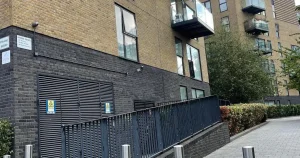

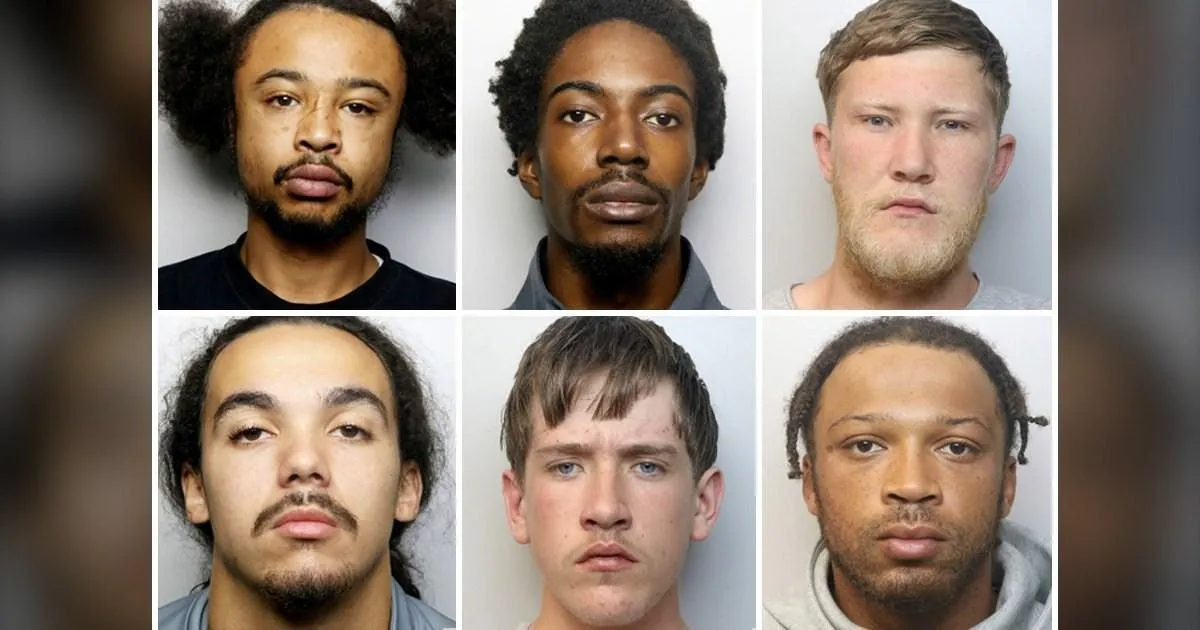
In the early hours of June 15, 2025, a young life was violently cut short in a scene that would horrify Derby and beyond. Dale Martin, just 21 years old, was going about his life when he was ambushed by a gang of balaclava-clad men on Stenson Road. What followed was not a random street robbery or a moment of impulsive anger, but a deliberate, cold-blooded hunt. Dale was dragged from his Renault Megane after the group formed a barricade with their electric bikes, trapping him in the middle of the road. As he tried to flee, he was surrounded and attacked with weapons that belonged more to a battlefield than a British street: swords, machetes and Rambo knives. The chilling CCTV footage that would later be shown in court captured the sheer terror of the moment, with the gang shouting “kill him, kill him” as they set upon him. Dale had no chance. This wasn’t just a crime; it was an execution carried out in a residential street, leaving a family shattered and a community asking how such savagery could unfold in broad daylight. The footage, released after the trial, is difficult to watch, not only because of the violence but because it shows a group of men so dehumanized, so intent on destruction, that they saw a fellow human being as nothing more than a target. Dale was a son, a brother and a friend to many. His life was just beginning, full of potential and ordinary dreams that would never be realized. Instead of celebrating milestones, his family will spend the rest of their lives mourning a boy taken from them in the most brutal way imaginable. The shockwaves of that night will reverberate for years, a painful reminder of how quickly life can be stolen by senseless hatred.
The attack itself unfolded with appalling speed and precision, suggesting that the men had been planning it for some time. The court heard that the violence was the result of a “tit for tat” row between rival groups, a vague and chillingly petty motive for such an extreme act of bloodshed. Dale was targeted as he travelled in his Renault Megane, and the gang used their electric bikes not just as transportation but as weapons, blocking his path so he could not escape. When he came to a stop, they dragged him from the vehicle and began their relentless assault. The CCTV showed the group scouting the area on their bikes moments before the ambush, then fleeing the scene immediately afterward, leaving Dale bleeding on the ground. They didn’t stop to check if he was alive; they didn’t call for help. They left him to die, showing not a flicker of remorse. The brutality of the attack was described in court as sustained and planned, with wounds inflicted to his head, chest and back as he lay on the ground trying in vain to protect himself. Police later released images showing blood splattered across the inside of the Renault, a sickening testimony to the ferocity with which the gang attacked their victim. In the aftermath, some of the men attempted to evade justice in ways that almost defy belief. Body-cam footage captured two of them being arrested at home, still in their underwear, while two others were picked up at London Gatwick Airport, apparently trying to put as much distance as possible between themselves and the crime. The contrast between their cowardly attempts to flee and the brutality they showed Dale could not be starker. They were willing to kill, but not to face the consequences, not to answer for what they had done under cover of balaclavas and darkness.
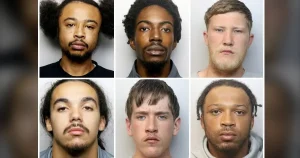
The legal process that followed was long and painstaking, culminating in a four-month trial at Loughborough Crown Court. Six men, all from Derby, were eventually convicted for their roles in Dale’s death. Jayden Mannion-Roberts, 26, was found guilty of murder, the most serious verdict, meaning the jury concluded that he was directly responsible for the killing and intended to end Dale’s life. The other five men—Keenan Hamblett, 27, Ki Grant-Finlayson, 23, Kayin Holmes, 25, Kelci Thompson, 19, and Shaylon McCalla, 27—were convicted of manslaughter, a verdict that acknowledges their involvement in the attack but perhaps with some nuance regarding their exact intent or participation. In a development that might seem surprising to outsiders, Carlus Grant-Finlayson, 18, was found not guilty of the murder charge he had previously faced. For the Martin family, these verdicts bring a complex mix of emotions: relief that someone will be held accountable, but also profound grief that no verdict can bring Dale back. The trial would have forced them to relive the horror of that night, watching CCTV footage of their loved one being slaughtered, hearing the frightened shouts of “kill him, kill him,” and sitting in the same room as the men who took his life. Their composure throughout such an ordeal is nothing short of remarkable. The men will be sentenced on October 1 at the same court, and the family will have to wait once more to see the final chapter of this dreadful story unfold. The verdicts send a clear message that such violence will not be tolerated, but for a mother who has lost her child, for siblings who have lost a brother, justice can never feel complete. It is not a victory; it is simply the closest thing to accountability that a flawed system can offer.
Detective Sergeant Chris Wright of Derbyshire Police spoke after the convictions, and his words captured the grim reality of what happened. He described Dale’s death as a “brutal, sustained, and planned attack,” emphasizing that the men “set out that night, armed with knives and with the intent to kill Dale.” Those words are powerful, because they strip away any suggestion that this was a spontaneous fight or a tragic accident. The group left their homes with weapons, they tracked down their victim, and they carried out a coordinated ambush with one purpose in mind. The detective also highlighted the chilling detail that the words “kill him, kill him” were shouted at the scene, making it clear that this was not just about hurting Dale, but about ensuring he did not survive. He noted that Dale’s family now know who is responsible, and while nothing will take away the trauma of losing a son, a brother and a friend in such a way, they will see those responsible face the consequences of their actions. That is small comfort, perhaps, but it matters. It matters that the state stands with the victim and his family, and that the men who killed him will not walk free. It matters that the community can see that the law still has teeth, even when faced with the brazen violence of gang culture. But the detective’s words also carry a weight of sorrow, a recognition that no conviction can undo the damage. A family has been permanently broken, and a young man is gone forever. The justice system can do many things, but it cannot resurrect the dead.
This case is a stark reminder of the senselessness of gang violence that continues to plague communities across Britain. The motive was described as a “tit for tat” row between rival groups, a phrase that sounds almost too flimsy to explain such savagery. These weren’t hardened criminals with a sophisticated plan for profit or power; they were young men, many barely out of their teens, who reached for weapons and chose to kill over what was, at its core, a petty feud. The images of the group on electric bikes, scouting the streets in balaclavas, are a disturbing sight, but perhaps even more disturbing is the ordinariness of it all. They were not professional hitmen; they were ordinary people who made a catastrophic choice to let hatred and pride override their humanity. Kelci Thompson, the youngest convicted, was only 19 years old. That is still a teenager, someone old enough to know right from wrong, but young enough that their life is also being defined by this terrible act. The ripple effects of the murder extend beyond Dale’s immediate family to the families of the accused, who must now grapple with the reality that their loved ones are killers. It extends to the witnesses, the first responders, the jurors who spent months absorbing the evidence, and the police officers who had to piece together the horror of that night. And it extends to the wider community in Derby, where parents will worry a little more, and young people will see that a disagreement can turn into a funeral. There are no winners in this story, only layers of loss and tragedy. The challenge for society is to find ways to intervene before the anger turns into an ambush, before the threats become a killing, and before someone else becomes another name on a memorial.
As October 1 approaches, the Martin family will face yet another difficult day when the men are sentenced. For them, no sentence will ever feel long enough, no punishment will ever match the crime. But there is a quiet and painful dignity in the way they have carried themselves through this ordeal. They have placed their faith in the legal process, and that process has delivered a measure of justice. The men who killed Dale will go to prison, and for a long time they will have to live with the consequences of their actions. They will lose their freedom, their futures, and their reputations. They will be known as the men who killed a 21-year-old in a street ambush. Dale, meanwhile, will be remembered not for how he died but for how he lived, by the people who loved him and the moments they shared with him. It is a bitter irony that the same night that ended his life also cemented his story in the public consciousness, a cautionary tale about the devastating cost of violence. The CCTV footage will be shown in classrooms and training sessions for years to come, not to shock, but to educate young people about where their choices can lead. If even one person watches it and decides to put down a knife, to walk away from a feud, to choose life over revenge, then Dale’s death will have meant something. That is not to diminish the tragedy, but to find a sliver of purpose in the darkness. The family will never get Dale back, and no apology, no prison sentence, no amount of reflection will change that. But they can take some small comfort in knowing that those responsible have been identified, tried, and convicted, and that the world now knows the truth of what happened on Stenson Road. Justice, imperfect and incomplete as it always is, has been done. And Dale Martin will not be forgotten.