

The Hidden Epidemic: How Online Misogyny Is Silencing Women and Endangering Lives
In an era where our digital and physical lives have become inseparable, a disturbing truth has emerged from the shadows of our social media feeds. A groundbreaking report from Refuge, the UK’s largest domestic abuse charity, alongside the End Violence Against Women Coalition, has uncovered a chilling reality: social media algorithms are actively normalizing violence against women and girls, with one in three women experiencing some form of online abuse every single day. The statistics paint a harrowing picture—36% of women have encountered online violence, and this figure skyrockets to 47% for young women aged 16 to 24. Even more alarming, a fifth of these women report encountering misogynistic content nearly every time they log onto their platforms, content that is deliberately amplified by algorithms designed to maximize advertising revenue rather than protect users. This isn’t merely an online inconvenience; it’s a public health crisis with devastating real-world consequences, leaving victims grappling with anxiety, panic attacks, and in the most tragic cases, suicidal thoughts.
The human cost of this digital violence extends far beyond hurt feelings or temporary discomfort. The report reveals that 7% of women who experienced online violence felt suicidal, a figure that more than doubles to 15% among younger women aged 16 to 24. Gemma Sherrington, CEO of Refuge, didn’t mince words when she declared that these findings “are reflective of a system that has continued to prioritise profits over safety, leaving women to pay the price.” Behind these statistics are real women like Jodie, whose story exemplifies the nightmare that unfolds when digital abuse goes unchecked. In January 2021, Jodie received an anonymous email containing intimate images of herself that had been shared online, along with her personal information and home address. Weeks later, she discovered explicit deepfakes of herself circulating on an online forum. The unthinkable betrayal came when she learned the perpetrator was her male best friend. When she sought justice from the police, she was told there was “nothing they could do,” forcing her to become her own investigator, tracker, and advocate while grappling with the trauma of having her life dismantled by someone she trusted.
The escalation of technology-enabled abuse represents a terrifying new frontier in violence against women, one that our legal and social systems are woefully unprepared to address. Nearly one in fifty women reported having AI-generated intimate images of themselves shared without consent, with 72% identifying the perpetrator as male. While strangers accounted for 53% of cases, a deeply troubling pattern emerged: current or former partners and friends or relatives were each responsible in roughly a fifth of cases, revealing that the threat often comes from those closest to us. Jodie’s experience with the criminal justice system exposes the systemic failures that compound survivor trauma. After painstakingly gathering evidence herself, contacting forums and porn sites directly to have the material removed, she was told the creation of sexually explicit deepfakes hadn’t broken any laws. “Despite the threats and risks I was facing, I did not have a liaison officer, and was told I was unable to access an Independent Sexual Violence Adviser because the abuse was not considered sexually motivated,” she explained. Her successful campaign with EVAW helped make non-consensual sexually explicit deepfakes a crime, yet 66% of women remain concerned about AI’s role in enabling violence against women.
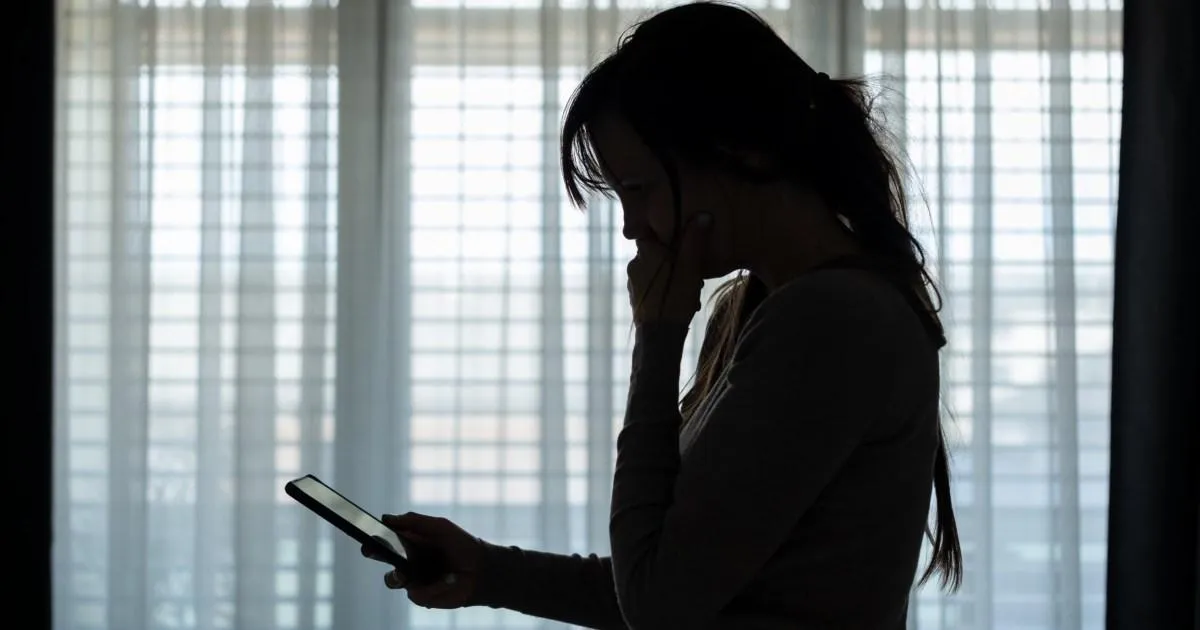
The psychological toll of this digital onslaught cannot be overstated, as victims describe a world where the boundaries between online and offline harm have completely collapsed. Jodie’s experience left her with PTSD symptoms, depression, and the exhausting burden of having to “carry into every part of my life, including my relationships, work and everyday interactions.” The report shows that 40% of those who experienced online VAWG suffered anxiety, while one in seven women have completely left platforms as a direct result of abuse, and nearly a quarter have reduced their online presence. Dr. Sophie Nightingale, who researches the psychological impacts of online VAWG, explains that the constant threat creates “feelings of embarrassment, shame and guilt that should never actually be attributed to the victim.” The unique horror of image-based abuse lies in its permanence—survivors live in constant fear of when their images might resurface, questioning whether they’ll ever truly escape the abuse. This fear extends beyond the individual, as victims like DJ and author Ashley James face threats not only against themselves but against their children, with rape threats now being directed at her three-year-old daughter through direct messages.
Perhaps the most insidious aspect of this crisis is how tech companies have become complicit in the normalisation of misogyny, creating algorithms that actively push women toward abuse and amplify harmful content. Ashley James, who has faced horrific graphic sexual videos, sexualised insults, and escalating threats since 2012, notes that her content often “ends up on the wrong side of the algorithm, being pushed towards [people who support] the manosphere.” Dr. Nightingale warns that we’re witnessing “the growth of misogynistic views and social, cultural norms,” with young children growing up believing this behavior is normal and acceptable. The report’s findings reveal a devastating pattern of isolation and silence: one in five women didn’t tell anyone about their abuse, less than a third reported it to the platform, and only 12% went to the police. Of those who did report to platforms, over half were unsatisfied with how their cases were handled. The recommendation is clear—the Online Safety Act must be updated, Ofcom’s VAWG guidance must become legally enforceable, and tech companies must be held accountable through a mandatory Safety by Design code of practice that prioritizes user safety over profit margins.
This crisis represents a fundamental failure of our digital infrastructure and legal systems to protect women, but it also reveals the extraordinary resilience of survivors who refuse to be silenced. Despite the devastating personal cost, Jodie channeled her trauma into advocacy that helped change the law, while Ashley continues to use her platform, refusing to let “trolls” drive her away. “We shouldn’t have to choose between having a voice and being safe,” she insists. “No one should be bullied into silence.” The Government has taken some initial steps—making cyberflashing a priority offence under the Online Safety Act and vowing to close legal loopholes around AI chatbots creating deepfake images—but the report demands more urgent and comprehensive action. As Janaya Walker, EVAW’s interim director, declared, “The status quo is untenable.” This isn’t just about online safety; it’s about whether we as a society are willing to confront the systemic misogyny that permeates our digital world and demand better. The line between online and offline harm has collapsed, and until tech companies, policymakers, and law enforcement treat digital violence against women with the seriousness it deserves, women will continue to pay the price with their safety, their mental health, and sometimes their lives.