

The 42-Second Shadow That Changed How Poland Breathes
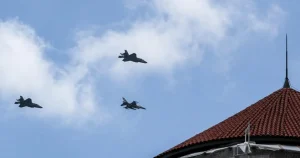
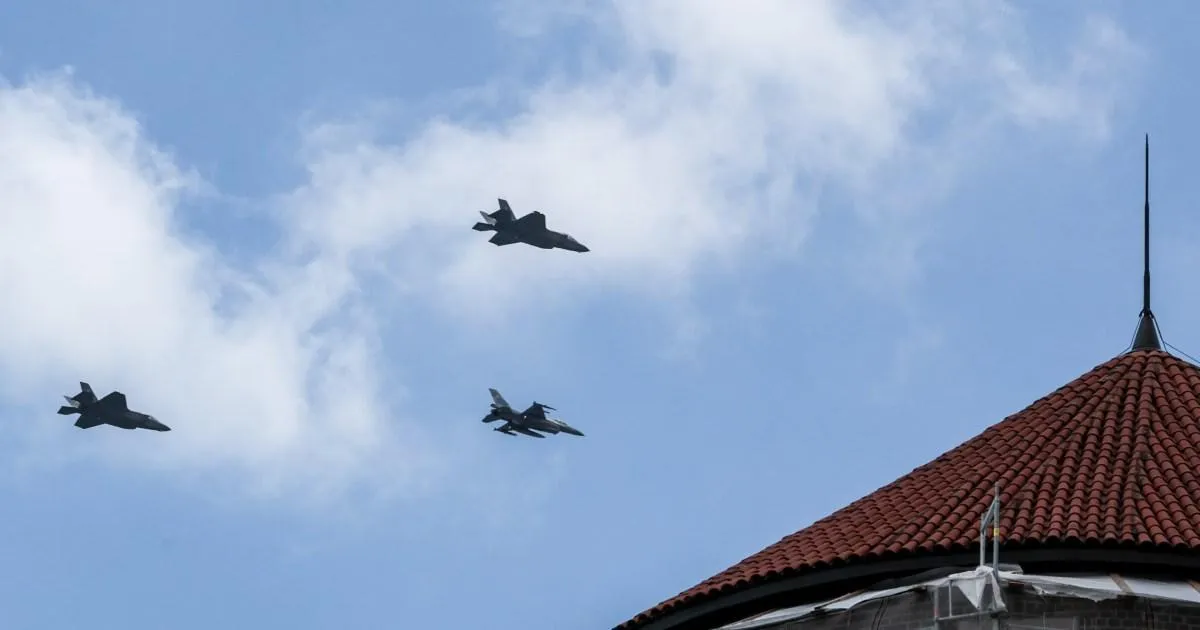
It began like any other morning in the quiet Polish town of Braniewo, where the cobblestones are worn smooth by centuries of footsteps and the air carries the salt of the nearby Baltic Sea. Children were in school, grandparents were queuing for bread, and farmers were checking the sky for rain rather than war. Then, without warning, the radar screens of the Polish Armed Forces flickered with an unwelcome shape. A Russian Mi-8 helicopter, bearing the markings of a nation that has spent years testing the patience and resolve of its neighbours, slipped across the border from the heavily militarised Kaliningrad enclave. It crossed roughly one thousand feet into NATO airspace, a distance that is both trivial and shattering. For forty-two seconds—less time than it takes to boil a kettle, less time than a traffic light takes to cycle through its colours—a foreign military aircraft hovered over Polish soil. In that brief, suspended moment, fighter jets were scrambled, ground-based forces snapped to attention, and an entire defensive apparatus roared into life. The helicopter did not stay long, but it did not need to. It had already delivered its message: that no border is truly calm, no morning is truly innocent, and no civilian can afford to be entirely unprepared. For the people of Braniewo, the incident was not a distant geopolitical abstraction but a shadow passing over their own rooftops. It was the sound of jets tearing through the sky where seagulls normally glide. It was the abrupt, unsettling reminder that their town, so close to the Russian outpost of Kaliningrad, sits on the front line of a tension that Europe has not felt in generations.
Politically, the incursion was far more than a navigational mistake. Poland understood it as a deliberate transgression, a calculated probe aimed at testing the readiness, speed, and coordination of NATO’s defences. The choice of location was no accident. Kaliningrad is a heavily fortified Russian exclave wedged between Poland and Lithuania, bristling with missiles, warships, and electronic warfare systems. It is a pressure point, a finger hovering over the map of Eastern Europe, and the Mi-8’s brief flight was like a shark bumping against the hull of a boat to see how the crew reacts. Polish air defence crews responded exactly as they were trained to do, tracking the aircraft, scrambling fighters, and maintaining alert status until the intruder retreated. But the message was not lost. The Polish Armed Forces acknowledged as much in their official statement, noting that the nature of the incident indicated that Russia was once again testing the readiness of the country’s air defence. For the NATO alliance, the episode was a useful drill; for the residents of Braniewo, it was a sobering warning. The question that hung in the air after the helicopter withdrew was not whether Russia had violated Polish sovereignty—it clearly had—but what would happen the next time, or the time after that. Would the incursion last forty-two seconds or forty-two minutes? Would it be a helicopter or a missile? And would there be enough time to act, or even enough time to flee? These are the questions that have begun to shape everyday life in Poland, where political speeches about deterrence and solidarity are increasingly accompanied by practical advice about evacuation routes and emergency supplies.
At the centre of this new atmosphere of preparedness is Radoslaw Sikorski, Poland’s deputy prime minister and foreign minister, a man whose Oxford-educated polish and measured demeanour might seem an unlikely match for calls to stockpile rice and preserves. But Sikorski, sixty-three years old, has become the face of a very modern kind of patriotism: the kind that involves a well-organised cupboard. In an interview with the newspaper Fakt, he revealed that he has an evacuation backpack ready at home, not because he is paranoid, but because he is realistic. He has stocks of rice, a hand pump for water, and preserves made from fruit grown in his own garden. He has read the safety instructions distributed by the state, and he has thought carefully about where the nearest shelter is located. He even suggested that everyone should know how to apply a battlefield dressing, a skill that, as he noted, is useful even in peacetime. When asked whether ordinary citizens should prepare a bag with emergency provisions, he did not hesitate. He reminded Poles that they have all received safety instructions, and that when the state tells citizens these are unsettled times and it is better to be prepared, it does no harm to listen. His appeal was simple and stark: “That is my appeal—to listen to it.” In a world where political leaders often hedge and echo, Sikorski’s bluntness stands out. He is not predicting that war will come tomorrow, but he is also not pretending that it cannot come at all. Intelligence reports have suggested that Vladimir Putin could strike a Western state this year, and while such reports are inevitably uncertain, Sikorski seems determined to model the behaviour he wants his fellow citizens to adopt. He is not a survivalist fanatic living on the edge of society; he is a senior statesman tending his garden, canning fruit, and making sure his family would know what to do if the sirens ever sounded. There is something almost pastoral about the image, yet it carries the weight of a nation that has been invaded many times before and is determined not to be caught unaware again.
The broader message from Warsaw is that preparedness is not panic, and vigilance is not despair. In the wake of the helicopter incursion, the Polish Armed Forces issued a carefully worded statement that sought to reassure the public while also acknowledging the gravity of the situation. The statement explained that the aircraft’s flight had been tracked by radar systems, that fighter jets had been scrambled, and that ground-based forces and assets had remained on alert. It described the incident as evidence that Russia is once again testing the readiness of Poland’s air defence, and it affirmed that Polish crews are conducting round-the-clock surveillance, staying in a constant state of readiness to secure the nation’s airspace. For many Poles, this official reassurances are welcome, but they are also reminders of a vulnerability that cannot be completely erased by radar systems or jet fighters. The human dimension of preparedness has become a recurring theme in public discourse, with officials encouraging citizens to think about what they would do in an emergency. Would they know where to go if the trains stopped running and the roads were jammed? Would they have enough water for their children? Would they have the phone numbers of their relatives written down on paper, in case the mobile networks failed? These are not glamorous questions, but they are practical ones, and they have moved from the margins of survivalist forums into the mainstream of Polish life. There is a strange intimacy to this kind of readiness: it turns abstract threats into checklists, and geopolitical anxieties into the reassuring weight of a backpack stored by the front door. It also creates a sense of solidarity, a shared understanding that in a dangerous world, the people who take care of themselves are also taking care of their communities. When a foreign minister talks about his home-made preserves, he is not just offering a practical tip; he is saying that no one is above the duty to be ready, and no one is too important to know where the nearest shelter is.
Poland is not alone in this shift. In March of this year, the European Union urged its nearly four hundred and fifty million citizens to prepare for potential emergencies—whether war or natural disaster—by assembling what it called “72-hour survival kits.” The recommendation was unprecedented in its scope and frankness. Brussels was effectively telling ordinary Europeans to set aside a bag containing water, food, medications, important documents, a flashlight, a radio, and enough supplies to last three days. The advice was framed not as an apocalyptic prophecy but as a sensible precaution, the kind of thing one might do before a long journey or a severe storm. Yet for many, the very fact that it came from the European Union, an institution historically devoted to peace and prosperity, made it all the more striking. It suggested that the unthinkable had become thinkable, that the idea of war on European soil was no longer the stuff of history books and film reels. Across the continent, households have begun to respond in ways both small and significant. Some have bought extra tins of soup and bottled water. Others have sat down with their families and discussed meeting points, escape routes, and how to stay in touch if the internet goes down. In countries like Finland and Sweden, which have lived alongside Russia for centuries, such preparedness has long been part of the national character. But in Western Europe, where peace and prosperity have been taken for granted for decades, the message has landed with a jolt. The survival kit has become a symbol of a new European consciousness, one that acknowledges that stability cannot be assumed and that the future, while hopeful, must also be planned for. It is a strange mix of bureaucracy and human instinct, of official guidelines and personal improvisation, and it has turned the simple act of packing a bag into an act of civic responsibility.
In the end, the story of the Russian Mi-8 helicopter and the Polish minister’s evacuation backpack is not really about aircraft or geopolitics. It is about how ordinary people respond to the possibility of extraordinary events. For the residents of Braniewo, the incursion was a reminder that their town is not just a postcard of medieval churches and red-tiled roofs but also a potential flashpoint in a larger conflict. For Sikorski, the decision to stockpile rice and preserves is a way of asserting agency in the face of forces that no individual can control. And for Europe as a whole, the move toward preparedness represents a shift in collective psychology, away from the comfortable assumption that peace will always prevail and toward a more cautious, resilient approach to the future. There is no glory in a hand pump or a can of beans, but there is dignity in the act of being ready. There is no thrill in knowing how to apply a dressing, but there is power in the knowledge that one could help a neighbour in a moment of crisis. The helicopter has returned to its base, and the jets have landed, and the radar screens have gone quiet again. But the lesson of those forty-two seconds remains. It is a lesson about the fragility of peace and the strength of preparation. It is a lesson about the importance of listening to the state’s safety instructions without losing one’s own common sense. And it is a lesson that a garden can yield not only fruit but also a profound sense of self-reliance. As Sikorski’s preserves sit on the shelf, and as the emergency backpack waits by the door, the people of Poland are learning to live with a new reality. They are not cowering in fear, but they are also not closing their eyes. They are watering their gardens, checking their stocks, and looking up at the sky with a slightly sharper awareness. In that way, they are transforming anxiety into readiness, and readiness into a quiet kind of hope. The future remains uncertain, but the human spirit remains adaptable, and the simple act of preparing, of thinking ahead, of caring for one another, is itself a form of resistance. So the rice is stored, the pump is ready, and the survival kits are packed. Whatever comes next, Europe is a little more prepared than it was before.