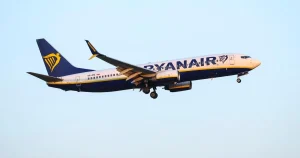

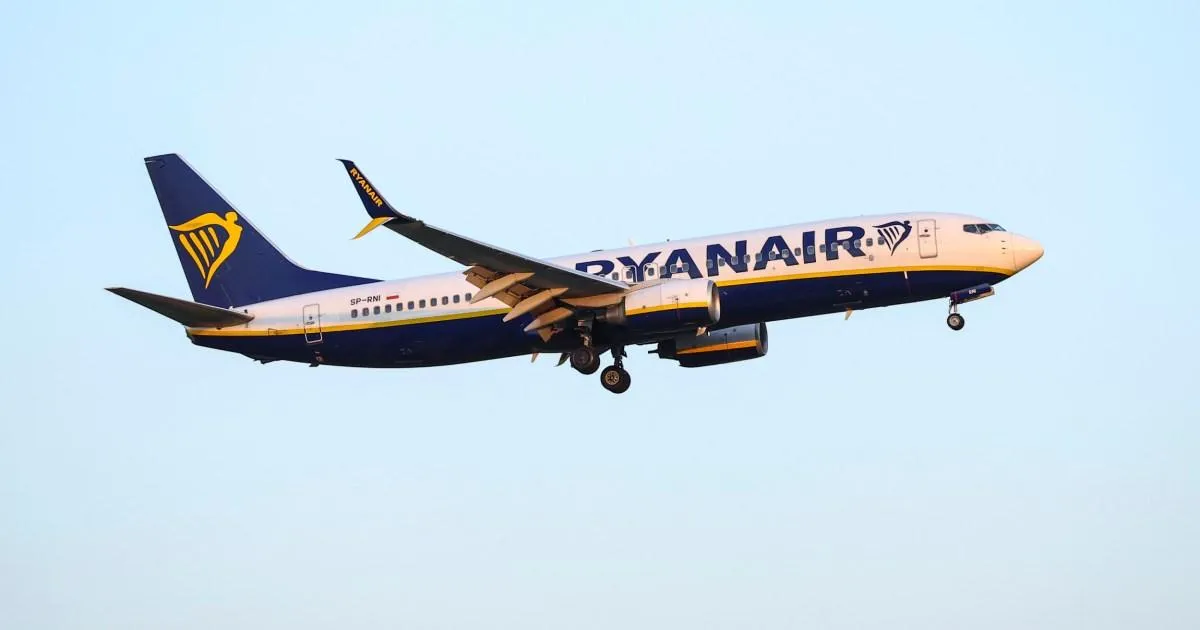
At first glance, it was exactly the kind of scene that plays out hundreds of times a night in European air travel. A Ryanair Boeing 737, flight FR7073, stood on the Porto apron in the late September darkness, ready for a short hop to Dublin. Passengers filed aboard carrying duty-free bags and the quiet weariness of travel: a cluster of Portuguese students going to visit friends, business travellers checking their phones, families hauling strollers through the narrow aisle. The cabin smelled of recycled air, sanitising wipes and cheap coffee. Everyone did the familiar arithmetic of low-cost flying: find seat, stow bag, buckle belt, and hope for an uneventful flight. The runway lights glowed outside the windows; the engines hummed their pre-take-off scale. Then, among them, a 48-year-old Brazilian woman sat perhaps quietly, perhaps with her hands folded, perhaps watching the window as if expecting to see someone out there. We don’t know her name; reports would later describe her only as “Brazilian” and 48. If anyone noticed her, they probably thought nothing of her. She was not the kind of passenger who attracts attention: no loud voice, no stumbling, no anger. She simply waited until the flight attendant passed, then held out some sheets of paper. The attendant took them, perhaps expecting a duty-free request or a complaint about a broken seatbelt. Instead, the words on the page told a different story: she needed him to give them to the pilot; she said three people were following her. In that single gesture, the ordinary fell away, and the routine flight became something else entirely.
What happened next followed a script written long ago by regulators and aviation security experts. The flight attendant did not argue or reassure him; he didn’t know how. He took the sheets of paper forward to the flight deck. In the cockpit, the captain read them, and in that moment the calculus of every future decision changed. A passenger believed she was being followed; whether it was true or not was not the captain’s to decide. His duty was to protect the machine and the two hundred souls inside it. He radioed air traffic control, requested a return to Porto, and—according to Portuguese press reports—set the aircraft’s transponder to the squawk code used for unlawful interference, a signal traditionally associated with hijacking or cockpit intrusion. To air traffic controllers on the ground, that code is impossible to ignore: it turns the aeroplane into a moving emergency, a blip that overrides every other concern on the radar. For passengers, though, there was no such clarity. The plane had been climbing normally into the night; then, without explanation, it began to turn. The seatbelt sign pinged on. The cabin crew, trained to reveal nothing, moved through the aisle with studied calm that was itself a clue. A few passengers looked up from their phones; others kept their headphones in, preferring to believe this was a technical deviation. But every single one of them, perhaps somewhere in their gut, knew something was wrong. There is a particular silence that descends on an aircraft when it reverses course: not the silence of panic but of held breath. Questions moved through the cabin in whispers. Why are we going back? Is someone sick? Is there a bomb? No one asked the woman with the sheets of paper, and she did not volunteer. She sat, reportedly calm, as the plane descended toward Porto and the familiar runway lights grew from pinpricks to a harsh, utilitarian glare.
Once the 737 touched back down in Porto, the unfinished flight became a scene of procedure. The aircraft taxied to an area away from the ordinary gates; police and local authorities boarded, identified one passenger and removed her from the aircraft. The 48-year-old Brazilian disappeared into the terminal sandwich by uniforms. What exactly happened after that depends on whom you believe. Portuguese newspaper Correio da Manha reported that she was identified by the authorities “without police verifying her allegations,” and then returned to the aircraft—a version that would mean the authorities treated her as a frightened woman rather than a threat, and that she may have eventually completed her journey. Other Portuguese media told it differently: they said she had forced the plane to turn back through “disorderly behaviour” and that she was escorted out of the airport by police. Some reports added that the pilot had to send the squawk code indicating unlawful interference, implying a more serious event than a nervous note. The contradictions are not necessarily malicious; they are the fog of a night when everyone involved was following their own instructions and filing their own paperwork. What the airline would later call “a false security report” had to be processed by dozens of people whose jobs are not to philosophise but to categorise. Is someone a victim or a threat? A witness or a problem? A passenger or a detainee? The answer, in this case, may have changed several times between landing and take-off. In one version, the woman returned to the plane and sat back in her seat among strangers who now knew her fear. In another, she was walked out into the night, her bags perhaps still in the hold. Either way, the question at the centre of her note—three people following her—was never resolved in public. The police identified her; they did not, as far as reports show, verify or deny her story. She was simply processed, and then the plane was processed, and then, with a two-hour-and-thirty-three-minute scar on the schedule, it was cleared to fly again.
Ryanair’s public position was brisk. A spokesperson told Metro: “‘This flight from Porto to Dublin (22 Sep) returned to Porto shortly after take-off due to a false security report, which was quickly resolved before the flight continued to Dublin following a 2hr 33mins delay.’” The phrase ‘quickly resolved’ sits oddly next to a delay of two and a half hours, but in aviation terms it means exactly that: no threat was found, no one was charged, and the aircraft was free to proceed. The plane eventually lifted off from Porto again just before 1:30 a.m., a red-eye with a restart, and landed in Dublin at about 3:15 a.m. local time—more than two hours behind schedule, with passengers stumbling out into an airport that had mostly closed for the night. The destination was no longer a fresh morning, but a sort of greyscale limbo: phones to charge, hotel shuttles to find, work emails to postpone. The story might have ended there. But it is worth pausing on what caused all this. The woman did not set off to disrupt a flight; she set off to Dublin. Sometime between boarding and the climb out of Porto, her sense of safety collapsed. She reached out with a sheet of paper, and in doing so triggered an entire security apparatus designed for worst cases. This is not really a story about Ryanair, or even about aviation; it is a story about what happens when fear enters a system that was never built to comfort, only to protect. A cockpit is just a few feet away from the cabin of a crowded aeroplane, but it is sealed by layers of training, bulletproof doors and legal liability. A pilot who ignores a note like that and the passenger turns out to be right does not get a second chance. So pilots do not ignore. They turn around, they squawk, they sacrifice schedules to worst-case thinking. That asymmetry—zero tolerance for being wrong—is why a single folded note can stop a plane in its tracks. The security state is often criticised for overreaction, but overreaction is its entire philosophy: it would rather inconvenience two hundred people than bury one
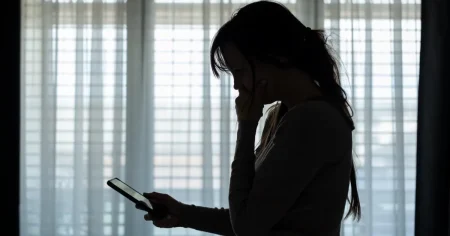
But what about the woman herself? In the rush to identify risk, protect the flight, and move on, it is easy to forget that at the centre of the “false security report” was a human being who believed, at that moment, that she was in danger. She was 48, Brazilian, travelling alone or perhaps not; reports do not say. We do not know why she was going to Dublin—work, family, escape. We do not know the shape of the three people she said were following her: whether they were strangers on the streets of Porto, ex-lovers, voices in her head. All we know is that she wrote them down, handed paper to a flight attendant, and asked him to make the pilot see. There is an eloquence to that act. She did not shout; she was not violent. She tried to make herself legible: here is what I believe, please make someone in charge believe it too. For a person who feels pursued, being taken seriously is sometimes the whole battle. And for a few minutes, she was taken seriously—seriously enough to turn an aeroplane around. That is simultaneously a victory and a defeat. The system took her seriously as a risk, but perhaps not as a person. It did not ask her if she was okay; it asked whether she was safe to fly with. It did not offer protection from three mysterious followers; it offered procedure. It is impossible to know whether what she said was true. It is entirely possible she was suffering from exhaustion, psychosis, a panic attack fed by travel adrenaline, or some private grief that had taken shape as pursuers. It is also possible she was exactly right—that three people were following her, and that getting off the plane and facing police was the bravest thing she did all day. The reports refer to her story as “allegations” and to her behaviour as “disorderly”—words that presume falsehood. But the human capacity for fear doesn’t need to be externally true to be internally real. Her sheets of paper were real. Her decision to hand them over was real. If she was wrong about three strangers, she was still not a fraud; she was someone who needed help and did not know another way to ask for it. The delay her action caused was not malice; it was misery. There is a difference
In the end, the story of FR7073 becomes a small parable about the age we live in. Every security incident, no matter how false, leaves a trace:a delayed flight, a police report, an anxious passenger, a cabin crew member who has to hand a stranger’s fear to the captain and wonder later whether he did enough. For the remaining passengers, the night become a tale they told at breakfast: “You won’t believe what happened on my flight… A woman handed a note saying three people were following her, and they turned the plane around.” The retelling would smooth over fear, emphasise absurdity, maybe make everyone laugh. But some passengers—those sitting near her, those who saw her face as the plane turned—may remember that no one on board knew whether the note was delusion or danger until after it was too late to act on either. And perhaps behind that memory is an uncomfortable question:in a world that has learned to treat every fear as a threat, what happens to fear itself? It no longer gets to be a conversation; it becomes a signal. A note passed to a flight attendant is read not as a cry for connection but as data for threat assessment. The plane turns around; authorities process; airline releases a statement. All correct, all rational, all oriented around safety. But somewhere in the gap between the human cry and the institutional response, something quietly gets lost—the possibility of simply sitting next to someone, holding their hand, and saying,“We’ll watch the door together.” Aviation security cannot do that. It cannot follow three shadows. It can only turn the plane around. The woman’s three pursuers, real or imagined, were not found. The flight did not get to its destination on time. The passengers did not get their sleep. The airline incurred the cost of a two-hour-and-thirty-three-minute delay. And the woman herself, by one account, got back on the same plane; by another, was escorted away into the night. Neither ending is the one anyone would choose for her. The Boeing 737 eventually reached Dublin, landing in the darkest early hours at around 3:15 a.m. Everyone aboard walked into the arrivals hall with that strange, exhausted relief of being finally on solid ground. Another day, another flight, another system successfully protected. But if you look hard at the story, just behind the headline, you can still see her—a 48-year-old Brazilian woman, alone with the belief that three people are following her, living in a world where even that belief could stop a plane, but could not get her help.