



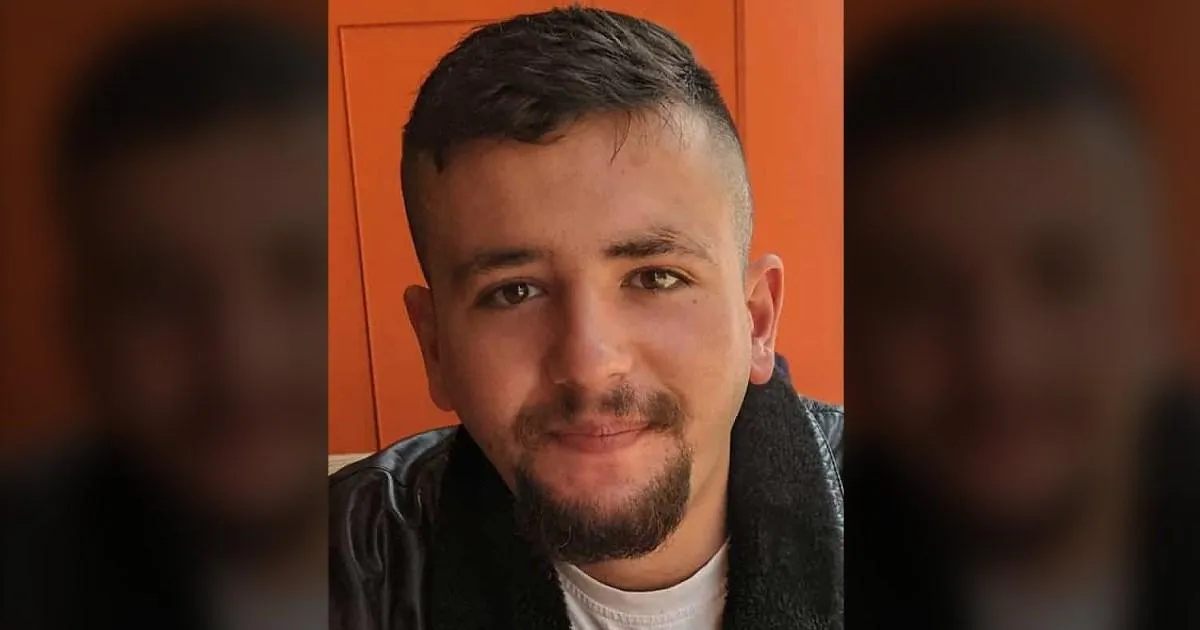
Alfie Goddard was the kind of young man who made the people around him smile. He was remembered as kind, funny, and deeply sensitive — someone who faced enormous challenges with a resilience that those who loved him admired. But on October 28, 2025, Alfie’s life came to a sudden and devastating end. The 25-year-old, who lived in supported accommodation in Colchester, Essex, had bought caffeine capsules online and taken them earlier that day. What followed was a terrifying chain of events: a caffeine overdose that triggered a cardiac arrest, a frantic emergency response, and ultimately a loss that left his family and friends reeling. At Essex Coroner’s Court, coroner Lincoln Brookes ruled his death as accidental, confirming what those closest to him already believed — that Alfie did not set out to end his life. He died because of the toxic effects of a legal substance, purchased with ease from the internet, that he likely did not understand could be so lethal. His death is a reminder that the everyday products we consume without a second thought can carry hidden and fatal dangers, especially for vulnerable people navigating complex mental health conditions.
The day Alfie died was chaotic and heartbreaking in ways that are hard to imagine. He was in the grip of a psychotic episode, a terrifying state of confusion and distress. At some point, he tried to call 999 for help, but he could not speak clearly enough to communicate what was happening to him. Instead, staff members at International House — the supported living complex where Alfie lived — were the ones who made the emergency call. When help arrived, Alfie was found in a horrifying condition: walking barefoot, delirious, and vomiting blood in the street. Paramedics and police attempted to restrain him, likely because he was in an uncontrollable state, and rushed him to hospital. Despite their efforts, Alfie suffered a cardiac arrest and died. A later search of his room by police uncovered an array of caffeine tablets, and a toxicology report found that his body contained a concentration of caffeine “well within the fatality bracket” associated with caffeine-related deaths. Inspector Tom Bastendorff of Essex Police captured the tragic simplicity of what happened: Alfie took the capsules, and the overdose set off the erratic behavior that led to his collapse. It is a bitter truth that a substance as ordinary as caffeine — found in coffee, tea, and energy drinks — could take a young man’s life so brutally and so quickly.
Alfie’s vulnerabilities were central to this tragedy. He lived with a combination of conditions that made him especially susceptible to harmful behaviors: attention deficit hyperactivity disorder (ADHD), drug-induced psychosis, paranoid schizophrenia, and autism. Against this background, he also had a history of polysubstance misuse. Supported accommodation was meant to be a safety net for him, a place where he could receive care and structure. Yet even in that environment, online shopping gave him unfettered access to products that would feed his compulsions. His sister, Daisy, described Alfie as having an “addictive personality” and said he was unaware of the harmful effects caffeine could have. His autism and ADHD, she explained, made him vulnerable to substance misuse — not just illegal drugs, but legal supplements and health products as well. He would order products in bulk, become fixated on them, and consume them despite his family’s repeated attempts to moderate his intake. At one point, the hospital trust involved in his care admitted it had been unaware of the quantities and types of caffeine he was buying. This gap in awareness is profoundly troubling. Alfie was not living in isolation; he was in a supported setting with staff and healthcare professionals around him. Yet the dangerous pattern of his purchases went unnoticed until it was far too late.
At the inquest, the full picture of Alfie’s final day and the circumstances surrounding his death came into focus. Coroner Lincoln Brookes concluded that Alfie had inadvertently died of caffeine toxicity after taking a large number of caffeine tablets at his home earlier that day. He noted Alfie’s long-standing diagnoses — paranoid schizophrenia, autism spectrum disorder, and ADHD — against a background of polysubstance misuse. The coroner’s ruling of accidental death is an important legal determination, but it does little to ease the sorrow of a family left without their beloved son and brother. Daisy remembered Alfie as “kind and sensitive” and spoke of missing him every day. She described a man who faced complex mental health challenges yet remained resilient and truly one of a kind. There is a profound grief in her words, a sense of a life cut short not by malice or self-destruction, but by a combination of vulnerability, accessibility, and a lack of awareness about the dangers of a substance that is both legal and widely available. The inquest highlighted the need for better oversight, not just for people like Alfie, but for the broader public who may assume that anything sold over the internet must be safe.
The broader implications of Alfie’s death extend far beyond his family and friends. His sister was explicit in her warning: caffeine tablets and powders are often sold online without clear labeling, are super-strong, and have questionable origins. Because they are legal, people do not realize how dangerous they are. Alfie’s case is a stark illustration of this. He was not consuming an illegal street drug; he was taking supplements that could be ordered with a few clicks, no prescription, no counseling, no warning. The fact that a young man with schizophrenia, autism, and ADHD could so easily buy bulk caffeine online and consume a fatal amount speaks to a dangerous gap in consumer protection. Caffeine is a stimulant that can cause heart palpitations, seizures, and cardiac arrest in high doses. Yet products sold as dietary supplements often slip through regulatory cracks, with little oversight of their potency or safety. Alfie’s death should be a wake-up call not only for his loved ones and caregivers but for regulators and online retailers. There must be better labeling, stricter limits on the strength of caffeine supplements, and more public education about the real risks of these products. Legal does not mean harmless, and Alfie’s story proves that with heartbreaking clarity.
In the wake of such a tragedy, the focus must remain on the human being behind the headlines. Alfie was not merely a victim of caffeine toxicity; he was a son, a brother, a friend, and a young man who brought joy to those who knew him. International House, the supported living complex where he lived, issued a heartfelt tribute, saying Alfie is greatly missed by everyone who knew himebb. To honor his memory, the staff and residents created a memorial garden where his friends and loved ones can spend time and remember him. It is a lasting tribute, they hoped, that would bring some comfort to all those who continue to feel his loss. For Alfie’s sister Daisy, the grief is raw and ongoing. “We miss him every day,” she said. But she also channeled her pain into a powerful message, hoping that by sharing Alfie’s story, other families might be spared the same heartbreak. His accidental death underscores the dangers of unlabelled caffeine tablets and powders that can be bought easily online — super-strong, questionable in origin, and deadly in the wrong hands. Alfie faced complex mental health challenges throughout his life, but he was resilient, and he was loved. His memory now carries a purpose: to raise awareness, to demand greater safety protections, and to remind us all that even the most innocuous seeming substance can become a tool of tragedy when placed in vulnerable hands. The memorial garden may offer a place of quiet reflection, but Alfie’s true legacy will be the urgent conversation his death has sparked about the hidden dangers of legal products, the need for better mental health support, and the precious, irreplaceable nature of every single life.