



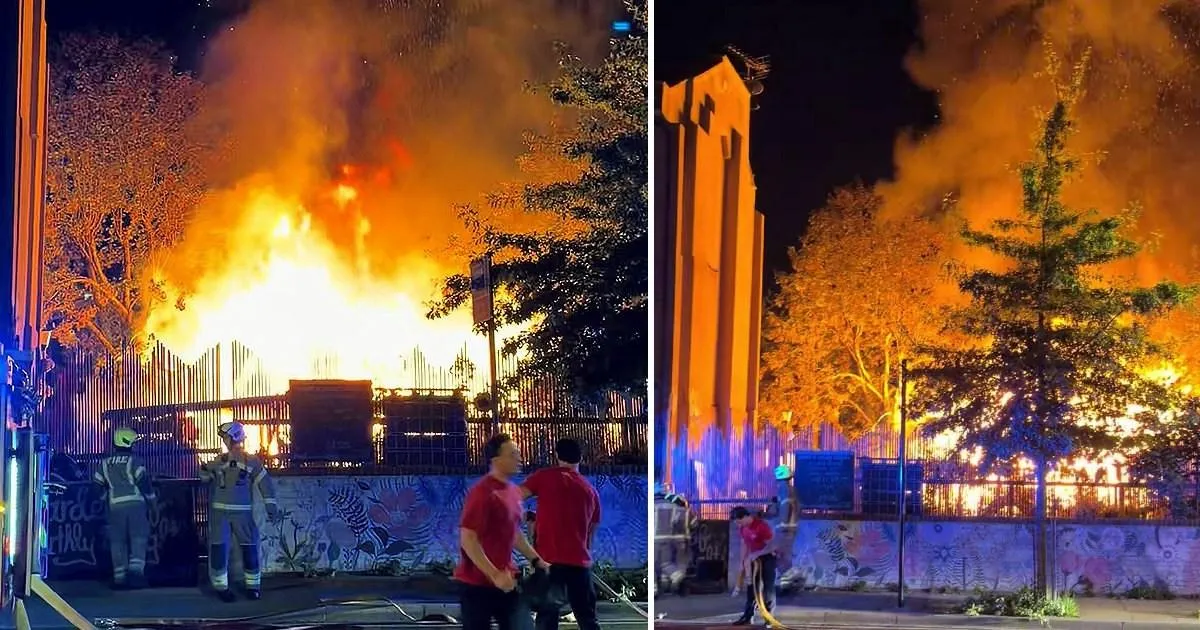
On a cool Wednesday night in Dalston, east London, the usual quiet hum of the neighbourhood was shattered by something far more sinister. The Garden of Earthly Delights, a beloved community garden tucked along Graham Road in Hackney, had become the scene of a fierce and frightening fire. Just after 10pm, residents heard what they described as two loud explosions, followed by thick plumes of smoke and towering flames that leapt into the dark sky. From across the east London nightscape, the orange glow was visible, a haunting beacon of trouble that drew people out of their homes and into the streets. For those who lived beside the garden, the sound of crackling wood and the roar of fire were terrifying enough that emergency services made the decision to evacuate nearby flats. Fire crews arrived with remarkable speed, and although a wooden workshop at the far end of the garden was left as nothing more than a charred and smoking shell, the garden itself was largely spared, thanks to their swift and coordinated efforts. Police also attended the scene, and an investigation was immediately launched to determine what had ignited such a destructive blaze. For the local community, this was not just another building fire. It was an assault on a place that many considered to be a living, breathing heart of their area, a handmade sanctuary built from friendship, hard work, and collective dreaming.
The workshop that went up in flames was much more than a simple shed. It was a project born from hope and crowdfunding less than two years earlier, designed to give local people practical skills that could change their lives. It was staffed by dedicated instructors who went out into the neighbourhood to teach carpentry and tool use, from how to handle a drill to how to build things with their own hands. For many residents, the workshop was a gateway to confidence, creativity, and even employment. One volunteer stood before the smoking ruins, visibly shaken, and tried to put his grief into words. “It’s devastating,” he said. “People have put so much effort in and now this. It’s heartbreaking. The staff go into the community and teach people skills like how to use a drill etc. Who knows how this happened. We will have to fundraiser again.” His voice carried the weight of loss, but also a glimmer of determination, an understanding that the community would need to gather itself once more and begin again. The crowdfunder that originally built the workshop had drawn on the generosity of people who believed in the power of skills, hands-on learning, and the dignity that comes from making and repairing things. Now, with the workshop reduced to ashes, that dream was not entirely dead, but it was wounded, and everyone who had ever swept its floor, sanded a plank, or taught a nervous beginner to hammer a nail felt the pain.
Witnesses painted a vivid and frightening picture of the night. One local resident told reporters that the explosions were unmistakable, like sudden bangs followed by a rush of smoke and shooting flames. “You could see the fire from across east London,” they said. “Everyone loves the garden and there was a kind of recycling workshop that there was a crowd funder for. That has gone up in smoke. It’s such a shame. There was wood everywhere in the garden, maybe that contributed.” The observation about wood scattered across the site felt painfully ironic; the garden was a place that celebrated natural materials, craftsmanship, and the beauty of wooden structures, and yet those same materials had become fuel for the disaster. Another neighbour described the sheer terror of being evacuated from a home right next to the fire. “It was really, really scary,” she said. “The fire was so intense the air was thick with smoke. The firefighters were here very fast. We managed to get back in our flat last night.” Her words captured the dual reality of the evening: the panic and uncertainty of being forced out of your home in the middle of the night, and the immense relief that comes when trained professionals arrive to take control of an uncontrollable situation. The firefighters were brave and effective, working through the thick smoke and intense heat to stop the flames from spreading further. But even as the physical danger passed, the emotional shock lingered, leaving residents to stand in the streets, wrap their arms around themselves, and wonder what would be left in the morning light.
To understand why the fire cut so deeply, one must understand what the Garden of Earthly Delights meant to the people of Hackney. It was created on disused railway land, a forgotten stretch of urban space that had been transformed into something lush and purposeful. In a city where green space is precious and often guarded, this garden was a small miracle. It was not a pristine park with manicured lawns and polite signs; it was a working, living community space where people could grow vegetables, share knowledge, hold conversations, and simply breathe. For many, it was a place of calm in the middle of a crowded and noisy borough, a pocket of slowness where the modern world’s relentless pace could be momentarily forgotten. Sheila Sachs, a 72-year-old resident who lives nearby, stood looking at the damage with a heavy heart. “We are heartbroken,” she said. “It’s such a lovely place to have a bit of calm and the people who run the workshop are lovely. I hope they can rebuild.” Her words echoed the sentiments of dozens of others who had made the garden part of their daily routines, whether by volunteering, taking classes, or simply sitting on a bench and watching a bee move from flower to flower. The garden was never just about plants. It was about connection, about the slow and patient work of nurturing something that did not grow overnight)Skip. And now, after one fiery night, all of that tenderness and effort had been scarred.
The London Fire Brigade provided a detailed account of what happened, and their description was both clinical and sobering. Four fire engines and around twenty-five firefighters were dispatched to Graham Road, with crews arriving from Homerton, Bethnal Green, and Stoke Newington. The first call came in at 22:38, and the firefighters worked quickly to bring the blaze under control, achieving that goal by 23:57. Their statement explained that the fire involved a community garden where a range of allotments and structures had been destroyed by the flames. A shed on the site was also partially damaged. There were no reports of any injuries, which was a relief, but the physical toll was undeniable. After a thorough initial investigation, officials concluded that the fire was accidental, most likely caused by an electrical event in an electricity meter. That small technical detail carried a strange kind of comfort; it meant that this was not an act of malice or arson, but a tragic accident, a spark from everyday infrastructure that somehow found its way into a place built on love and labour. Still, knowing that no one was injured did not erase the sense of violation. The garden had been touched by something brutal and indifferent, and the neat, official language of “structures destroyed” and “shed partially damaged” could never capture the tears, the memories, or the hours of working side by side that had gone into every corner of the space.
Now, in the aftermath, the community is left to pick up the pieces, to hold impromptu meetings, to hug one another, and to talk about what comes next. The volunteer’s quiet resolve to “fundraiser again” feels inevitable, because this is what communities do: they mourn, they gather, they rebuild. The fact that the garden itself survived, even as the workshop did not, offers a thread of hope. The soil remains, the plants remain, and the people remain. There is already talk of another crowdfunding campaign, of encouraging donations, of holding benefit events and spreading the word so that the workshop can rise from its ashes. There is also a new awareness, a shared understanding that electrical safety matters, that old meters need checking, that vulnerable wooden structures need protection. But above all, there is resilience. The Garden of Earthly Delights was created from a disused piece of railway land, transformed by the stubborn faith of local people who believed they could make something beautiful out of neglect. That same faith will be needed againcars, but it has not been extinguished. As the smoke clears and the first morning light dawns over Graham Road, the community is already standing together, looking at the charred remains and daring to imagine what they will build next. The fire took a building, but it did not take the garden. It did not take the bonds between neighbours, the hours of teaching, the laughter, the shared cups of tea, the quiet pride of making something with one’s own hands. Those things will endure, and in time, so will the workshop. The road ahead will require effort, money, and patience, but if there is one thing this garden has always proven, it is that the Earthly Delights are not measured in structures alone. They are measured in spirit, in community, and in the determination to keep growing, no matter what fire or fate may throw in the way.