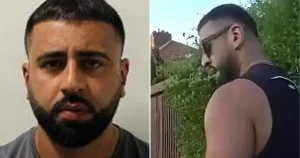

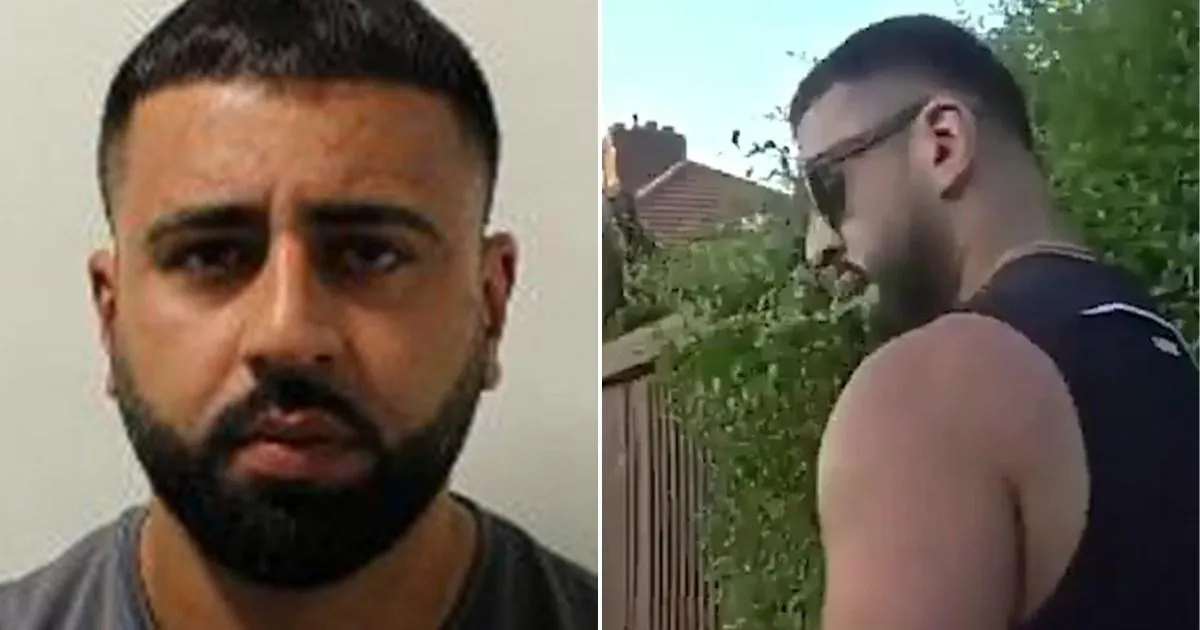
There is a particular kind of horror in discovering that the danger to your child was not a stranger lurking in the dark, but a neighbour looking out from a bedroom window — a man whose daily view included a playground full of children. Zafer Dogan, a 32-year-old from Enfield in north London, became that nightmare for several families. He spent months photographing girls and women in his area as they went about their ordinary lives: walking to school, playing on climbing frames, or simply holding a parent’s hand on the street. Using artificial intelligence software, he then digitally “nudified” many of those photographs, turning innocent images into material for sexual abuse. When he was finally brought to justice at London’s Wood Green Crown Court, he was jailed for two years and four months after pleading guilty to a series of child abuse image offences. But the sentence, for many, has not brought a sense of closure. The case exposed a deeply troubling flaw in the justice system: Dogan was repeatedly granted bail while awaiting sentencing, despite prosecutors’ efforts to keep him in custody. He was allowed to return to his flat overlooking the very playground where he had targeted his victims, forcing at least one family to flee their own home in fear. As the mother of a 13-year-old victim told the court, “I feel like we’re on the run, yet we’re not the sexual offenders.” It was a statement that captured the surreal, cruel reality of a family forced to uproot their lives because the system failed to protect them from a predator who had already admitted his crimes.
The details of Dogan’s offences are chilling in their scale and method. He pleaded guilty at Highbury Magistrates’ Court on 6 August to three counts of making indecent images of a child. Those images included 653 category A images — the most serious classification, involving penetrative sexual activity — as well as 294 category B images and 900 category C images. But that was only part of the picture. He also admitted to two additional counts of making indecent photographs of a child, possessing extreme pornography, possessing a prohibited image of a child, creating purported intimate images of an adult, and obstructing a constable in the execution of their duty. When police arrested him on July 16 this year, Dogan threw his phone into a neighbour’s garden in a desperate attempt to hide the evidence. Police dogs were brought in, and they found the device. Inside, investigators discovered another 1,800 indecent images of children and extreme pornographic material, including content involving bestiality. Perhaps even more disturbing was the way in which Dogan used technology to deepen his abuse. The court heard that he followed unsuspecting women and girls in the surrounding areas and took photographs of them from his bedroom window. He then used artificial intelligence software to remove their clothing. Thirty-three pictures of women were found in this altered state, as well as images of two girls aged just seven and thirteen. The original photographs are believed to have been taken while the victims were simply living their lives — walking, playing, commuting — completely unaware that they were being watched and exploited. Most of the individuals in the images have yet to be identified, and police continue to urge anyone with information or witness accounts to come forward, especially if they saw Dogan filming or taking pictures.
For the victims and their families, the trauma of the crimes has been compounded by the experience of watching Dogan walk free on bail. The mother of the 13-year-old girl told the court she felt like she had been “punched in the gut” when she learned that he had been allowed to return to his home. She described the family’s decision to leave their home as a desperate act of survival, saying she felt like they were on the run even though they were the victims, not the offenders. “Dogan is just living the same life while our lives have been changed forever,” she said. “How can a court put him back so close to his victims?” Her words echoed those of another mother, whose seven-year-old daughter was among the children whose images Dogan had altered. In a statement read to the court by prosecutor Sarah Gabay, the mother said she had been “desperately trying to move” in order to “protect my child from this monster.” She spoke of the unfairness of a situation in which her daughter, an innocent victim, was being forced to change everything because a paedophile had chosen to exploit her. “How is that fair? She’s done nothing wrong.” These are the voices that are too often lost in discussions of criminal justice, and their testimony brought the human cost of Dogan’s crimes into sharp focus. Behind every image, every count on an indictment, every legal technicality, there is a child whose sense of safety has been shattered and a family left to pick up the pieces.
The question of how Dogan was ever granted bail has prompted outrage from senior figures in law enforcement and victim advocacy. London’s victims’ commissioner, Andrea Simon, said the victims and their families were “grossly failed” by a justice system that did not centre victims when bail was approved. “To know that the police and prosecutors opposed bail multiple times, but nevertheless, he was returned to the community, is an indication that the capacity pressures on prisons are not being balanced with the impacts that that’s having on victims’ lives,” she said. Simon warned that the system seemed to be lurching from one crisis to another, with victim safety and rights “put to one side” as the justice system struggles under the weight of its own pressures. Her words were echoed by Metropolitan Police Commissioner Sir Mark Rowley, who described it as “unfathomable” that Dogan had been bailed. Rowley highlighted the absurdity and cruelty of a situation in which a victim and her family found themselves living in close proximity to a man who had admitted targeting them. They were so frightened, he said, that they ultimately felt forced to move to distant temporary accommodation, disrupting their lives and their children’s lives, simply to escape being in the neighbourhood of the offender. A government spokesperson responded by saying the crimes were awful and that thoughts were with the victims and their loved ones, adding that the law is clear that bail should only be used where necessary and proportionate, including to protect victims, witnesses, and the public. They also noted that the government has introduced tough new laws to ban AI tools designed to create child sexual abuse images, target websites that spread them, and prevent this vile material from being created in the first place.
When the case finally reached sentencing at Wood Green Crown Court, the judge did not hold back in describing the severity of what Dogan had done. The images found in his possession were “chilling,” the judge said, noting that the original photographs were taken while the women and girls were “going about their daily business — walking, children playing on climbing frames, or at a local park.” He observed that all of them were completely unaware that Dogan had surreptitiously taken photographs, “no doubt for your sexual pleasure.” In a moment that acknowledged the broader societal duty of the court, the judge declared that he would be “utterly failing my public duty” if he were to allow a suspended sentence. Dogan’s defence lawyer, Joseph Carr, apologised on his client’s behalf to the victims and their families, and said Dogan wanted to express “the sincerity of his remorse and reassurance” that the AI-generated images had not been shared. But the damage, of course, had already been done. In a final twist, the court ordered that Dogan’s family leave the home they had lived in for 30 years; they are expected to move out in the coming days. Metropolitan Police Constable Natalie Scagliarini, who worked on the case, said the force remains committed to protecting women and children and bringing those who seek to exploit them before the courts. She thanked those affected by Dogan’s actions for their bravery, and described the case as “deeply distressing” and Dogan’s conduct as “predatory and dangerous.” Her remarks were a reminder that although the sentencing has concluded, the echoes of this case will be felt for a long time.
This case is more than a single story of one man’s depravity. It is a warning about how quickly emerging technologies can be weaponised to cause harm, and how a justice system under strain can fail the very people it is meant to protect. Dogan used AI not to create something new, but to violate the bodies of children he had secretly observed in his own neighbourhood. He turned everyday spaces into hunting grounds, and ordinary moments into permanent evidence of abuse. That the system allowed him to remain in that neighbourhood, overlooking those same spaces, is a failure that must not be repeated. The response from advocates, police chiefs, and government officials suggests that there is at least a growing recognition of the need for change. AI companies, as Sir Mark Rowley demanded, must do more to prevent their platforms and tools from being used to facilitate sexual offending and harm. The law must continue to evolve to ban the creation and spread of such content. But beyond laws and technology, there is a deeper need to centre victims in the administration of justice. Bail decisions cannot be made in a vacuum, weighing only the rights of the accused and the pressures on prison capacity. They must also weigh the safety and humanity of the people whose lives are forever altered by these crimes. For the families in this case, no sentence will ever fully restore what was taken from them. But their bravery in coming forward, in speaking out, and in demanding to be heard, may help ensure that the next child, and the next family, are not so badly let down. The quiet streets of Enfield may look peaceful again, but the memory of what happened there — and the lesson of how the system failed — should not be allowed to fade.