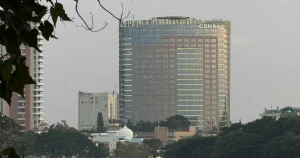


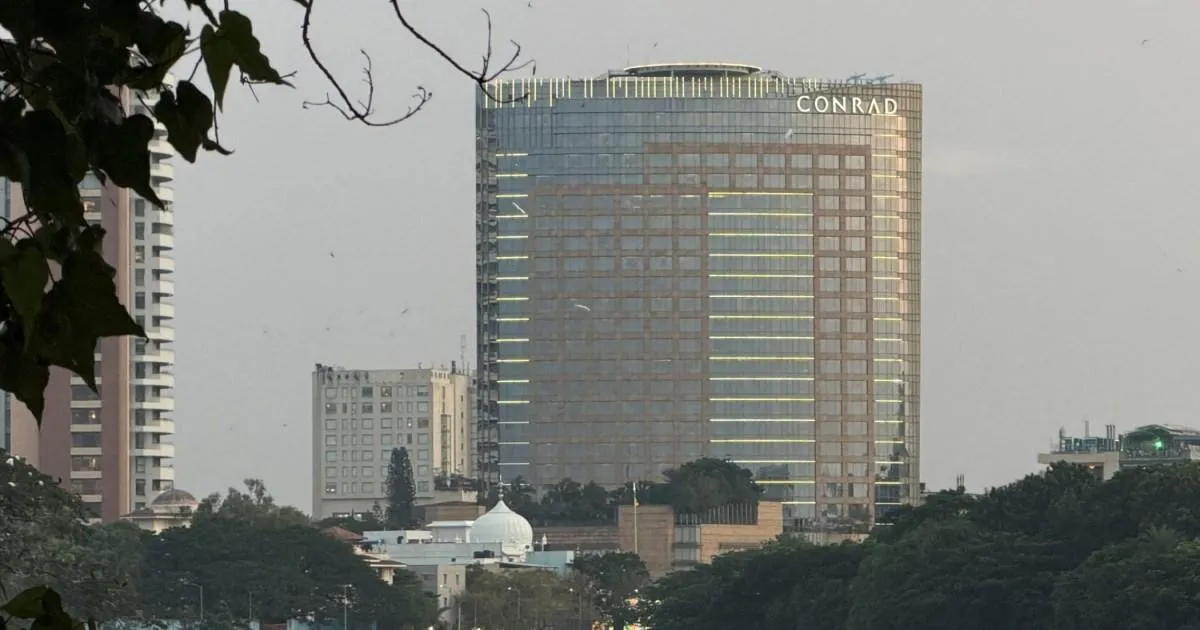
On an otherwise ordinary Friday afternoon, the pool area at the Conrad Hotel in Bengaluru, India, became the scene of a devastating accident that has left two families grieving and a city searching for answers. At around 5:10 pm local time, emergency services were called to the five-star hotel after reports of a suspected electrocution in the swimming pool. Two men were pulled from the water in critical condition, and despite the frantic efforts of hotel staff, lifeguards and paramedics, neither survived. Police have since opened an investigation into the circumstances surrounding the deaths, and the hotel has closed its pool area for the remainder of the month while authorities examine what went wrong. The victims have been identified as Alexander Maximilian Theiss, a 57-year-old German national, and Juraj Horvat, a 45-year-old Slovak national. Theiss, according to reports, was a crew member for the German airline Lufthansa and was believed to be on a layover in the city when the tragedy occurred. Lufthansa later confirmed the death of a crew member in Bengaluru, although it did not immediately provide further details. Horvat, meanwhile, was identified by police as a project manager for IBM. Both men were guests at the hotel, and both were far from home, which has only deepened the sense of shock and sadness surrounding the incident. Two other men were also injured in the same accident, and they are now recovering in hospital after attempting to rescue the victims. The exact sequence of events remains unclear, but early accounts suggest that the men were leaving the pool when they suffered an electric shock, causing them to lose consciousness and drown. The investigation is expected to focus on the hotel’s electrical systems and pool maintenance procedures, and Theiss’s wife has already filed a formal complaint alleging negligence on the part of the hotel management.
Behind the official statements and police reports are two lives that were cut short in the most sudden and unexpected way. Alexander Maximilian Theiss was not merely a statistic or a name in a news article; he was a husband, a colleague and a seasoned aviation professional who had spent his career helping passengers travel safely around the world. As a crew member for Lufthansa, he was accustomed to the rhythms of airports and layovers, the temporary pauses in foreign cities that are part of an airline employee’s life. On this particular stop in Bengaluru, he had no way of knowing that a brief visit to a hotel pool would be his final moments. His wife, who has been left to process an incomprehensible loss, has taken the difficult step of filing a police complaint, insisting that the hotel management was negligent in maintaining the pool and that this negligence cost her husband his life. Juraj Horvat, the other victim, was a 45-year-old Slovak national who worked as a project manager for IBM. He too was a professional, likely accustomed to international travel and the quiet comfort of upscale hotels. He was far from his home and his loved ones when tragedy struck. The two men may not have known each other before that day, but they now share a heartbreaking bond: both died in the same place, at the same time, in a supposed sanctuary of relaxation and safety. Their deaths are a reminder that a hotel pool, often seen as a harmless amenity, can become a site of danger when safety systems fail. The grief of their families, their colleagues and their friends cannot be measured, and the world is left to wonder how such a thing could happen in a five-star establishment.
Among the most painful aspects of this tragedy are the two men who were hurt while trying to help. Mathew Desantis, a 41-year-old hotel guest from the United States, and Rahul Tiwari, a 28-year-old local pool attendant employed by the hotel, both rushed to the scene in an attempt to save the victims. They did not hesitate. They saw other human beings in trouble and they moved toward the danger, not away from it. Desantis, a guest who was presumably on holiday or business travel, put his own safety aside in a moment of crisis. Tiwari, a young man whose job was to watch over the pool and keep guests safe, acted with a courage that goes far beyond any job description. Both men were injured in the incident, reportedly suffering the effects of the same electrical hazard that killed Theiss and Horvat. They were taken to Manipal Hospital for treatment, and both are said to be out of danger. Their recovery is a small mercy in the midst of a terrible event, but it does little to ease the sorrow of what happened. It is worth pausing to think about what they experienced: the shock, the confusion, the sudden knowledge that something invisible and lethal was in the water, and still they stayed. They are not being celebrated as heroes in the way that they should be, but their actions speak to something deeply human: the instinct to save a stranger, even at great personal risk. Their injuries are a physical reminder of how dangerous the situation truly was, and their survival offers a thread of hope in an otherwise dark story.
The precise details of how the electrocution occurred are still under investigation, but the sequence of events described so far is deeply troubling. According to a complaint filed by Theiss’s wife, the men suffered an electric shock while leaving the pool, which caused them to drown. If this account is accurate, it means that the water itself, or the equipment surrounding it, carried a lethal current that should never have been present. Swimming pools are supposed to be carefully maintained, with strict safety standards governing pumps, lights, filters and electrical wiring. Water and electricity are a notoriously deadly combination, and hotels that offer pools to their guests have a responsibility to ensure that every electrical component is properly installed, grounded and inspected. The fact that this happened at a luxury hotel, part of the prestigious Hilton group, has only intensified public concern. Guests pay a premium for comfort and safety; they do not expect to risk their lives by stepping into a pool. Theiss’s wife is seeking accountability, and her legal action will likely put the hotel’s maintenance records under scrutiny. Police are investigating, and experts may be called in to examine the pool’s electrical systems. The timeline of the emergency is also heartbreaking: Theiss died before he could be taken to the hospital, and Horvat died while doctors were trying to revive him. That means that even as first responders worked desperately to save them, the two men slipped away. The knowledge that their deaths might have been preventable makes the tragedy even harder to bear.
The hotel’s response, at least publicly, has been to close the pool area for maintenance for the rest of the month, according to a notice on its website. That is a practical step, but it cannot undo what happened. For the Conrad Hotel, and for the Hilton group as a whole, this incident is a serious reputational blow and, more importantly, a legal and ethical challenge. Hotel guests should be able to trust that the facilities are safe, and when that trust is betrayed, the consequences can be fatal. The closure of the pool suggests that the hotel is at least acknowledging that something was wrong, though it remains to be seen whether the investigation will reveal a systemic failure or a tragic accident. The broader issue is larger than any single hotel, however. Around the world, older buildings, poorly maintained electrical systems and lax safety inspections can create hidden dangers in places that are meant for leisure. A hotel pool is a place where families gather, where children play, where travelers unwind. It should never be a place of death. This incident should serve as a wake-up call for the hospitality industry, reminding hotel owners and operators that safety must always come before profit, and that a single overlooked wire can have devastating consequences. It is also a reminder to travelers that even the most luxurious surroundings are not immune to disaster, and that vigilance is necessary even when you are on vacation.
In the end, this is a story about human beings, not just a story about electrical failure or legal liability. It is about Alexander Maximilian Theiss, a man who dedicated his career to air travel and whose journey ended in an unexpected city far from home. It is about Juraj Horvat, a project manager whose intelligence and professionalism had taken him across borders, only to lose his life in a moment of terrible misfortune. It is about their families, who must now find a way to live without them. It is about Mathew Desantis and Rahul Tiwari, two ordinary men who acted with extraordinary bravery and who will carry the memory of that day for the rest of their lives. And it is about the countless travelers who pass through hotels every day, never imagining that a swimming pool could be a source of danger. As investigations continue and questions are asked, the hope must be that lessons are learned, that safety standards are strengthened, and that no other family has to endure such a loss. The pool at the Conrad Hotel will eventually reopen, perhaps, and life in Bengaluru will go on. But for those who were touched by this tragedy, nothing will ever be the same. In the meantime, the world mourns two men who died too soon, and we remember that behind every headline there are real people, real tears and a grief that words cannot fully capture.