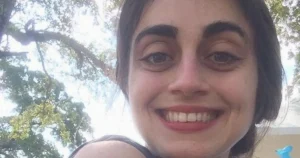


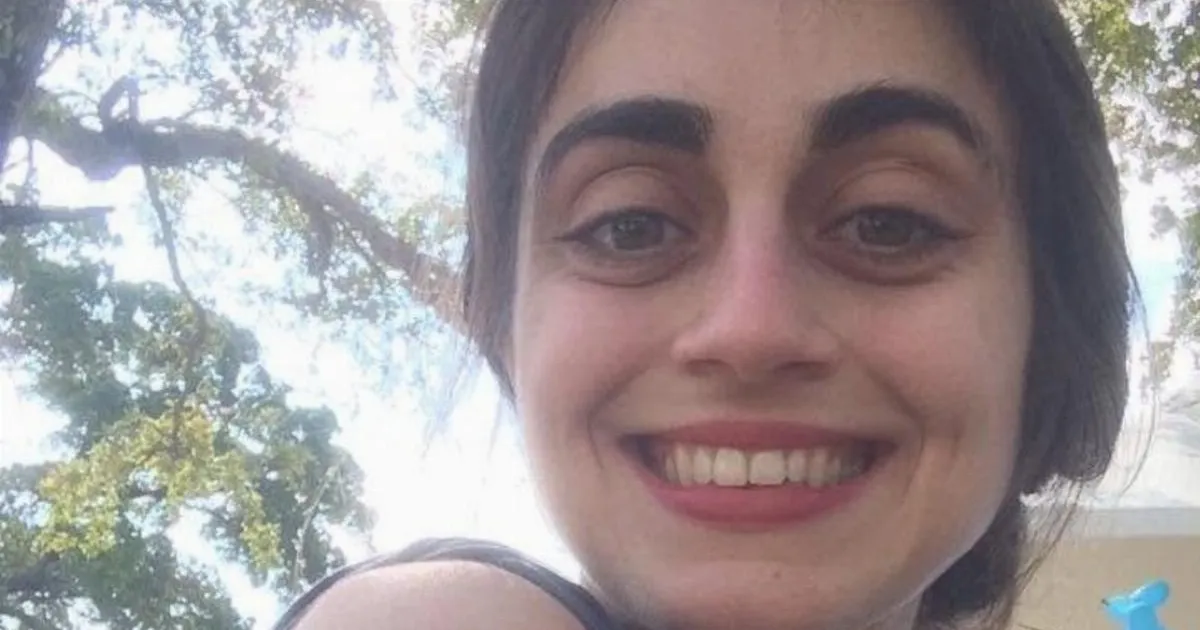
The 36-year-old American woman who died in the Italian Dolomites has been identified as Michelle Alejandra Rubio Leiva, a Florida resident originally from Guatemala. She was on holiday with her family, a trip that should have been a joyful escape into one of the most breathtaking landscapes on Earth, when a single misstep turned a moment of beauty into an unspeakable tragedy. On October 17, Leiva was hiking through the Val di Fassa, a scenic alpine valley in the Trentino region, when she reportedly left the designated mountain path in order to take a photograph. The exact reason she strayed remains part of the heartbreaking speculation surrounding her death, but it appears she simply wanted to capture a better view, a more perfect memory, perhaps a frame-worthy image of the dramatic peaks that surrounded her. In an agonizing instant, she lost her footing on the steep, unforgiving terrain and plunged down the mountainside. According to CNN, she fell nearly 1,000 feet, while another report from the Italian outlet Il Dolomiti gave a shorter but still horrific estimate of approximately 656 feet. Either way, the fall was catastrophic, and there was no saving her once she went over the edge.
The moments that followed were harrowing for her loved ones. Leiva’s sister witnessed the entire event unfold—saw her sibling tumble into the abyss—and immediately called emergency services around noon local time. That image, a sister watching helplessly as her loved one disappeared over a cliff, is almost too painful to contemplate. A rescuer was able to reach the site of the incident and provide the exact coordinates to an air rescue technician, but by the time the technician and medics arrived, it was already too late. Leiva was pronounced dead at the scene. The recovery operation was long, lasting until roughly 2:30pm local time, and it must have been an agonizing wait for her family, who had to stand by as the reality of their loss sank in. Her family members who had been with her during the hike were airlifted to Canazei, a charming alpine resort town in the upper Val di Fassa, while Leiva’s body was retrieved from the slope. Later that week, after her next of kin had been notified, police publicly announced her death. The emotional weight of this sequence—watching, waiting, being ferried away without the person you came with, then hearing the final confirmation—is beyond measure.
There is a deeply tragic irony in where this happened, because the group was not simply wandering on a casual stroll; they were making their way to a cable car station that would take them to the summit of Sass Pordoi, a majestic peak in the Dolomites that rises to 9,344 feet. Their destination was a renowned mountaintop restaurant, a place where people go to celebrate life while gazing at panoramic views of one of the most spectacular UNESCO World Heritage Sites on the planet. The Dolomites are famed for their jagged rock formations, their surreal light at sunrise and sunset, and their fossil-rich cliffs, drawing hikers, climbers, and tourists from all over the world. This particular part of the mountain range is accessible only by cable car, which means that a dinner at the summit feels like an otherworldly experience, suspended between earth and sky. Leiva and her family were on their way to exactly that kind of memory-making evening when the accident occurred. The contrast between the intended joy of the day and the devastation that actually unfolded is almost unbearable. Instead of sharing a dinner above the clouds, the family was plunged into a nightmare, and a beautiful excursion turned into a permanent scar.
Leiva’s death is not an isolated incident, and it highlights a growing crisis within this enchanting region. The Dolomites have surged in popularity in recent years, driven by the relentless rise of social media tourism, viral TikTok trends, and the newer phenomenon of “coolcations,” in which travelers deliberately escape the oppressive heatwaves of southern Europe and popular coastal destinations in favor of cooler mountain climates. This influx of visitors has brought new energy and economic vitality to the area, but it has also exposed many people—some unprepared and unaware—to the very real dangers of the mountains. The Italian Alpine Rescue unit told CNN that the hiking areas in the Dolomites can be extremely hazardous, with steep slopes, loose gravel, and falling rocks posing constant threats. The numbers speak for themselves: more than 80 people have died in the Dolomites this year alone, according to the outlet. That figure is staggering when you consider that the region traditionally averages only about 10 deaths per year from mountain accidents. The totals fluctuate depending on weather conditions and visitor numbers, but a nearly eightfold increase in fatalities suggests something has changed, both in the conditions and in the behavior of those who come to enjoy them.
Behind the statistics and the cautionary headlines, it is essential to remember that Michelle Rubio Leiva was a real person with a rich life and a future that was cut tragically short. Born in Guatemala, she moved to the United States and eventually graduated from Brigham Young University, a private research institution in Provo, Utah, in 2012. She then built a career in communications, marketing, and business development, applying her talents and energy to fields that require creativity, relationship-building, and a sharp understanding of how people connect. In 2025, she was working remotely from Rome in consulting, a testament to her adventurous spirit and her willingness to embrace new places and new challenges. She also devoted her time to volunteer work, particularly supporting young people and disadvantaged communities. That detail reveals a great deal about her character: she was not just someone who loved to travel and take beautiful photographs; she was someone who cared about others, who used her skills and her time to lift up those who had less. Her death leaves behind not only her immediate family, who witnessed the horror of that day, but also friends, colleagues, and communities she touched through her generosity. The loss of someone so vibrant, so engaged with the world, feels profoundly unfair.
In the wake of this tragedy, there is both a warning and a call for compassion. The mountains will always be wild, and no amount of breathtaking beauty can erase the fact that they demand respect, preparation, and caution. A photograph is not worth a life, and the allure of a perfect frame can too easily lead a person off the safe path into impossible danger. But when we speak of this incident, and when we share the statistics about the many lives lost in the Dolomites, we must also hold space for the human reality beneath the numbers. Leiva’s family will forever carry the image of her last moments, the sight of her falling, the sound of the wind, the helplessness they felt. They will also carry the memory of who she was: a daughter, a sister, a friend, a woman who worked hard, loved deeply, and tried to make the world a little better. As the recovery helicopters fly and the rescue teams do their brave work, and as social media continues to draw more people to these sacred peaks, we should all take a moment to pause. We should honor Michelle’s memory not by dwelling only on how she died, but by celebrating how she lived—and we should remind ourselves that the most precious gift of any journey is the simple fact of coming home.