


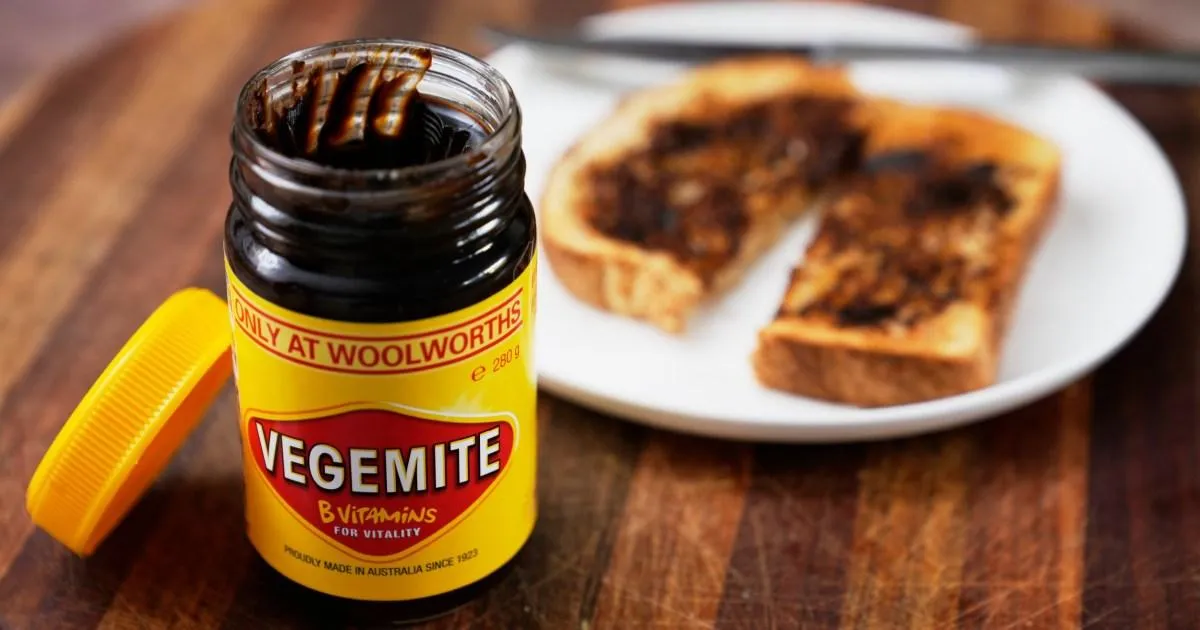
Few foods divide opinion quite like Vegemite. To the uninitiated, it is a puzzling dark-brown paste with a salty, bitter edge; to Australians, it is a childhood memory spread thinly over buttered toast, a taste of home that has survived wars, rationing, and countless breakfast tables. For more than twenty years, however, this beloved national icon has been banned from prisons in the Australian state of Victoria. It is the kind of policy that might sound trivial from the outside, but for one inmate it became a deeply personal legal fight. Andre McKechnie, a 54-year-old man serving a life sentence for a fatal stabbing in Queensland in the 1990s, argued that removing Vegemite from prison menus denied him the right to enjoy his culture as an Australian. On Monday, a Supreme Court judge rejected his appeal, ruling that the ban would remain in place. The judge’s words were blunt: McKechnie’s cultural rights are limited primarily by the fact that he has been sentenced to a term of imprisonment. The decision may settle the legal question, but it leaves behind a bigger and more human one: when a prisoner loses the taste of home, what exactly do they lose?
The story of Vegemite is woven into the story of modern Australia itself. It was invented in 1923, born out of necessity when World War I disrupted the supply of Marmite from Britain. A Melbourne food company, seeking a homegrown replacement for the imported yeast extract, developed a product that would eventually become a pantry staple for millions. Over the decades, Vegemite stopped being just a spread. It became a symbol of resilience, a comforting constant in school lunchboxes, camping trips, and family kitchens. Its distinctive aroma and sharp, savory flavor are unmistakable, and for generations it has been a marker of belonging. When Australians move abroad, they often pack jars of it to remind them of home. When soldiers serve overseas, care packages full of Vegemite are treasured. So it is no surprise that a man in prison, cut off from so much of ordinary life, might cling to the idea of it. Food is never just food. It is memory, identity, and comfort. A smear of Vegemite on toast can conjure images of childhood mornings, of parents fussing over breakfast, of laughter and safety. To take that away is to take away one more thread connecting a prisoner to the world he once knew.
McKechnie’s legal case went beyond nostalgia. In suing Victoria’s Department of Justice and Corrections, he claimed that the ban breached laws requiring prisons to provide food that maintains inmates’ health. He wanted Vegemite back on the menu, not only because it tasted familiar but because he saw it as a fundamental part of his identity as an Australian. The authorities, however, had practical concerns that outweighed sentiment. They argued that the thick, sticky paste could be used to disguise contraband substances, hiding illegal items in a way that would be difficult to detect. More strikingly, they claimed it could be used to brew alcohol behind bars. This is not a new fear. Vegemite is also banned in prisons in Queensland, South Australia, and Tasmania. In Victoria, Corrections has long maintained that the strong smell of the spread can distract sniffer dogs during drug searches, compromising vital security operations. The Supreme Court judge sided with these arguments, making it clear that McKechnie’s right to enjoy his culture is constrained by the reality of incarceration. It is a sobering reminder that in prison, even the most innocent small pleasure can become a potential risk, and the law tends to err on the side of caution rather than comfort.
The idea that Vegemite or its British cousin Marmite could be turned into alcohol has been a persistent prison myth for years. In 2009, the Daily Express reported that governors at HMP Dartmoor in the United Kingdom had restricted fruit juice and Marmite after a spate of alcohol-related incidents. There were whispers of a home-brewed drink humorously called a “Marmite Mule.” But the science behind such a recipe is questionable at best. The yeast used to make both spreads is already spent, left over from beer brewing and then heated to incredibly high temperatures during the cooking process. That means the yeast is no longer alive, and without live yeast, fermentation is virtually impossible. In other words, the threat of prisoners turning their breakfast spread into a raging brew is more urban legend than practical reality. Yet policies are sometimes shaped more by fear than by facts. The smell, however, is another matter. Both Marmite and Vegemite have a pungent, salty aroma that can linger in the air and cling to surfaces. For a sniffer dog trained to detect drugs, encountering a powerful yeast smell could indeed be distracting, possibly masking or confusing other scents. There is no blanket ban on Marmite in UK prisons, but individual establishments can choose to remove items if they believe they pose a risk. This uneven approach highlights how bans often stem from local concerns and rumors rather than clear, evidence-based rules.
At the heart of this story is a deeper tension between security and humanity. The judge’s language was legally precise, but it also sounded resigned: a person who has been sentenced to prison cannot expect to keep all the freedoms of ordinary life. That is true. A murderer serving a life sentence has forfeited a great deal, and a jar of Vegemite may seem like a minor grievance in the broader scale of punishment. But human beings are not built to stop needing small comforts just because they are confined. Prisoners live in a world where almost every choice is taken from them: what time to wake, what to wear, when to eat, who to speak with. In such an environment, food becomes one of the few remaining forms of expression. It can be a reminder of family, culture, and the person they were before their crime. For McKechnie, Vegemite was not just a condiment; it was a thread to his identity. To say that his cultural rights are limited by his imprisonment is to acknowledge that pain, even if the law finds it acceptable. It also raises a troubling question: if a familiar taste can be denied because it is a potential security risk, how many other small pieces of humanity are being quietly stripped away in the name of safety? Prisons are meant to punish, yes, but they are also meant to hold people in conditions that allow them to return to society one day as something other than broken souls. Sometimes, the small things matter most.
So the ban stays, and Andre McKechnie will go back to life in prison without Vegemite. The story may seem odd, even almost humorous—a convicted murderer fighting for a breakfast spread—but it is also deeply human. It speaks to the universal need for comfort, the longing for the familiar, and the lengths people will go to preserve a sense of who they are. Vegemite has survived wars, recessions, changing tastes, and countless cultural shifts. It has been embraced as a national treasure, an emblem of Australian identity. But it has not survived the prison bureaucracy of Victoria, where a smear of black paste is seen not as a comfort but as a risk. The science suggests that the fear of home-brewed Vegemite alcohol is largely unfounded, and the practical concerns might be manageable with simple policies rather than outright bans. But for now, the spread remains off the menu, and the prisoners in Victoria must learn to eat their toast without that familiar salty flavor. Perhaps one day the authorities will reconsider and recognize that a little taste of home can be a powerful tool for keeping people calm and connected, rather than a threat to order. Until then, Vegemite’s absence in prison is a quiet reminder that even the simplest things can carry enormous weight. For McKechnie, and for many others like him, it is not just breakfast. It is a memory of a world outside, a world that feels impossibly far away when you are locked behind bars.