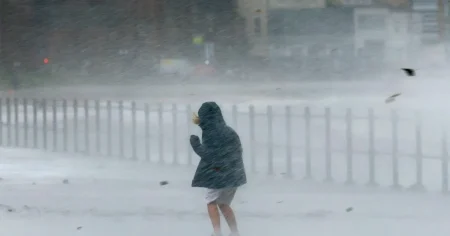


On a grey, windswept afternoon on Polzeath Beach in Cornwall, the sea should have been the last place anyone wanted to be. Storm Austen had arrived with all the fury of an early-season tempest, lashing the coast with 50 mph winds and whipping the Atlantic into a frenzy of towering swells and violent whitecaps. The beach, usually alive with families and surfers, was nearly deserted. Those who did venture out were wise enough to keep their distance from the waterline, perhaps clutching warm coffees and watching from behind windbreaks, marveling at nature’s raw power. But one family, a father, his partner and their young children, were doing something that seemed incomprehensible to everyone around them. Dressed in wetsuits, carrying bodyboards, they were heading straight for the sea. RNLI lifeguards had red-flagged the beach, a clear universal signal that entering the water is not just discouraged but actively dangerous. Red flags mean drowning risk. They mean stay out. Yet this family, with children who looked very young, were undeterred, battling the gusts as they made their way to the water’s edge, apparently convinced that they could handle whatever the storm threw at them. For the people watching from the relative safety of the shoreline, there was a growing sense of disbelief, then worry. The family looked small against the towering waves, and the children looked fragile against a sea that seemed determined to swallow anything in its path. It was exactly the kind of situation that makes bystanders feel an instinctive pull to intervene, to say something, to do something, because watching people place themselves and their children in harm’s way is almost unbearable. And that is precisely what one passer-by decided to do.
The passer-by, whose identity remains unknown, walked down to the water’s edge just before 2pm. His approach seemed measured, concerned, perhaps even gentle. He had probably been walking along the beach, seen the red flag, seen the family in the swirling surf, and felt he could not simply walk by in silence. In a world where people often hesitate to get involved, he chose to speak up, to warn the father that this was not safe, that the sea was too rough, that the children were too young, that the flags were red for a reason. It was an act of civic responsibility, the kind of thing most of us would hope a stranger would do if we were making a dangerous mistake. But the father’s reaction was anything but grateful. As the passer-by reached the water’s edge, the father exploded. He sprinted out of the surf, his wetsuit slick with seawater, and confronted the man with a level of aggression that stunned onlookers. He got right in the man’s face, his body language unmistakably threatening. Then, with no apparent attempt to talk or listen, he raised his fists. The video captures the moment vividly: the father, seemingly furious that anyone would question his decision, throwing a punch at the passer-by. The passer-by did not retaliate. He did not take the bait. Instead, he simply walked away, leaving behind a scene that said more about fear, pride and poor judgment than any words could. The father, apparently satisfied, turned back to the sea and rejoined his family, as if protecting his right to put his children at risk was some kind of victory.
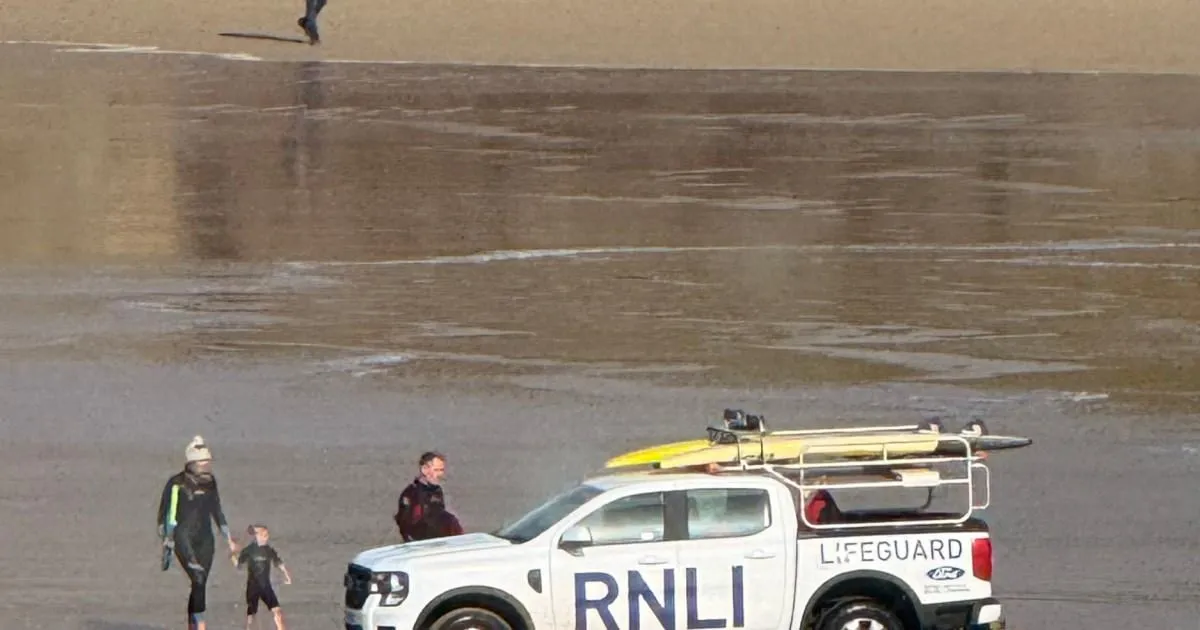
For the witnesses sitting nearby, the altercation was alarming but, in some ways, not entirely surprising. The unnamed witness, who spoke to Cornwall Live, described watching the family with “very young-looking kids” heading into the water and battling with their boogie boards. They thought the family must be crazy to go in, given the state of the sea and the strength of the wind. When the passer-by approached, they assumed he was suggesting it was unsafe, which made the father’s response all the more shocking. The witness described how the father sprinted out of the water, confronted the man, got very close, and then punched him. The passer-by “didn’t seem to take the bait,” they said, and shrugged it off, walking away without escalating the situation. The contrast between the two men could hardly have been starker. One man, moved by concern, risked an awkward and potentially hostile confrontation to warn a family of danger. Another, moved by ego, chose violence instead of conversation. The incident did not end there, however. A few minutes later, an RNLI pickup truck arrived on the beach, and lifeguards made their way to the family. They were asked to leave the beach, which, given the conditions, was the only sensible outcome. The family complied, gathering their boards and making their way back to dry land, but the damage was done. They had been publicly removed, the father had been captured on film punching a stranger, and the whole episode had become a cautionary tale about how not to respond to good advice.
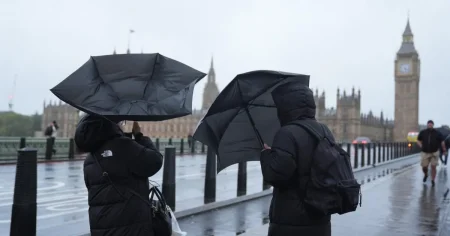
The incident on Polzeath Beach unfolded against the backdrop of a genuinely dangerous period of weather. Storm Austen was the first named storm of the season, and it made its presence felt across the UK, bringing heavy rain, howling winds and treacherous conditions to coastal communities. The storm was followed almost immediately by Storm Boelo, which continued to batter the country over the rest of the weekend. Elsewhere, the same weather system caused tragic consequences. A driver in their twenties became the second victim of Storm Boelo after a tree crushed their car in London. In another incident, two people were crushed by a collapsing scaffold in high winds. These were not minor weather events. They were life-threatening. The sea, in particular, becomes an entirely different entity in storm conditions. Waves that look exciting from a safe distance are actually powerful enough to knock adults off their feet, drag children away in seconds, and pin people against rocks. Rip currents become more violent, and even experienced swimmers can be overwhelmed. RNLI lifeguards do not raise red flags for fun. They do so because they have seen the consequences of people ignoring them, because they have performed rescues in towering seas, because they have recovered bodies from water that looked deceptively inviting. The red flag on Polzeath Beach that Friday was not a suggestion. It was a warning designed to save lives, including the lives of the children who were being led into the surf by a father who apparently believed he knew better than everyone else.
It is worth pausing to think about the human psychology at play in this strange, disturbing moment. Why would a father, presumably wanting to keep his family safe, react so violently to a warning? There are several possible layers. First, there is the defensiveness that comes from being challenged, especially in front of one’s children and partner. To be told, in public, that you are making a dangerous mistake can feel like an attack on your competence as a parent. The father may have heard not a concerned warning but an accusation: you are failing to protect your children. His anger, then, was not really about the passer-by. It was about his own insecurities, his own need to appear strong and in control. Second, there is the phenomenon of normalization. People who regularly visit the sea, especially surfers and bodyboarders, can develop a false sense of confidence. They have ridden waves in rough conditions before, they know how to handle themselves, and they may genuinely believe that the danger does not apply to them. The red flag is for tourists, for beginners, for people who do not understand the sea. This mentality is common and often deadly. Third, there is the simple fact that some people respond to fear with aggression. The father may have been, on some level, frightened himself. The sea was rough, his children were young, and the responsibility was heavy. When the passer-by appeared, that fear found an outlet in rage. It is easier to punch a stranger than to admit you might be wrong. But the tragedy of this incident is that the passer-by was not an enemy. He was a helper. He was exactly the kind of person we would want to see if our own family were in danger. And instead of thanking him, the father punched him.
In the end, the story is not just about a punch or a red flag or a storm. It is about how easily fear and pride can override common sense. It is about the courage it takes to intervene when you see someone in danger, and the way that courage is sometimes met with hostility. The passer-by who walked away without retaliating showed more strength in that moment than the father who threw the punch. He understood that the point was not to win an argument or prove he was right. The point was to try, however imperfectly, to help. The lifeguards who arrived afterwards did their job with quiet authority, removing the family from the beach and restoring a small measure of order to a chaotic scene. Perhaps, in the cold light of day, the father will look back on the video and feel shame. Perhaps he will realize that his children were minutes away from disaster, and that the man he punched was a better guardian of their safety than he was. Perhaps the family will return to Polzeath on a calm summer day, when the sea is gentle and the flags are green, and they will laugh about the storm and the stranger and the madness of it all. But for now, the image that lingers is of a beach battered by wind, a red flag snapping in the gusts, and a father raising his fists at a man who only wanted to keep his children alive. It is a reminder that the greatest dangers at the beach are not always in the water. Sometimes they walk among us, wearing wetsuits, carrying boards, and refusing to listen. And it is a reminder, too, that kindness and concern, even when rejected, are still the right response. The passer-by may have left with a sore jaw, but he left with his conscience intact. The father may have walked away triumphant, but he carried with him something far heavier: the knowledge, buried somewhere beneath the anger, that he was the one who had failed the most basic duty of all.