


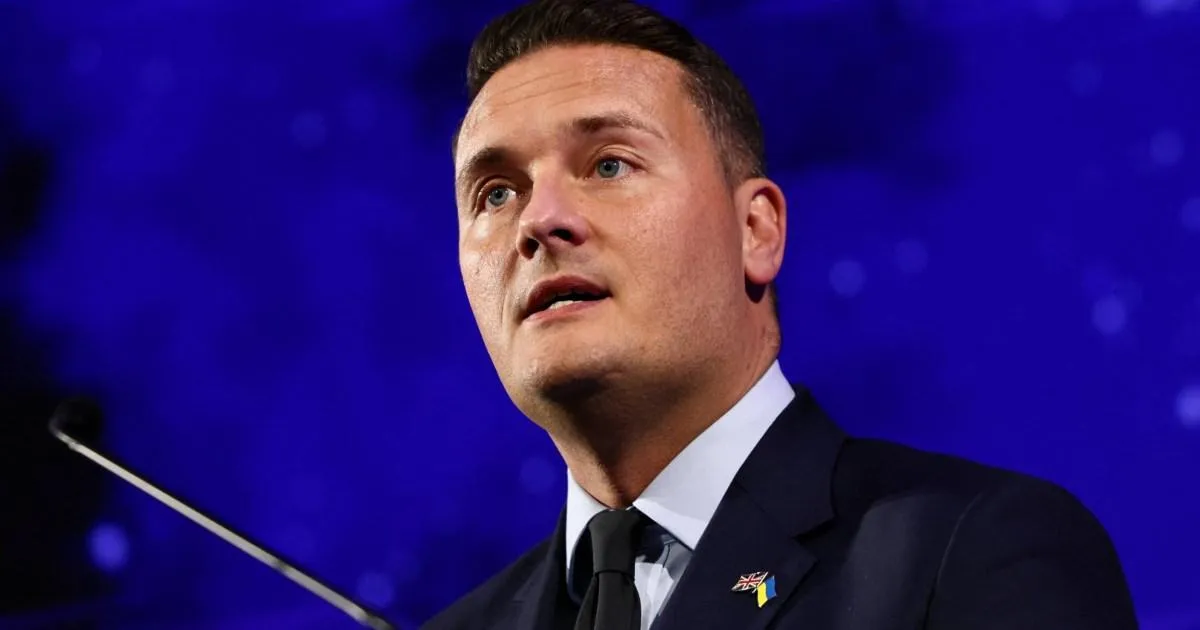
For most of us, the idea of a countdown clock ticking toward a war feels like something from a dystopian novel, not a Tuesday morning news bulletin. Yet that is precisely the alarming reality laid out by Defence Secretary Wes Streeting, who has warned that Britain’s adversaries could be ready to strike by 2030. In stark, measured terms, he explained that the will to do us harm is nothing new—what has changed is the capacity. By 2030, he argued, the force strength and war economy of hostile states could put them in a position to attack, leaving the nation with a little over 1,000 days to get ready. It is a sobering thought, one that reframes the next few years not as a vague period of political drift but as a concrete window of preparation. For ordinary families, it turns abstract geopolitics into something deeply personal: What would you do if the lights went out for a week, if the shelves in the supermarket were empty, or if the internet simply stopped working? Streeting’s message, published in the national press, was not designed to terrify, but it certainly commanded attention. He spoke of stepping up national resilience alongside national defence, insisting that the threats we face are not hypothetical but real, and not somewhere else but increasingly here. The suggestion that households and businesses should ask themselves if they are ready marks a significant cultural shift for a country that has long felt insulated from the chaos of the wider world.
The conversation quickly moved from the corridors of Westminster to the family kitchen, as Prime Minister Andy Burnham stepped forward with practical advice that felt both homely and unsettling at the same time. In a tone that was carefully calibrated to reassure rather than alarm, Burnham encouraged citizens to stock up on tinned food and bottled water, the kind of staples that whisper of everything from a bad storm to a national emergency. He was quick to distance the guidance from panic, describing it instead as taking sensible measures to ensure we have enough in the house to tide us over in a difficult situation. And yet, the very normalcy of his delivery—the suggestion that buying a few extra cans of soup is just common sense—made the underlying message all the more striking. We are living, he pointed out, in a world where unexpected events seem to be becoming more and more common. For many Britons, this is the first time in their adult lives that a senior political figure has openly discussed preparing for conflict. The last time such advice was doled out on a national scale, the Cold War was still a defining feature of our existence, and the advice was about nuclear fallout shelters and duct tape. Now, the guidance feels more intimate, more domestic: a full cupboard, a bottle of water, a way to look after the pets.
The specifics of the official advice are worth unpacking, because they invite us to imagine what an emergency actually looks like in practice. Households have been urged to have nine litres of bottled water per person—a surprisingly precise figure that suggests planning gone seriously deep—and three days’ worth of non-perishable food. Alongside these basics, the list expands to include blankets, cash, a first aid kit, and a wind-up FM radio, that old-fashioned piece of technology that suddenly makes sense when you consider the possibility of phone networks failing. The government has also thrown in hand sanitiser, wet wipes, and pet food, acknowledging that our furry companions are part of the family too. On the surface, this looks like nothing more than a well-stocked camping cupboard, but read between the lines and you see a clear vision of a scenario where modern conveniences vanish: no cash machines, no digital payments, no smart speakers to ask for the weather. It forces us to think about what resilience really means in an age of convenience, where we are used to buying what we need exactly when we need it. The idea of storing supplies might feel slightly absurd in a world of 24-hour delivery services, but it reflects a growing recognition that our interconnected systems are vulnerable, and that the intricate web of supply chains we rely upon can be disrupted by forces well beyond our control.
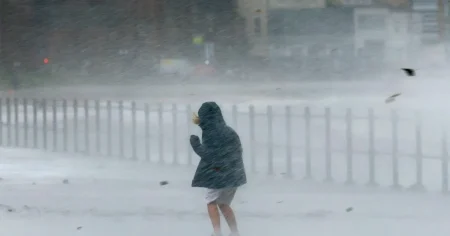
The reasons behind this push for preparedness are layered, and they extend far beyond the spectre of a single enemy on the march. Streeting referenced Russia’s potential for what he called “state-sponsored terrorism,” a phrase that conjures images of sabotage, cyber warfare, and interference designed to undermine the very fabric of daily life. But the threats are also more diffuse and, in some ways, closer to home. Just last month, the National Audit Office warned that Britain’s food supply chain is at risk due to the growing dangers of cyber attacks and the accelerating climate crisis. The NAO was blunt in its criticism of the Department for Environment, Food and Rural Affairs, accusing it of failing to improve the resilience of a system upon which every single one of us depends. Burnham responded to these concerns by pointing to the here and now, reminding us that even as we speak, the UK is facing storms, with people in Cornwall suffering power cuts. In that context, being prepared is not about paranoia, but about pragmatism. A power cut caused by a storm and a cyber attack might begin differently, but they end the same way: with families sitting in the dark, hoping they have enough food in the cupboards. The distinction between preparing for war and preparing for a flood has blurred, and the government seems to be leaning into that ambiguity, because the practical steps are largely the same.
This is where the human element of the story really comes to life, because the call to stockpile taps into a deep well of psychological responses. For some, the advice is reassuring, a way of taking control in an uncontrollable world. For others, it feels faintly ridiculous, a throwback to an era of bunkers and emergency broadcasts that modern society was supposed to have outgrown. There is also a strand of anxiety, the nagging worry that if politicians are telling us to buy bottled water, they must know something they are not telling us. Burnham, for his part, has tried to meet people where they are, even appearing on a popular television show to soften his public image and make the conversation feel more approachable. His message is that being prepared is not about cowering in fear but about building a quiet, sturdy confidence that whatever comes, you have the basics covered. He has stressed that this is a conversation about resilience, not panic, and that the goal is to get through difficult moments without the added stress of realizing the fridge is empty and the shops are closed. That framing makes the advice easier to swallow, transforming it from a political directive into a simple act of self-care. After all, we buy insurance for our homes and our cars without expecting to use it, and stocking a few extra tins of beans is not so different. It is a small price to pay for peace of mind, and it allows us to feel proactive rather than helpless in the face of huge, impersonal forces.
As the countdown of roughly 1,000 days ticks away, the challenge for Britain is to find the balance between complacency and alarm. The government’s message is clear: we must prepare to prevent the worst, and readiness is the best antidote to fear. For families, that might mean sitting down together and having an honest conversation about what they would do in a crisis, whether it is a storm, a cyber attack, or something far more sinister. It means buying a little extra when you do the weekly shop, checking that the first aid kit is fully stocked, and perhaps digging out that old battery-powered radio from the back of the drawer. But it also means maintaining perspective, remembering that the same advice that protects us in a conflict also protects us from the ordinary emergencies that life throws at us each year. The 1,000-day figure is not a prophecy of doom, but a call to action, a reminder that the time to act is now, while we still have the luxury of preparation. In the end, the debate is not really about tinned food or bottled water; it is about the kind of society we want to be. We can choose to be passive, hoping that the worst never happens, or we can choose to be ready, quietly confident that we have done what we can to protect our families and our communities. It is that simple, and it is that hard—but it is a challenge we now all have a role in meeting.