
Paragraph 1: A Tragedy That No Family Should Ever Know
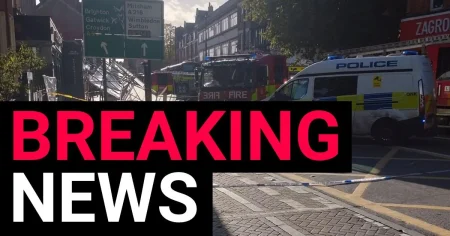
A four-year-old girl, whose entire life should have still been about toys, bedtime stories, and the simple wonder of the world around her, has died after falling from a block of apartments in Barking, east London. The news broke like a wave of cold shock on Saturday morning, when police were called at 11:00 to reports of a child falling from height at an address on St Paul’s Road. The little girl was found in circumstances that no emergency responder is ever truly prepared for, and despite the frantic, desperate efforts of paramedics at the scene, her young life could not be saved. She was rushed to a hospital, but was pronounced dead shortly after arrival. At this stage, her identity has not been released to the public, leaving those who knew her, and even those who did not, to imagine the unbearable grief now weighing on her family. The incident has torn through the quiet fabric of a residential neighborhood, transforming an ordinary Saturday morning into a moment of profound sorrow. For every parent who hears this story, there is an involuntary tightening of the chest, a sudden urge to hold their own children a little closer. This was not a statistic; it was a little girl with a favorite song, a favorite toy, a giggle that her family will now remember through tears. As the sun moved across the sky above Barking, the reality settled in: a life had ended far too soon, and an entire community was left to make sense of something that makes no sense at all. The police presence, the ambulance lights, the dazed neighbors standing behind tape—all of it formed the painful tableau of a tragedy that should never have happened.
Paragraph 2: The Desperate Rush to Save a Young Life
The events unfolded with terrifying speed on Saturday, October 24th. The Metropolitan Police received the call at 11:00 precisely, and the London Ambulance Service was alerted moments later at 11:05. In the world of emergency response, every second counts, and on this day, every possible resource was thrown into the effort to save the child. The London Ambulance Service dispatched ambulance crews, a clinical team manager, an incident response officer, and an advanced paramedic practitioner. Even London’s air ambulance was sent to the scene, an indication of the severity of the situation. These are highly trained professionals who have seen terrible things, but the sight of a small child lying motionless on the ground is the kind of image that stays with a person for decades, haunting quiet moments and interrupting sleep. They administered emergency first aid at the scene, working with the kind of focused intensity that comes only when a life hangs in the balance. The child was then transported to a major trauma centre in London, where a team of doctors and nurses stood ready to do everything humanly possible. But despite the combined effort of paramedics, aircrew, and hospital staff, the injuries proved too severe. The young girl succumbed to her injuries, passing away in a place where strangers fought so hard to keep her alive. For the family, the journey from St Paul’s Road to the hospital must have felt like a nightmare from which there was no waking. There is no version of these moments that leads back to a normal life. The empty seat at the dinner table, the unused bedroom, the sudden silence where a child’s laughter used to be—these are the devastating aftershocks that will remain long after the emergency vehicles have gone.
Paragraph 3: Official Words, Deepest Sympathies
In the wake of the tragedy, the Metropolitan Police released a formal statement that attempted to capture the gravity of the moment while also providing necessary facts. “Police were called at 11:00 on Saturday, 24 October to reports of a child falling from height at an address in St Paul’s Road, Barking,” the statement began. It went on to explain that officers attended the scene alongside the London Ambulance Service, where emergency first aid was administered. “The girl, aged four, was taken to hospital but, very sadly, later died from her injuries.” The language is clinical, carefully chosen, but beneath the formality lies a profound human reality. The police also offered a simple, heartfelt message that speaks to the universal weight of the loss: “Our thoughts and deepest sympathies are with the child’s family and loved ones at this incredibly difficult time.” These words, though familiar, are no less sincere when uttered by officers who stood at the scene and witnessed the aftermath of the incident. The statement confirmed that an investigation into the circumstances surrounding the tragedy is ongoing, but crucially, it noted that at this time, the incident is not believed to be suspicious. No arrests have been made. In some ways, this brings a small measure of closure—the suggestion that no third party was responsible, that this was a terrible accident rather than a deliberate act. But to a grieving family, the distinction between accidental and intentional offers little comfort. Their child is gone. The why and the how may be answered in the coming weeks, but the pain remains the same. The investigation will likely focus on how the fall happened, whether through a window, a balcony, or another part of the building. It will seek to ascertain the facts so that something, anything, can be learned from such a loss.
Paragraph 4: The Ambulance Service’s Account and the Effort to Help
The London Ambulance Service also released its own account of the tragic event, providing further detail about the intensity of the response. A spokesperson confirmed, “We were called on Saturday 24 October at 11.05am to reports of an incident in St Pauls Road, Barking.” They detailed the resources sent to the scene: ambulance crews, a clinical team manager, an incident response officer, an advanced paramedic practitioner, and London’s air ambulance. “We treated a child at the scene before taking the patient to a London major trauma centre.” The mention of the air ambulance is particularly telling. When an air ambulance is deployed, it means the situation is considered catastrophic, requiring the highest level of medical intervention at the quickest possible speed. Those who arrived at the scene would have been confronted with a heartbreaking sight: a tiny, fragile body, surrounded by adults doing everything in their power to coax life back into it. The advanced paramedic practitioner and the clinical team manager represent the highest tier of pre-hospital care in the UK. They are experts in trauma, capable of performing complex medical procedures on the street, but sometimes even their expertise is not enough. The child was taken to a major trauma centre, a hospital designed to handle the most severe injuries, where a team of specialists in pediatric trauma would have been waiting. Despite all of this, the little girl died from her injuries. In the aftermath, the ambulance service’s statement stands as a reminder of the heroic efforts made on her behalf. There was no lack of care, no lack of urgency. The system worked exactly as it should have, and yet the outcome was the one result everyone had prayed against. It is a painful reminder that sometimes, no matter how skilled or how fast the response, fate has already written its cruel ending.
Paragraph 5: A Community Left Devastated by an Unimaginable Loss
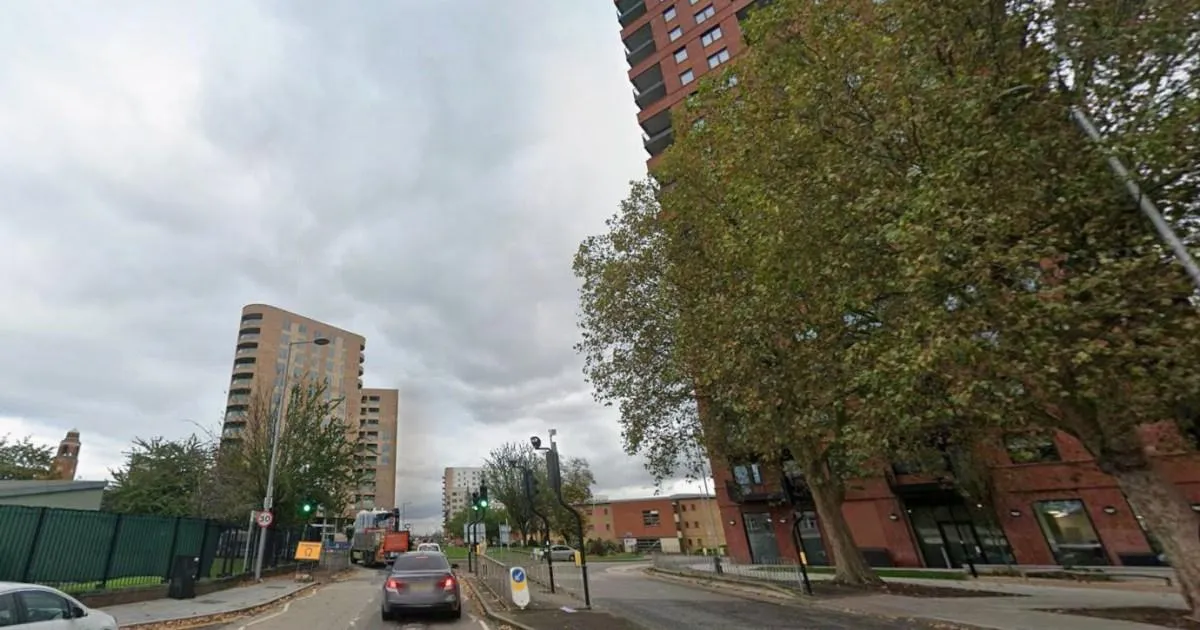
The setting of this tragedy, St Paul’s Road in Barking, is a residential area that likely has no shortage of children playing, of families going about their daily routines, of neighbors who nod to each other in passing. In such communities, a tower block is not just a building; it is a vertical neighborhood, filled with hundreds of lives, each with its own hopes and fears. When news of the little girl’s death spread, the shock would have rippled through every flat, every corridor, every shared space. Neighbors may have heard the sirens, seen the ambulances, and watched the air ambulance descend from the sky, never imagining that the commotion involved a child so young. For those who live in similar high-rise buildings with young children, the story will resonate with a particular kind of dread. It is every parent’s deepest fear that somehow, in a split second of inattention, a doorway left open, a window unsecured, a moment of curiosity, something terrible could happen. While the police have stated that the incident is not being treated as suspicious, the questions will remain heavy in the air. How did she fall? Was there a balcony? Was she alone? Could anything have been done differently? These are questions that will haunt not only the family but also the wider community. There is also the broader issue of safety in high-rise buildings, a topic that has been discussed many times before in London and other major cities. The tragedy in Barking will likely reignite conversations about window locks, balcony doors, and the need for childproofing in multi-story homes. But for now, such discussions feel abstract and distant. What matters in this moment is the simple, devastating fact that a four-year-old girl has lost her life. Her family has lost a daughter, a sister, a granddaughter. The world has lost a little soul whose potential will never be known.
Paragraph 6: An Appeal for Answers and a City’s Shared Grief
In the wake of the tragedy, the Metropolitan Police have urged anyone with information about the incident to come forward. “We urge anyone with information about the incident, to contact police on 101, quoting CAD 2424/24OCT.” While the investigation has not been deemed suspicious, the police still want to understand the full circumstances surrounding the fall. Perhaps someone in the area saw something, heard something, or noticed a detail that could help piece together exactly what happened. The appealing tone of the request reflects an institution that knows it is operating alongside a family’s deepest grief. For the rest of London, the story is a shared sorrow. This city, with all its noise and hurry, has been reminded of its own vulnerability. Somewhere, in a quiet apartment on St Paul’s Road, there is now a silence that cannot be filled. A mother and father are facing a life without their little girl. There will be no first day of school, no birthday cake, no small hand reaching up to hold theirs. The coming days will bring police reports, safety inspections, and perhaps even recommendations aimed at preventing future tragedies. But for the family, the only thing that matters is what has been lost. As the investigation continues, and as the community tries to process what has happened, there is a shared sense of helplessness. We cannot bring her back. We cannot erase the pain that her family now carries. What we can do is hold our own loved ones a little tighter, and hope that this family finds the strength and support they need to endure the days ahead. The little girl who fell from a tower block in Barking is gone, but she will not be forgotten. Her memory will live on in the hearts of those who knew her, and her story will serve as a somber reminder of how precious, and how fragile, life truly is.