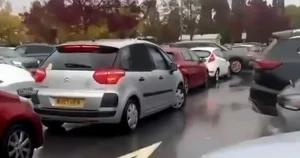

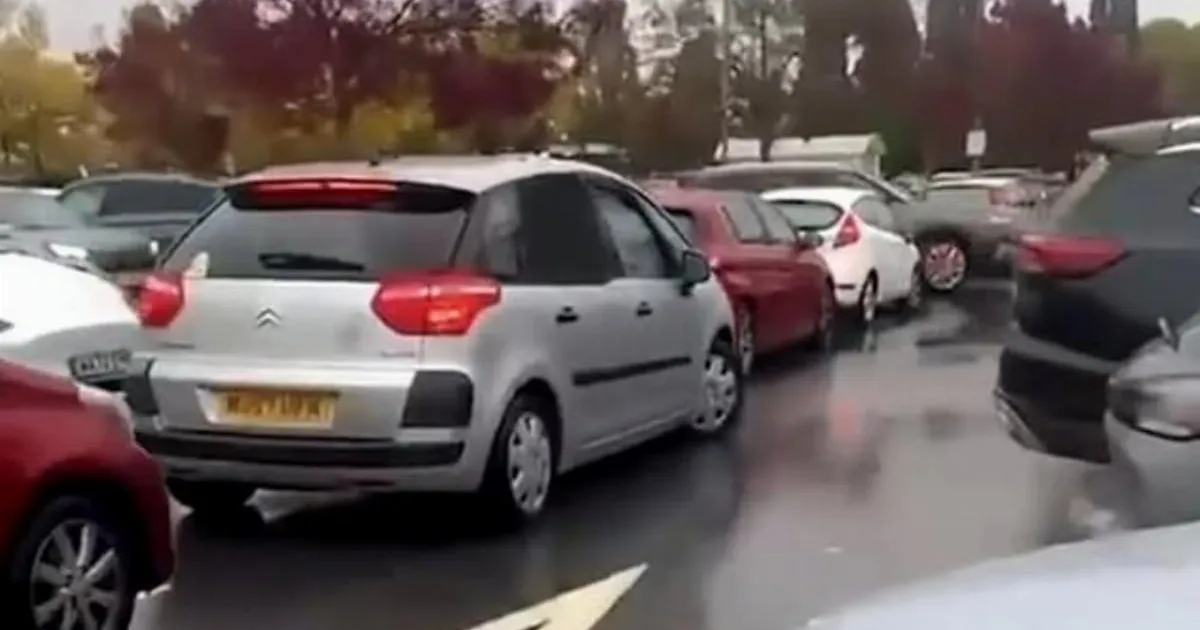
The scene at Asda’s Turner Rise retail park in Colchester on a recent afternoon was not the usual weekend shop. Video footage showed cars crawling through the exit, brake lights glowing, horns occasionally sounding, and shoppers sitting in the same spot for what felt like an eternity. Inside, the supermarket was, in the words of one customer, “rammed with people panic buying,” with shelves stripped in a way that normally only happens in the days before a named storm or a once-in-a-decade snow forecast. “We’re stuck in it now, absolutely crazy,” one frustrated shopper wrote to a local Facebook group, adding, “If this is because of ‘stockpiling’ then people are so stupid.” Another described sitting in her car for a full hour before deciding to abandon the vehicle entirely and asking someone to pick her up. The gridlock wasn’t caused by a disaster, a power cut, or a supply-chain collapse. It was caused by a government announcement. Days earlier, officials had launched the “Be Ready” campaign, a three-year initiative encouraging households across the United Kingdom to prepare for potential emergencies by keeping a small stockpile of essentials. The advice was practical, measured, and careful to avoid alarm. But the reaction, at least in some corners, was immediate and visceral: people rushed to supermarkets and hardware stores as if a deadline were approaching, stripping shelves and jamming car parks. It was a reminder that when authority figures tell a nervous public to “be ready,” the message can land differently than intended. No one wants to be caught unprepared. No one wants to be the person who ignored the warning. And so, in a matter of days, the humble act of buying bottled water and tinned beans turned into a small-scale retail frenzy.
The numbers tell the story. According to reporting, sales of wind-up radios—those unglamorous little devices that somehow feel both nostalgic and deeply practical in an emergency—skyrocketed fivefold in just a few days. Seven major models sold out entirely. Maplin, the electronics retailer, reported that torch sales had jumped by 284 percent in the same short window, while sales of portable power banks rose by 106 percent. These are not the kinds of purchases people make on a whim. They are purchases driven by something deeper: a flicker of anxiety, a desire for control, a mental checklist of “what if.” The government’s guidance had specifically mentioned a wind-up radio as a sensible item to keep in the home, along with a first-aid kit, a power bank, cash, and a list of emergency contacts. It also suggested keeping a three-day supply of bottled water, tinned food, and medications. None of this was unreasonable. Emergency preparedness experts have long advised exactly this sort of modest buffer. But the combination of a government campaign, media coverage, and social media chatter created a feedback loop. People saw others buying, assumed they must be missing something, and bought too. The result was a surge in demand that made the story even bigger. The irony is that the government’s message was meant to be reassuring—a calm, sensible suggestion that households should have the basics on hand in case of short-term disruption. Instead, it triggered what one shopper called “panic buying,” at least in certain areas. It was a case study in how information spreads, how fear multiplies, and how a well-intentioned public information campaign can accidentally light a match in a room full of nerves.
So what exactly is the “Be Ready” campaign? Announced on a Thursday, it is a three-year initiative designed to encourage households to think about potential emergencies and take small steps to prepare. The government’s National Risk Register lists a range of scenarios that officials are monitoring: wartime attacks on British soil, extreme weather such as heatwaves, power outages, cyber attacks, terrorism, nuclear incidents, disruptions to oil supplies, wildfires, and pandemics. That list sounds terrifying when read all at once. It conjures images of apocalyptic landscapes, of cities on lockdown, of people huddled in shelters. But the campaign’s actual advice is far more grounded. Officials are not asking anyone to build an underground bunker or stockpile years’ worth of freeze-dried meals. They are simply asking people to keep a three-day supply of essentials at home: bottled water, tinned food, medications, a wind-up radio, a first-aid kit, a power bank, cash, and emergency contact numbers. The logic is straightforward. In any major incident, the immediate challenge is often not the disaster itself but the disruption that follows. Electricity may go out. Water supplies may be interrupted. Communications may fail. Shops may close temporarily. Roads may be blocked. In those first seventy-two hours, emergency services and local authorities are working to respond, and households that can look after themselves are better placed to cope and to help others. The “Be Ready” website even adds a gentle, community-minded note: “If you have any extra items, you could consider donating these to others who might not have the means to prepare their own households.” It is, in essence, the same advice that generations of grandparents followed: keep a torch by the bedside, keep a tin of soup in the cupboard, know where your important documents are. The problem is that the conversation around preparedness has become so tangled with doomsday rhetoric that even a sensible suggestion can feel like a warning that something terrible is just around the corner.
The British Red Cross was quick to offer a much-needed dose of perspective. The humanitarian network stressed that the campaign is not the government saying Armageddon is going to happen in 72 hours. It is not a prediction, not a prophecy, not a sign that the end is nigh. “Instead,” the Red Cross said, “it’s about being ready to cope with short-term disruption to everyday services such as electricity, water, communications, transport or access to shops.” That is a crucial distinction. A power cut that lasts a day or two is inconvenient. A burst water main that shuts down a neighbourhood for a weekend is a hassle. A severe storm that knocks out phone lines and leaves roads impassable for a few days is stressful. But none of these are the apocalypse. They are, however, the kinds of situations where a little preparation can make a real difference. Having a torch means you are not fumbling in the dark. Having a power bank means your phone stays charged enough to call for help or check for updates. Having bottled water and tinned food means you do not have to join the panicked crowds at the supermarket the moment something goes wrong. The Red Cross’s framing is deliberately calm because the goal is not to frighten people. The goal is to nudge them toward a modest level of self-sufficiency. And yet, as the scenes at Asda and the sales figures from Maplin showed, the line between “being prepared” and “panic buying” can be very thin. Part of that is human nature. When we hear that something might be scarce, we instinctively want to secure our share. When we see other people stocking up, we worry that we are missing something. It takes a conscious effort to step back, breathe, and remember that the point is not to survive a Hollywood disaster—it’s just to get through a rough few days without too much stress.
This is not a new phenomenon, and it is not confined to the paranoid fringes. “Doomsday preppers”—people who are genuinely wary that a disaster could happen at any moment—have been saying for years that most people don’t need to do anything extreme. Dan Goss, who runs the Start Prepping blog, offered some practical wisdom that applies equally to a global pandemic and a zombie apocalypse. He explained that the kind of disasters people might face usually fall into two categories: those where you need to stay put and those where you need to get out of the house. For certain rare events, you might need specialist equipment or specific plans. But for the vast majority of emergencies, the basics are enough: food, water, and shelter. “Even if The Last of Us happens,” he told Metro, “zombies and a blackout are the same. You don’t have any electricity.” His advice was simple: keep three days’ or three weeks’ worth of essentials, enough to get by without being able to go to the shops. That might mean a stash of tinned soup and rice, a bottle of water, a torch, a first-aid kit, and a way to stay warm. It doesn’t mean building a fortified compound or buying a gas mask. What’s striking about this advice is how ordinary it sounds. It’s the kind of thing that used to be common sense before modern convenience made us assume the shops would always be open, the lights would always be on, and the tap would always flow. The pandemic was a wake-up call for many people, revealing just how fragile everyday systems can be. The “Be Ready” campaign is, in many ways, an attempt to bottle that lesson and turn it into a lasting habit. But the human response to that message is complicated. Fear can be a powerful motivator, but it can also lead to hoarding, selfishness, and gridlocked car parks. The challenge is to take the advice without the panic—to be prepared without being consumed by anxiety.
For those who want to take the advice seriously without going overboard, there is a helpful list of items to keep by your bed. All important documents—passports, birth certificates—should be in an easily accessible place, ideally inside a waterproof bag stored in a fireproof safe. A hard drive large enough to back up digital information is a sensible addition. A small water filter and a large water bottle can be lifesavers. Battery lanterns or candles provide light when the power goes out. A first-aid kit is non-negotiable. A “go bag”—a tough backpack with waist belt and shoulder straps—should be packed with weather-resistant clothing, walking shoes, medications, a compass, a map, long-life calorie-dense food, a tent, and a means of making fire. Among the most humble recommendations: “the humble and noble corner-shop disposable lighter.” There is something almost poetic about that. After all the talk of nuclear attacks and cyber warfare, the advice comes down to the same things humans have always needed: warmth, light, water, food, and the ability to move. The government’s “Be Ready” campaign, the Red Cross’s reassurance, the preppers’ practical wisdom—all of it points in the same direction. Preparedness is not about living in fear. It is about living with awareness. It is about taking a few small steps now so that when something unexpected happens, you are not caught completely off guard. It is about being the kind of person who can stay calm in a crisis, and maybe even help a neighbour. The shoppers in Colchester may have overreacted in the moment, but their instinct was not entirely wrong. The world is unpredictable. The best any of us can do is to be ready for the small disruptions that life throws at us, while keeping our perspective and our humanity intact. And if that means buying a wind-up radio and a packet of batteries, so be it. Just try not to sit in the car park for two hours on the way home.