


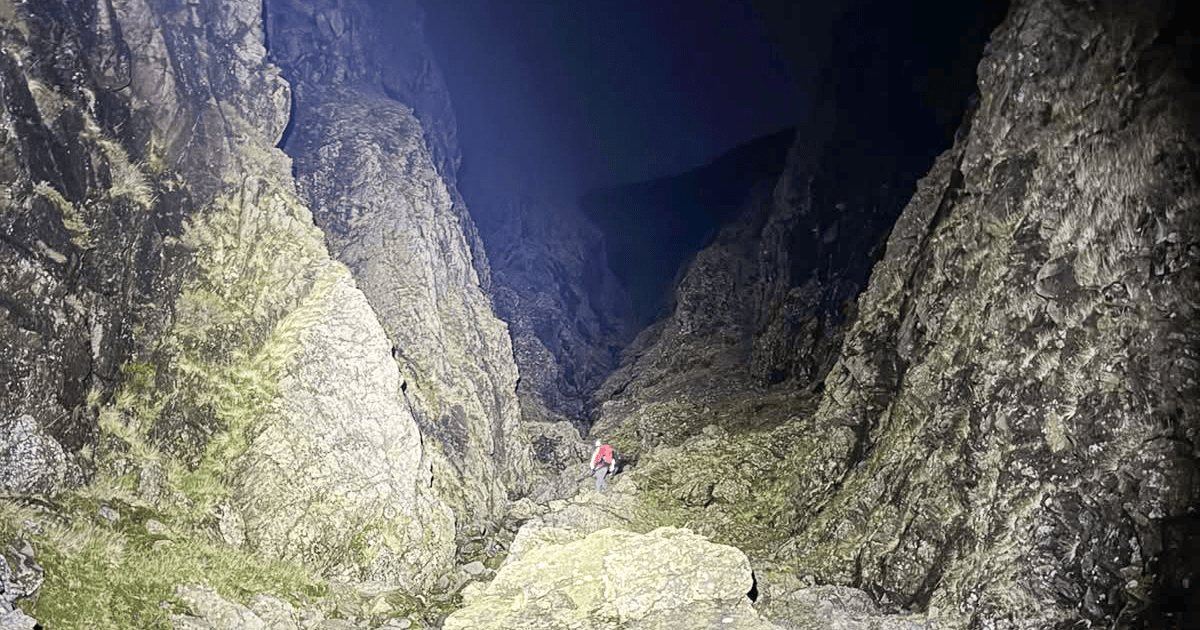
In the wild, weather-battered heart of the Lake District, a night that should have been a peaceful adventure turned into a desperate fight for survival. As Storm Austen lashed the UK with freezing rain and ferocious winds, a young man set out on England’s highest peak, Scafell Pike, and vanished into the cold, wet darkness. Back home, a mother’s instinct kicked in. When she couldn’t reach him, and his last known location was Taylor Gill Force—one of the most dramatic and remote waterfalls on the mountain—she made the agonizing call that would set an entire rescue operation into motion. The fear in her voice was palpable, the kind of fear that only a parent knows when their child is out in conditions that would test even the most experienced mountaineer. She had no way of knowing if her son was safe, injured, or worse. All she knew was that he was out there, alone, somewhere on a mountain that was quickly becoming a frozen, windswept trap. The clock was ticking, and every passing minute made the outcome more uncertain.
The rescue teams answered that call with everything they had. Six mountain rescue teams from across the region converged on the fells, their volunteers leaving warm homes and sleeping families to walk straight into the teeth of the storm. The conditions were brutal. Perceived temperatures plunged to nearly minus two degrees Celsius, and snow swept across the upper slopes, turning rocks into ice and paths into treacherous slides. The wind cut through layers of waterproofs, and the rain soaked through even the best gear. Yet the searchers pressed on, headlamps cutting small beams through the blackness as they scanned the landscape for any sign of the missing man. At around 2:40 in the morning, after hours of searching, they finally found him in Upper Esk, a remote and rugged valley beneath the mountain’s shadow. He had been sitting there since six o’clock the previous evening, alone, in the dark, in the cold, with the storm raging around him. By the time the rescuers reached him, he was very cold and deeply exhausted. In a small act of self-preservation, he had changed into his spare clothes, but his phone and power bank were both completely dead—no way to call for help, no way to tell anyone where he was.
What the rescue teams found was not just a man in trouble, but a situation that could have ended in tragedy. The search area was enormous, and the weather was actively working against them. With snow falling and visibility poor, the rescuers had already alerted the silver regional command, asking for additional resources because they feared the search might stretch into a second day. That kind of preparation is what makes the difference between life and death in the mountains. In total, twelve rescuers were involved in the nine-hour operation, a small but determined team that refused to give up. When they found the young man, they didn’t just grab him and run. They carefully warmed him up in situ, wrapping him in blankets and providing hot drinks and reassurance, letting his body temperature rise slowly before attempting the difficult evacuation. The journey off the mountain was slow and painstaking, every step made harder by the icy ground and the exhausted state of the man they were helping. But eventually, they brought him down to safety, handing him over to the care of those who could continue his recovery. It was a quiet victory, the kind that never makes headlines but means everything to the people involved.
The Wasdale Mountain Rescue Team, who led the response, later shared a stark and heartfelt warning about the incident. They reminded everyone that the very same day, they had been out on the hills in driving rain, and that there was snow on the summit of Scafell Pike. The mountain, they said, is a place that demands respect, not complacency. They urged walkers and climbers to check the mountain weather forecast and any warnings before setting out, and to be prepared to turn back if the weather gets worse or daylight is running out. It sounds simple, but in the excitement of a planned adventure, it is easy to ignore the signs. The team’s words carried the weight of experience, the knowledge that they had been called out too many times to count because someone underestimated the mountain or overestimated their own abilities. They were not judgmental, just honest, hoping that this young man’s close call would serve as a lesson for others. In a world where we are used to comfort and convenience, the mountain is a reminder that nature does not care about our plans, our schedules, or our pride.
The same weekend, the rescue team was called to a string of other incidents that highlighted just how dangerous the conditions had become. On Friday, they responded to an SOS emergency call from Sty Head, where the members of a walking party were unresponsive to calls, a deeply worrying sign for any rescue team. Then, a second call came in from Scafell Pike, this time about a woman with a hip injury who was unable to move. When rescuers reached the location, they found the contents of the stretcher box empty—a small relief, but also a sign of how chaotic the situation had become. The group had apparently moved on towards Seathwaite, forcing the teams to adjust their plans and track them down. It was a chaotic, stressful period for everyone involved, a reminder that rescues do not happen in a vacuum. Each incident drains energy and resources, and the volunteers who carry out these missions are ordinary people with extraordinary dedication. They give up their nights, their weekends, and their safety to help strangers they have never met, and they do it without expecting anything in return.
This all unfolded as the UK found itself in the grip of successive storms, first Austen and then Boelo, which battered the country with heavy rain and wind, triggering multiple weather warnings across Wales and Northern England. The storms closed roads, cancelled events, and brought chaos to travel networks, but for the people on Scafell Pike, they were not just an inconvenience—they were a threat to their lives. As the weather warnings piled up and the wind howled, the mountain rescue teams were a quiet, reassuring presence, a reminder that help is always there when we need it most. For the young man who was found in Upper Esk, the night must have felt endless. Sitting alone in the cold, with no way to contact the world, he had to trust that someone would come. And someone did. The rescue is a testament to human compassion, to the idea that we look out for one another, even in the most remote and hostile places. It is also a lesson in humility, a reminder that no mountain is forgiving, and that no adventure is worth more than a life. The rescuers did their job, but they would be the first to say that they hope they never have to do it again for the same reasons.