

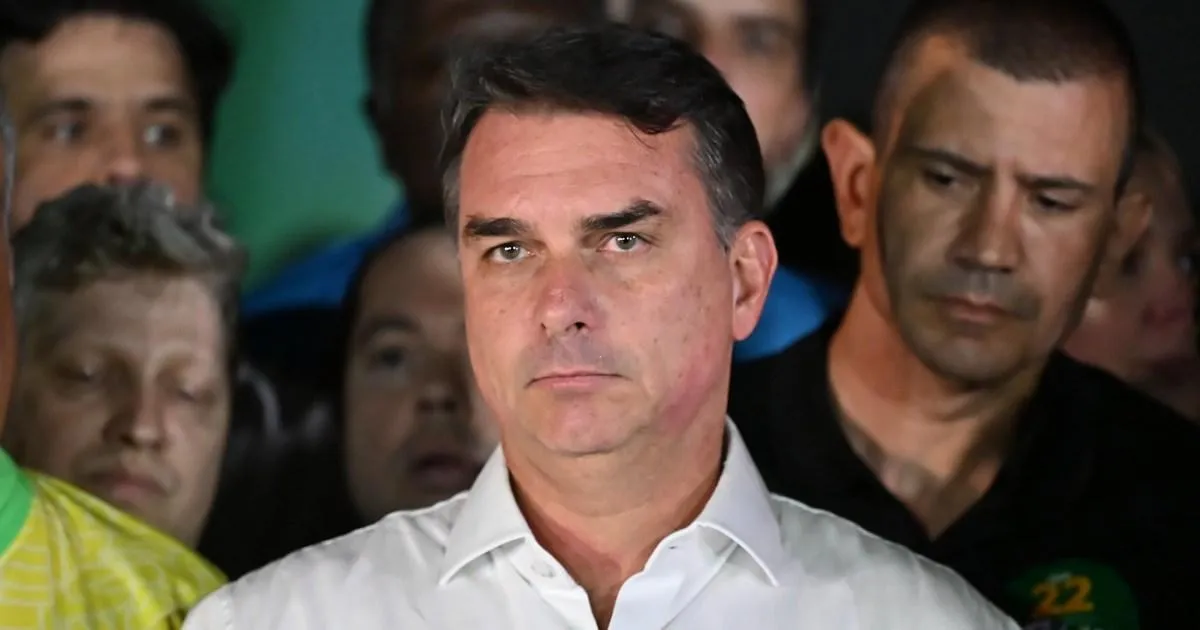
There are election nights that feel less like a count of votes than a national heartbeat, and Brazil’s latest presidential runoff was one of those nights. For months, the country had been pulled in two directions. On one side stood Luiz Inácio Lula da Silva, the 80-year-old left-wing icon whose life has been a story of poverty, struggle, imprisonment and resurrection. On the other stood Flavio Bolsonaro, the hard-line heir of his father’s conservative movement, a man whose family name had become synonymous with a new kind of confrontational politics. When the final votes were counted, Lula had won 51.79% of the ballot, enough to claim a fourth term that no Brazilian president had ever earned before. The result was not a landslide; it was a verdict. The gap was only about four million votes, a narrow enough margin to feel like a knife-edge, but wide enough to decide a nation’s future. As red flags waved in São Paulo and across the country, Bolsonaro’s camp refused to accept what the electorate had said. In Brasília, before a crowd of supporters, he declared the election “impossible to recognise” and promised to ask for it to be annulled. His words were not a concession speech; they were a warning. For millions of Brazilians who had spent years worrying about the stability of their democracy, it felt like watching a familiar storm gather on the horizon, just as another victory celebration began. Election officials and foreign observers looked on in disbelief; even in a country accustomed to political drama, the immediate threat to the result landed like a thunderclap.
For Lula, this victory was more than a political achievement; it was a personal vindication that few alive could fully absorb. A former metalworker and union organiser who rose from the streets of Brazil’s northeast to the country’s highest office, he has spent his entire life beating expectations. As the candidate of the left-wing Workers’ Party, he first governed Brazil from 2003 to 2010, a period in which social programmes, economic growth and global demand for Brazilian goods combined to lift millions out of hunger. Those years built his legend. Then came the fall: corruption charges, a contentious trial and imprisonment that seemed to end his story forever. He was freed, his convictions annulled, and in 2022 he returned to the presidency by defeating Jair Bolsonaro, the father of the man he had just beaten again. This new election, however, was never easy. Lula finished second in the first round, and history was not on his side. Since Brazil restored direct presidential elections in 1989, no candidate who lost the opening round had ever come back to win the presidency. He defied that precedent with a late surge of campaigning and a remarkable turnout in the runoff, turning what could have been an obituary into another chapter of political resurrection. When victory was confirmed, he stood in São Paulo and thanked the voters who had made it possible. His recovery from the first-round defeat was, in his words, a collective act of faith. Then he offered the words Brazilians most needed to hear: “Long live democracy.” He called his fourth term “the best of any president in the history of this country” and promised to listen more than ever to ordinary people. It was a statement of ambition that sounded almost impossible, and yet, from his mouth, it felt like a vow.
The path to that promise, however, was full of friction. The campaign had been tense and poisonous, and in the final stretch the most immediate problem was simply getting voters to the polls. Election day arrived under stormy skies and a fragile mood. Long lines formed at dawn; some Brazilians waited for hours to cast their ballots, while others never made it at all. Both campaigns raised alarms about access. Flavio Bolsonaro’s team blamed severe weather in southern Brazil, while Lula’s campaign said that “incidents” in several states were delaying buses heading to voting stations. In response, Brazil’s Supreme Court extended voting hours by two hours — a decision that should have been a neutral solution, but arrived just as many polling stations were closing, and not all could reopen in time. The result was confusion, anger, and a sense of chaos that no one had needed. Bolsonaro pounced immediately. He said the “rules of the game” had been changed and called the decision a “tragedy.” It did not seem to matter that both campaigns had asked for more time; the moment was cast as institutional manipulation. In a healthier democracy, an administrative extension would have been a minor story. In Brazil, where the last presidential election ended in accusations of fraud and a violent assault on institutional trust, the extension became the foundation for another challenge. Bolsonaro’s demand to annul the result could no longer be dismissed as the stray comment of a sore loser; it was a formal warning that his side would not accept the outcome without a fight. Election observers braced for a wave of disinformation, and ordinary citizens once again found themselves caught between hope and dread.
To understand why those words carried so much weight, you have to remember what came before. Flavio Bolsonaro’s father, Jair Bolsonaro, was elected president in 2018 on a wave of anti-establishment anger and then lost a razor-thin race to Lula in 2022. Rather than handing over power peacefully, the elder Bolsonaro spent years attacking the electoral process, insisting that the votes against him were somehow illegitimate. His efforts to overturn the result eventually led to a 25-year prison sentence for attempting to overthrow the election — an outcome that humiliated the Bolsonaro family and served as an international warning about the dangers of refusing to accept democratic defeat. Now his son stood in Brasília speaking the same language. He told supporters that the election outcome was impossible to recognise and that legal action would come. There was no concession, no congratulations, no acknowledgment that Lula’s victory had been won within the rules of the country’s own institutions. Instead, there was the language of sabotage and betrayal. For many Brazilians, it was like watching the same film a second time, only with a new actor in the lead role. But there was also a crucial difference: Lula was no longer an outsider trying to reclaim power; he was the sitting president, with the machinery of government, a national mandate and a powerful base behind him. The challenge was real, but so was the resistance. The streets that celebrated his re-election were not only cheering for a man; they were defending a system. In the weeks to come, Brazil would have to decide whether it believed in its own ballot boxes, and whether a son could take his father’s path further without paying the same price.
In the center of that celebration, Lula tried to define the meaning of the night. Addressing supporters in São Paulo, he began by thanking the millions who had voted and made it possible for him to climb out of the first-round defeat. He thanked the young voters who had “taken to the streets to defend democracy,” a nod to a generation that had grown up in the shadow of Bolsonarismo and refused to let it become permanent. His campaign, after all, had focused on the anxieties that mattered most to ordinary families: the rising cost of living, the fear of crime and the urgency of climate change. Those issues had brought voters to his side, and he knew it. Lula did not shy away from making the moment historic. “This, my fourth term, will be the best of any president in the history of this country,” he declared, after the national anthem had played and the crowd had wept. “It will be the one in which I listen most to the Brazilian people.” The words were grand, and some critics called them arrogant, but they were also the language of a man who had been counted out more than once. He was not promising perfection; he was promising attention. For supporters, that was enough. For a weary nation, it sounded like a chance to breathe. “Long live democracy,” he said, and the phrase was not merely ceremonial. It was the central thesis of his entire return. In that moment, Lula was not only the winner of an election; he was the embodiment of a belief that ballots, not bullets or legal threats, should decide who rules. The streets answered him with cheers, but the harder answer would come in the courts and in the daily life of a still-divided country.
Looking ahead, it is impossible to ignore the scale of the task. Lula’s fourth term will run until 2030, making him the longest-serving president in Brazilian history if he completes it. That prospect fills his supporters with hope and his opponents with dread. The election result only mirrored a nation that remains deeply divided: nearly half of Brazil voted for Flavio Bolsonaro, and many of those voters now believe, following his accusations, that the election was stolen. Lula will have to govern a fractured country while also managing a legal war over the validity of the vote. His own history offers both warnings and lessons. He was in power from 2003 to 2010 and returned again in 2022, after a period of imprisonment that he has always insisted was politically motivated. Each comeback expanded his legacy; each victory also raised the stakes. Now he carries the burden of an entire democratic system on his shoulders. The next six years will test his government’s ability to deliver on bread-and-butter promises while maintaining faith in institutions and repairing Brazil’s standing in the world. He will not be able to please everyone. He cannot undo years of polarisation overnight. But his re-election, and the resilience of the voters who made it possible, shows that even in a time of misinformation and political violence, democracy has a stubborn power. As the celebrations fade, the real work begins: proving that an election can be won, accepted, and used to build a country rather than to divide it. For Lula, and for Brazil, that is the challenge of a lifetime — and the only way forward.