


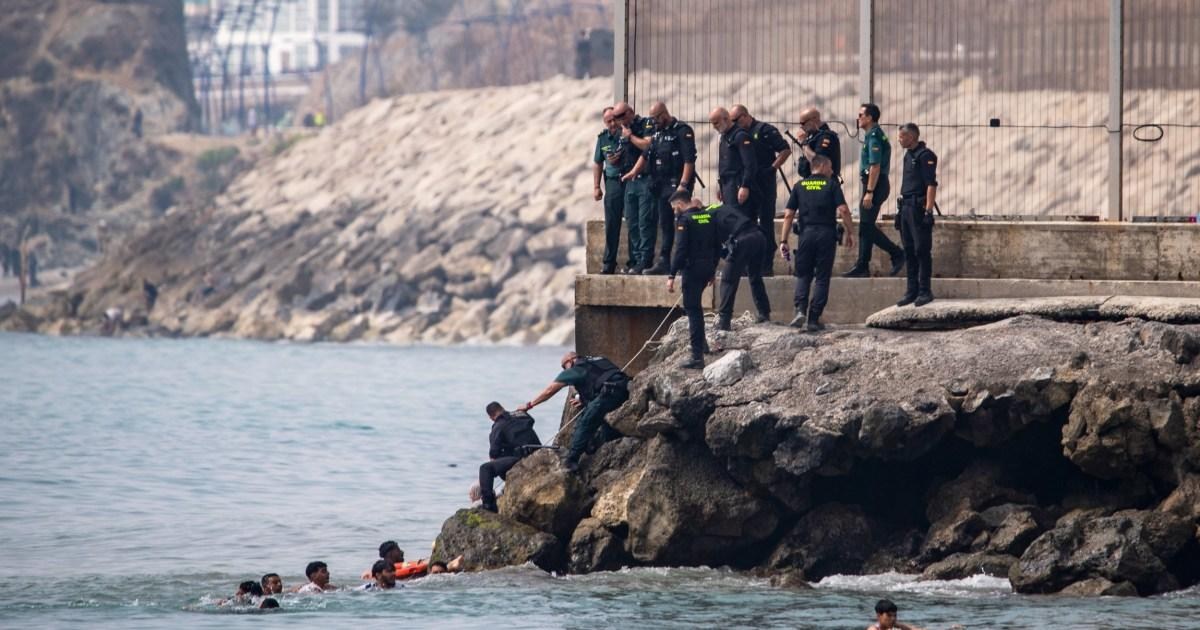
The recent scenes unfolding at the borders of Ceuta, one of Spain’s two North African enclaves, represent a harrowing humanitarian crisis that has once again brought the complexities of European migration policy to the forefront. Thousands of migrants, many of them young, have been seen swarming the shores of this small territory, often relying on nothing more than inflatable inner tubes and makeshift flotation devices to navigate the treacherous waters from nearby Morocco. This sudden, massive influx has left local authorities completely overwhelmed, as the sheer volume of arrivals has turned a steady, managed trickle of migration into a desperate, chaotic surge that is testing the limits of Spain’s logistical and political capacity.
For those on the ground in Ceuta, the mood is one of profound apprehension and urgent alarm. Local leadership has issued desperate pleas to the central government in Madrid, calling for the immediate deployment of the military to help manage the overwhelmed border defenses. Juan Jesus Vivas, the president of Ceuta, has characterized the situation as a total humanitarian and social emergency. The local reception centers, which were never designed to handle such sudden spikes in human movement, are currently saturated beyond capacity. Every corner of the enclave’s resources is being pushed to the brink, leaving officials with the grim realization that they no longer have the space or the supplies to adequately house or care for the people now massing on their streets and beaches.
This dramatic escalation echoes the events of May 2021, when a similar surge saw upwards of 10,000 individuals cross into the enclave in just a matter of days. As with that previous crisis, the current situation highlights the unique and precarious status of Ceuta and Melilla as the only land borders between the African continent and the European Union. These cities serve as the physical intersection of two vastly different worlds, acting as a magnet for those fleeing economic hardship, conflict, or the lack of opportunity in their home countries. The sight of crowds rushing toward safety while chanting messages of hope illustrates the extreme lengths to which people are willing to go, often risking their lives in the sea for the slim promise of a new beginning.
The catalyst for this recent explosion in numbers, according to officials, may be linked to a significant shift in legal interpretation. Earlier this month, the Spanish Supreme Court issued a ruling stipulating that migrants intercepted at sea while attempting to reach these enclaves cannot be summarily returned under the regions’ previously stringent border-rejection regimes. The Guardia Civil has described this legal change as a primary driver for the current “explosion” in numbers, suggesting that human smuggling networks are adeptly exploiting the new judicial landscape to encourage and facilitate these dangerous journeys. By painting a picture of a more lenient border environment, these networks are effectively incentivizing vulnerable people to undertake a high-stakes gamble with their lives.
In response, the Spanish Interior Ministry is actively working with Moroccan counterparts, attempting to navigate the delicate diplomatic dance required to secure the border while maintaining the humanitarian obligations necessitated by law. It is a complex challenge; the government must address the concerns of local residents who feel the strain on their social services, while simultaneously upholding both national security interests and individual human rights. Officials are particularly focused on dismantling the smuggling operations that profit from this desperation, arguing that these shadowy groups are intentionally sowing chaos and misinformation to drive, rather than deter, clandestine migration.
Ultimately, the crisis in Ceuta is a sobering reminder that migration is rarely just a matter of border policy; it is a profound human experience shaped by desperation, legal gray areas, and the enduring pull of a better life. As thousands wait in shelters or navigate the streets of the enclave, the situation serves as a stark call to action for broader international cooperation. Whether through economic development in the transit countries or more unified, sustainable migration policies within the European Union, the status quo is clearly unsustainable for both the migrants risking their lives and the communities tasked with receiving them. For now, the people of Ceuta and the migrants arriving on their shores are caught in a difficult, unfolding chapter of history, waiting for a resolution that moves beyond temporary fixes toward long-term, compassionate solutions.