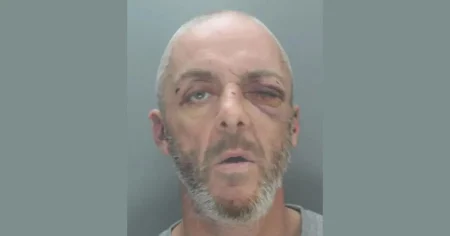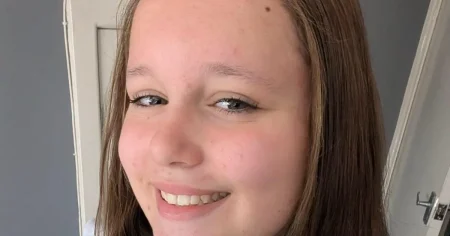



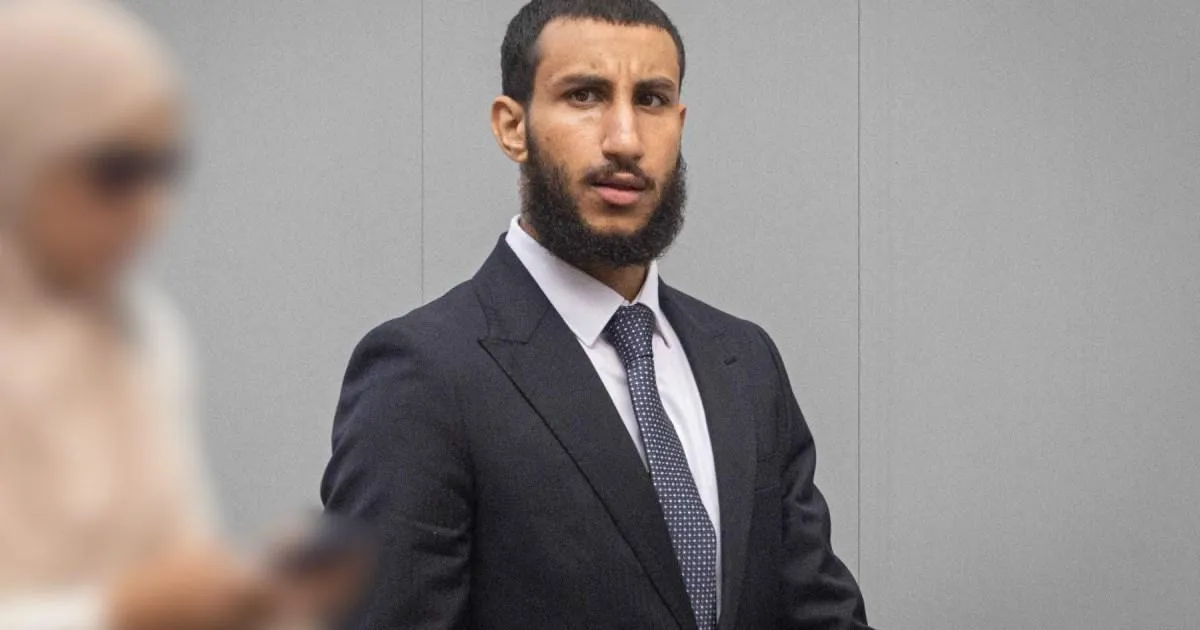
Natasha Thorp was twenty-one years old, a student with a future as wide open as the hearts of everyone who loved her. She had friends who adored her, a family who treasured her, and an ordinary evening in Sutton Coldfield ahead of her when she walked out with her best friend, Cerys Cartwright. By the end of that night, Natasha was dead, Cerys was seriously injured, and a whole community was left trying to make sense of something that made no sense at all. A Toyota Corolla, driven by Saleh Mahmoud Taha Hassan, had struck them while Hassan—a twenty-year-old Uber Eats delivery driver—was doing what the judge would later describe as showing off. He had been drifting his car, sliding the wheels on a public road in a display of speed and nerve that was designed to impress. It impressed no one in the end. In the days that followed, the Gracechurch Shopping Centre in Sutton Coldfield became a place of mourning. Hundreds of tributes and flowers were left in Natasha’s memory, and nearly a thousand people attended her funeral, a number that says more than any eulogy about the kind of person she was. Her family, in the middle of unfathomable grief, offered a quiet and devastating tribute: “To know Natasha was to know a life filled with love, laughter, and joy. It was a privilege to know her as a part of our family or as a friend.” They also called her one in a million, the kind of phrase we use too easily for strangers and too painfully for someone truly loved. No parent should have to bury a child, and no friend should have to leave flowers at a shopping centre instead of plan a birthday. Yet here was a family doing exactly that, wrapped in the love of a town that refused to let Natasha’s light disappear without saying thank you for it.
What made the crash so difficult to accept, both in court and outside it, was that it never should have happened. There was no ice on the road, no mechanical failure, no sudden illness, no unavoidable accident. There was only a choice. Hassan had passed his driving test just two months before the crash. He was not insured to drive, but he had spent part of the evening making Uber Eats deliveries, using the roads to earn money. At some point, the serious task of driving became something else. He was with friends, and one of them was filming him. The video was not some casual home movie; the judge later said that Hassan was recording it to be boastful. He deliberately put the Toyota Corolla into a slide, making the wheels spin and the car drift along a street where a pedestrian had every right to be walking safely. It was, in the judge’s words, “simply stupid.” Judge Kershaw was direct and unsparing: “There is no other way I can see this can be described in a way other than showing off. There is nothing that can be described as driving that was successful. It was simply stupid.” He added that the reason for the crash was Hassan making a conscious decision to slide and skid the wheels of that car. Those words mattered because they cut through any attempt to reframe the tragedy as a moment of panic or a lack of experience. It was a deliberate act, carried out by a young man the judge described as intelligent, someone with high A-level results, someone fully capable of understanding consequences. Immaturity, the judge said, was not an excuse. Being twenty years old does not make you blind to risk; it often makes you feel untouchable, as if nothing bad can actually happen to you. On that August night, Hassan’s sense of invincibility caught up with him, and Natasha and Cerys were in its path.
The days and weeks after the crash were a blur for everyone who loved Natasha. Grief is exhausting in a way that cannot be explained to anyone who has not lived through it, and grief after a sudden and violent death is even worse because it is tangled with shock, anger, and disbelief. Cerys Cartwright had not only lost her best friend; she had been seriously hurt herself, and she would carry the physical and emotional scars for a long time. The judge would later say that the crash “seriously hurt Cerys, and damaged her,” a careful sentence that contained the full weight of what had happened. For the wider community of Sutton Coldfield, the crash felt like a violation. It happened on a familiar street, in an ordinary setting, at a time when people expect to be safe. The response was unmistakable. Hundreds of tributes and flowers appeared at Gracechurch Shopping Centre, turning a busy public space into a memorial. People who had never met Natasha felt moved to leave a card or a candle, because the loss of a young life is a loss shared by the whole community. Almost a thousand people attended her funeral, filling the room with love for a young woman who had made the world brighter simply by being in it. Her family, surrounded by so many witnesses to her short life, described her as one in a million. They spoke of love, laughter, and joy, refusing to let the way she died define the way she lived. In the middle of legal proceedings, statements like that were a reminder that there is no such thing as perfect closure. There is only memory, love, and the slow, painful work of going forward.
Before the sentencing, Hassan had already taken a significant step by pleading guilty. At a court hearing earlier this year, he admitted causing death by dangerous driving, causing death by driving while uninsured, and causing serious injury to another person by dangerous driving. Those guilty pleas spared Natasha’s family the torture of hearing every detail of the crash explored in a trial, but they could not spare them the truth. In a letter written to Natasha’s parents and read aloud in court at the sentencing hearing, Hassan tried to put something into words. “Not a single day passes that I don’t think about the life lost and suffering I have brought on so many innocent people,” he wrote. It is hard to know what to do with a statement like that. For a grieving parent, it may feel hollow; for a defendant, it may be the only honest thing left to say. Judge Kershaw appeared to accept that remorse could be genuine, but he did not allow it to outweigh the facts. He dismissed immaturity as a mitigating factor, noting that Hassan was an intelligent man with strong A-level results. This was not a child who had made a foolish mistake in a moment of excitement; this was an adult who knew the rules of the road and knew the risks of turning a car into a plaything. He also knew that he was not insured, and he drove anyway. The fact that his friend was filming him made the situation even worse. The film was not an accident; it was evidence of intention. It showed a young man who, for a few moments, thought the road was his stage and that sliding a car around would make him look impressive. Instead, it made him answerable for a tragedy that would end with him being sentenced to prison and banned from driving for more than a decade.
On Friday, at Birmingham Crown Court, the final judgment was delivered. Hassan was jailed for nine years and four months, and he was banned from driving for twelve years and eight months. The sentence reflected the seriousness of the offences and the need to send a clear message about dangerous driving. Judge Kershaw did not soften his language. “It was an irresponsible, reckless and deliberate piece of driving that took away the life of Natasha Thorp and seriously hurt Cerys, and damaged her,” he said. “It has damaged many others in different ways, that includes others away from her family and in your family also.” The last sentence was a reminder that the reach of a bad decision extends far beyond those who are physically struck. Hassan’s own parents will now visit their son in prison. His siblings will carry the weight of what he did. His life, too, has been forever changed, not with the same grief, not with the same devastation, but changed nonetheless. The judge turned to Natasha’s memory: “Natasha was a loved young woman who had all of her life in front of her. That was shown by almost 1,000 people turning up to celebrate her life at her funeral.” Nine years and four months is a long time. It is enough time for a person to earn a degree, to start a family, to build a life. But it is not enough time to bring back a life. It is not enough time to let a young woman graduate, fall in love, build a career, or grow old. It is not enough time for Cerys to forget the night she almost died. The law does what it can, but no sentence can truly repair the damage. What it can do is acknowledge, in the name of the community, that what happened was not only a personal tragedy but a public wrong, and that those who choose to drive recklessly must face serious consequences.
Every story like this leaves behind a lesson, though the people who need it most are often too busy to hear it. The road is not a racetrack. A car is not a toy. The people walking along the pavement are not obstacles in a video game; they are someone’s daughter, someone’s best friend, someone’s future. Hassan, an intelligent young man with his whole life ahead of him, made a decision that probably felt thrilling for a few seconds. It cost him his freedom. It cost Natasha her life. It cost Cerys her health and her peace of mind. It cost two families the futures they had imagined. For the rest of us, the temptation is to look away because the story is so sad. But stories like this need to be told, because they are happening too often. The image of Natasha walking through Sutton Coldfield, laughing with her best friend, is not so different from the image of any young person on any street in any town. The image of Hassan at the wheel, being filmed by a friend, is also not strange. It is part of a culture where cars are often used as props, where risky driving is seen as entertainment, and where the urge to impress can overwhelm common sense. The difference between a clever video and a funeral is only a few seconds of lost control. The judge called the driving “simply stupid,” and it was. But the consequences were not simple. They were devastating, and they were permanent. In her family’s words, Natasha was one in a million, and her life was filled with love, laughter, and joy. That is how she should be remembered. The flowers outside Gracechurch Shopping Centre have long since faded, and the courtroom has moved on, but for those who loved her, the loss will not fade. Natasha Thorp will never grow older, and the world is quieter without her. The best hope is that her story, and the painful details of this case, might make someone think twice before taking the same risk, and that all of us might understand a little more deeply what is at stake every time someone gets behind the wheel and drives without care.