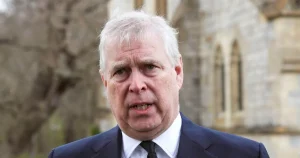


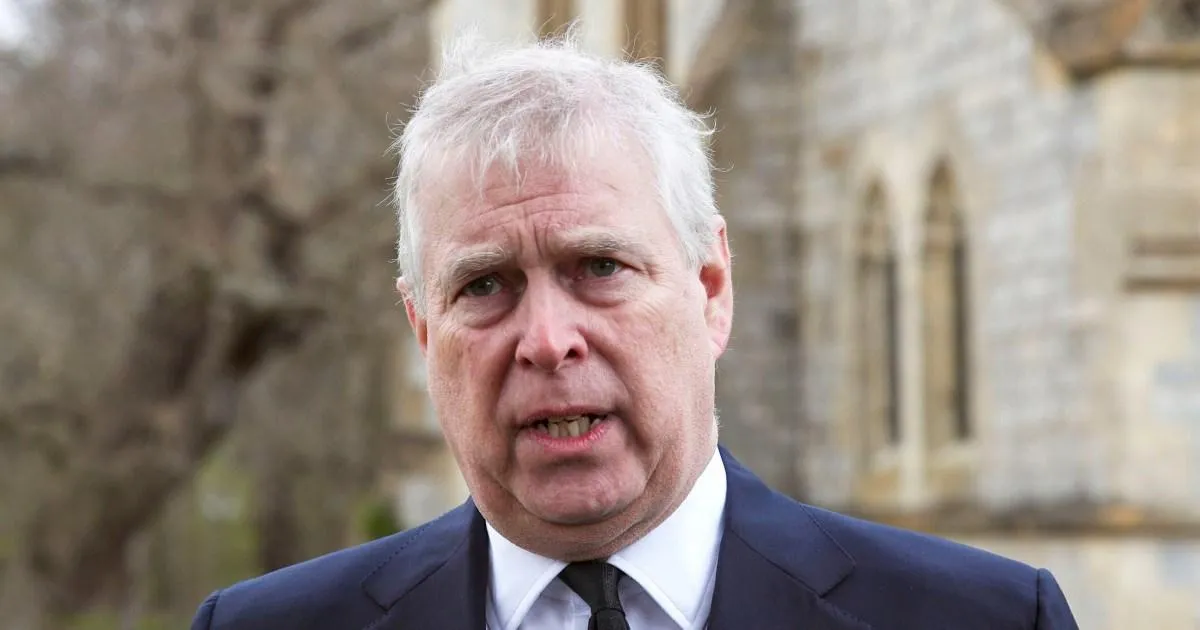
For a man who once stood at the glittering centre of royal life, the silence now surrounding Andrew Mountbatten-Windsor is almost deafening. He is no longer the Duke of York, no longer a working member of the royal family, and no longer able to move freely through the world he once inhabited with such ease. Instead, he is living what those close to him describe as a life “in limbo” at the Sandringham Estate in Norfolk, a vast and beautiful property that has become less a retreat than a holding pattern. Following his arrest in February on suspicion of misconduct in public office, the former prince has been advised to keep an extremely low profile while the police investigation continues. Seven months on, he remains under investigation but not charged, suspended in a strange space between accusation and resolution. The grand estates, the diplomatic trips, the invitations to exclusive gatherings—all of that has been replaced by a quiet, constrained existence in the countryside. He has moved from Royal Lodge in Windsor to Sandringham, a place that once symbolised family tradition and royal leisure, but now feels more like a place of waiting. For someone who spent his entire life surrounded by protocol, privilege, and purpose, the adjustment has been profound. There is no official title anymore, no public role, no clear path forward—only the slow, grinding machinery of a legal process that may take many more months to resolve.
The roots of his current predicament stretch back more than two decades. Between 2001 and 2011, Andrew served as a UK trade envoy, a role that was meant to promote British business abroad but which eventually became mired in controversy because of his association with Jeffrey Epstein, the disgraced financier and convicted child sex offender. The friendship had been a catastrophic miscalculation, one that would follow him for the rest of his life. When Epstein’s associates began releasing documents and emails as part of a growing body of evidence known as the Epstein files, new allegations emerged suggesting that Andrew may have shared confidential information about his official work with Epstein. That was enough to trigger a criminal investigation into whether the former duke had committed misconduct in public office. On the morning of his 66th birthday, police arrived to question him. For about twelve hours, he sat through interviews with Thames Valley Police, answering questions about his diplomatic activities and his connections to Epstein. At the end of that gruelling day, he was released without being charged, but he remained under investigation. Since then, there has been no further contact from the police, and those close to him suggest that authorities appear no nearer to proving the allegation. But the shadow of the investigation remains, and with it, a lingering uncertainty that prevents him from reclaiming any sense of normal life.
Perhaps the most difficult part of Andrew’s situation is that, in a technical sense, he is not formally restricted. He has not been required to surrender his passport, and he is legally free to travel abroad. But in practice, he cannot go anywhere. His own lawyers and royal officials have advised him that leaving the country while the investigation is still active would be extremely unwise. So he remains rooted to Sandringham, unable to do even the simplest things that used to define his life. The friends who used to visit have been reduced to a small, trusted circle. He is reportedly in touch with his siblings, Princess Anne and Prince Edward, and he has been making an effort to adjust to his quieter surroundings. But the relationship with his brother, King Charles, is strained. The King made clear after the arrest that the law must take its course and that the authorities have his full support, but privately, the brothers have not spoken for some time. That family distance must be painful, especially for a man who has lost so much public standing. Andrew is no longer part of the official family photograph, no longer invited to the grand ceremonial events that once gave structure to his calendar. He exists, in a sense, on the periphery of the royal world, watching from a distance as his former life continues without him. The isolation is not just physical but emotional, a kind of quiet exile that has left him with little to do but wait and reflect.
The emotional toll of this limbo is hard to overstate. According to those who have observed him, Andrew’s days have become almost painfully empty. The biographer Andrew Lownie, who has written extensively about the royal family, described the former prince’s reality as “bleak” and his life as “very empty.” He painted a picture of a man who has retreated into solitary habits, reportedly playing video games late into the night, prioritising gaming over work, health, and even basic hygiene. It is a sad and human portrait—not of a villain, but of a man struggling to fill the hours of a life that has been stripped of purpose. There is, however, another side to the story. Friends insist that Andrew is not entirely despairing. They say he is “making the most” of his current situation, trying to focus on his new life in Norfolk. They also suggest that there is a sense of relief in being out of the royal “bubble,” away from the relentless scrutiny and expectation that came with his old position. Perhaps there is a certain freedom in no longer having to perform the role of a royal, no longer having to smile through events he never wanted to attend. But that freedom comes at a terrible cost. He has denied previous reports that he holidayed in the south of France, and he has barely left Sandringham for the rest of the year. The contrast with the jet-setting lifestyle he once led could not be more stark. From international travel and glamorous events to a quiet estate in Norfolk, his world has shrunk dramatically, and there is no telling when or if it will expand again.
Beyond the criminal investigation, Andrew also faces fresh legal and public pressure. In early September, Thomas Massie, a Republican congressman from Kentucky, called for Andrew to be “investigated and prosecuted” over accusations of “sex crimes in the United States.” This followed the release of more Epstein files, which reignited public interest in Andrew’s connection to Epstein and the allegations made against him. The most serious of these allegations came from Virginia Giuffre, one of Epstein’s most prominent accusers, who claimed that she was forced to have sexual encounters with Andrew when she was a teenager. Andrew settled a civil lawsuit with Giuffre in 2022, paying a substantial sum without admitting any liability. He has consistently denied all wrongdoing and has insisted that he never met her. To this day, he maintains his innocence, and no criminal charges have ever been brought against him in relation to those claims. Still, the stigma of association has been impossible to escape. He was stripped of his royal titles last October, a symbolic but devastating blow that marked his final separation from the institution to which he had devoted his life. The legal proceedings and public accusations have turned him into a figure of controversy, someone whose reputation may never be fully restored, regardless of the outcome of the current investigation. In the eyes of many, he has already been judged, and no legal verdict can undo that.
As months stretch on, Andrew Mountbatten-Windsor finds himself in a strange and lonely place, waiting for a resolution that may never bring him peace. The investigation could continue for several more months, and even if it ends without charges, he will still face the wreckage of his public life. There will be no return to royal duties, no restoration of his titles, no easy recovery of the respect he once took for granted. His story is a cautionary tale about the dangers of privilege and poor judgment, but it is also a deeply human one about what happens when a life built on status and image is suddenly hollowed out. Behind the headlines and the legal language, there is a 66-year-old man living in a grand but empty house, cut off from his former world, estranged from his brother, and uncertain of what the future holds. He may have made terrible choices, and he may bear responsibility for his own downfall, but he is also, in a very real sense, trapped. He cannot move forward because the investigation looms over everything, and he cannot go back because that world no longer exists for him. In time, the police may reach a conclusion, and the public may turn its attention elsewhere. But for Andrew, the limbo has become a way of life. All he can do is wait, and hope, and try to find some meaning in the quiet, uncertain days at Sandringham.