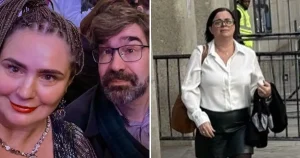


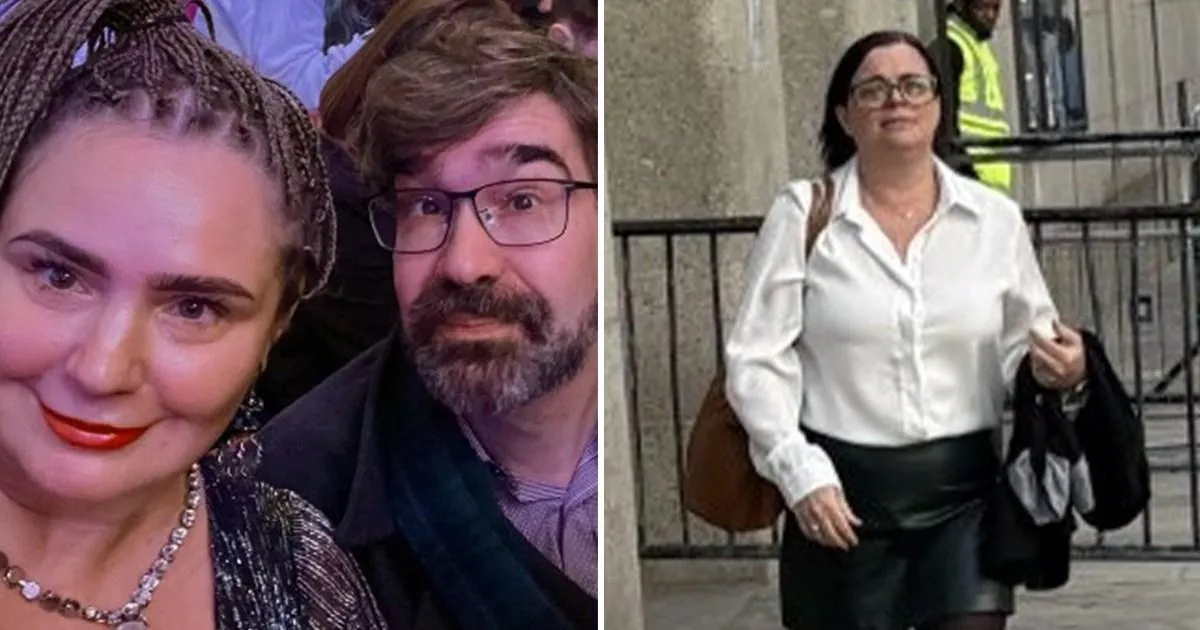
In the stark, unforgiving arena of a courtroom, the story of a life tragically cut short unfolds, painting a portrait of a relationship frayed by mental illness, infidelity, and a desperate, final attempt at a financial exit. The trial of Joanna Cierpka, a 51-year-old woman, for the murder of her partner, Henrik Slotsaa, is not merely a recounting of a violent act, but a deep dive into the heart of a partnership that had spiraled into a vortex of depression, jealousy, and despair. At the center of this heartbreaking narrative is a seemingly pragmatic, yet ultimately futile, breakup offer: £70,000 and a plot of land in Greece. This proposal, presented by the victim, a successful Citibank banker, was meant to be a lifeline out of a suffocating relationship, but instead became a poignant symbol of his final, desperate bid for freedom, a freedom he would never live to enjoy. The court proceedings reveal a tragic tapestry of events, beginning with a birthday confession that shattered Cierpka’s world and ending with the discovery of Slotsaa’s body in their shared home in Elephant and Castle, a discovery that brought their private turmoil into the harsh light of a public murder trial.
The foundation of the tragedy was laid months before the fatal March morning, in the quiet intimacy of a birthday celebration that went horribly wrong. Henrik Slotsaa, 52, had chosen a moment meant for celebration to confess a devastating truth to his partner of years: he had met someone else at work whom he “liked.” This confession, delivered on Cierpka’s birthday, was the emotional bomb that detonated the relationship. It revealed a deep rift that had been widening for some time, exacerbated by Cierpka’s ongoing battle with depression. Court testimony detailed that Slotsaa had confided in others that his partner was suffering from depression and had stopped taking her medication, a critical detail that suggests a woman adrift, without the chemical and professional support she needed to navigate the emotional storm that was about to break. The confession was not a sudden impulse but the culmination of a growing emotional distance, a moment of brutal honesty that set the stage for the desperation and violence that would follow. This revelation, delivered on a day that should have been about her, became the catalyst for a spiral of jealousy and rage, as Cierpka learned that her partner’s affections had not only waned but had been redirected towards a new colleague, Aimee O’Shaughnessy.
In the aftermath of his confession, Henrik Slotsaa, a man described as “very good with his numbers,” attempted to apply a logical, financial solution to an emotionally volatile situation. He confided in his new friend, Aimee O’Shaughnessy, about his plans to “financially resolve things” with Cierpka so they could separate. He meticulously worked out a plan, a calculation of severance for a relationship that had run its course. The offer, as revealed in court, was substantial: £70,000 and a plot of land in Greece. This was not a meager sum but a significant financial package, perhaps a reflection of his guilt, his desire for a clean break, or a recognition of the years they had spent together. Yet, the court heard he was “still very concerned” about the offer, believing it wasn’t the right thing to do because he deemed his partner to be “not coping.” This reveals a man caught between his own desire for happiness and a lingering, perhaps paternalistic, concern for the woman he was leaving behind. He could see her fragility, her inability to function without him, and yet he was determined to move on. The financial offer was his final, calculated gesture, a failed attempt to buy his way out of a tragic situation, a solution that tragically underestimated the depths of Cierpka’s despair and rage.
The third party in this tragic triangle, Aimee O’Shaughnessy, provided crucial insight into Slotsaa’s state of mind and the nature of their relationship. She testified that they had met at a work event in November, a couple of months after he had started at Citibank’s Canary Wharf office. Their connection grew through exchanged numbers and a few lunches, including one in January where Slotsaa expressed that he “enjoyed spending time” with her. However, O’Shaughnessy made it clear she was not ready to “get involved with someone” at that point in her life, and she understood their relationship to be one of friendship. Despite this, the texts they exchanged were laced with a poignant intimacy. Slotsaa wrote, “I always need you for some reason, I can’t explain,” to which she replied, “We’re def friends for life so you are stuck with me.” For Slotsaa, she represented a possible future, a breath of fresh air after the suffocating atmosphere of his home life. He used her as a confidante, sharing his “hard time” in his current relationship and his plans for separation. For Cierpka, however, this friendship was likely perceived as the ultimate betrayal—the “someone else at work” her partner had confessed to liking, the living, breathing reason for her abandonment and the focus of her intense jealousy.
The tragic climax occurred on the day police were called to the couple’s flat in Elephant and Castle. There, they made a grim discovery: Henrik Slotsaa was found dead in his bedroom, while Joanna Cierpka was discovered injured in the living room. The scene was one of chaos and violence, a stark contrast to the quiet, calculated world of banking and the financial settlements that Slotsaa had been planning. In the immediate aftermath, Cierpka made damning statements that would become central to the prosecution’s case. She told a member of staff at the hospital that she had “killed her partner,” a remark that was meticulously recorded in a dated and signed note. Furthermore, she told a psychiatrist that Slotsaa had admitted in December that he no longer loved her and had met someone else at work. These admissions, born of shock, guilt, or a fractured mental state, painted a picture of a woman who had reached her breaking point. The prosecution argues this was a premeditated act fueled by jealousy and rage at being replaced. The defense, however, posits a different narrative: that this was a tragic act committed by a woman whose mental capacity was severely diminished by depression, a woman who was not in control of her actions when she killed the man who had promised to love her but instead chose to leave her.
The trial now hinges on a starkly different interpretation of the same tragic event. The prosecution’s psychiatrist has suggested that jealousy over Slotsaa’s new relationship could have played a part in his alleged murder, framing it as a crime of passion rooted in a specific, identifiable motive. Cierpka, a Polish national, has denied the charge of murder but has offered a plea of guilty to manslaughter on the grounds of diminished responsibility. This legal strategy acknowledges her role in her partner’s death but argues that her mental state at the time was so impaired by her untreated depression that she cannot be held fully responsible for her actions. The court must now weigh the evidence of her mental illness—her stopped medication, her documented depression—against the calculated steps Slotsaa took to leave her. The £70,000 offer and the land in Greece become a tragic detail, a price tag placed on a life and a relationship that was beyond any financial valuation. The jury is left to determine not just what happened, but why it happened, and whether the woman who sits in the dock was a cold-blooded killer or a deeply troubled soul who snapped under unbearable pressure. The trial continues, a somber search for justice in the wreckage of a life and a love that ended in the most brutal way imaginable.