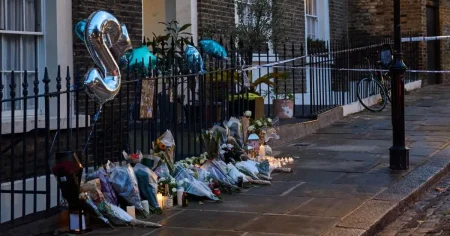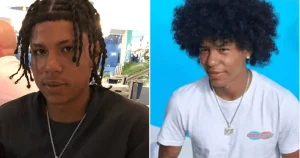


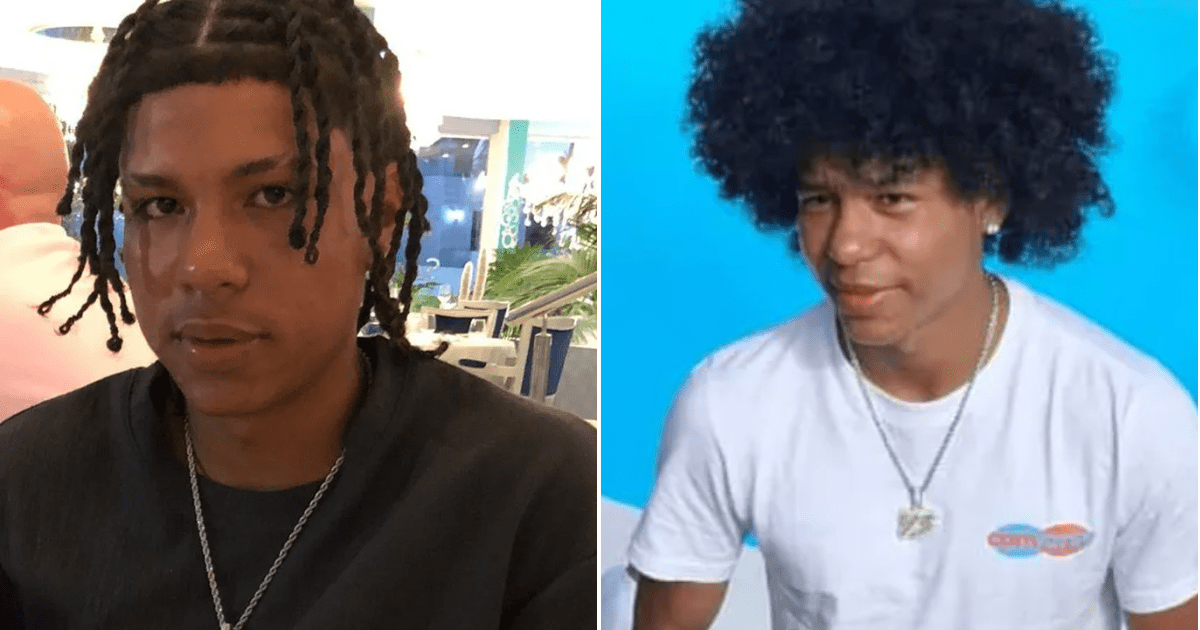
On the night of 27 August, just before 11pm, Old Kent Road in south-east London was doing what it always does: cars moving through the orange streetlight, takeaways glowing, groups of teenagers lingering in the warm evening air. Outside a McDonald’s, Yeray Sanchez Morales sat with a friend. He was 17 years old, a young man who had just finished the first year of a sport science course, and he dreamed of becoming a PE teacher. He was in love, full of plans and energy and the ordinary brightness of a life that had barely begun. None of that protected him. Without warning, without a reason that anyone could later explain, Yeray was attacked. In front of a crowd of other young people, he was stabbed and struck with a bottle. He suffered nine wounds to his neck and chest. His friend survived but would later say they had no idea why they had been targeted. Yeray was rushed to hospital, where he died a week later. The attack was not a private act of violence. It happened in a public place, under the lights of a fast-food restaurant, on a normal street where people were simply trying to get through their evening. The horror did not end there. According to the Met Police, the killers boasted about what they had done by posting photographs of their bloodied hands and knives on social media. Instead of remorse or panic, there was a kind of terrible pride. Instead of a teenage boy on the edge of a future, there was a body, a trail of digital evidence, and a community left to ask how something so senseless could happen.
Yeray’s mother, Elena Morales, has given the world a way to remember her son as something more than a name in a court report. She described him as sensitive, happy, polite and generous, a young man always ready to help anyone in need. He had a special way of connecting with others, she said, and a kindness that shone through everything he did. He loved to dance and sing. He had just finished the first year of a sport science course, and he wanted to become a PE teacher. He was in love and full of dreams and projects. These are not empty phrases. They are the details that make a life real, and they make the loss feel even sharper. Elena said her son’s death has left a wound so deep that it can never heal. The sadness and pain, she added, have scarred her family and his friends forever. Every birthday, every family occasion, reminds her that Yeray should be there. As a mother, she said, she has no words to describe the pain that crushes her soul. Her statement is devastating because it refuses to let the legal story become the only story. Yeray was not a statistic. He was not a warning sign or a case number. He was a boy who wanted to work with children, who loved music, who had someone special in his life, who had parents and friends and hopes. The knife did not only cut through his skin; it cut through all those futures at once. His mother’s grief is not abstract. It is the ache of a kitchen that is too quiet, a voice that will never be heard again, a dance that will never be danced. She hopes the convictions can bring her family some degree of peace, but she knows, better than anyone, that peace is not the same as healing. There is no sentence heavy enough to bring back a son.
The investigation that followed Yeray’s death was painstaking and urgent. Detectives from the Met Police reached out to the teenagers who had witnessed the attack, knowing that many of them were shocked and frightened. Through public appeals, they obtained mobile phone footage of the night, and they used local CCTV to track the movement of the group before and after the attack. They matched clothing seen in the footage to specific individuals. Then they found the social media posts: images of bloodied hands and knives shared openly, as if the attackers were celebrating rather than grieving. The digital trail became a key part of the evidence. One of the 16-year-olds was found to have booked a taxi to take him away from the scene shortly after Yeray was attacked. It is a detail that speaks volumes. Instead of stopping to help, instead of calling an ambulance, he thought only of escape. Another individual was identified through DNA left on the rim of a bottle that had been used to hit Yeray. Forensic science, street cameras, witness statements and social media came together to reconstruct a chaotic, violent few minutes. Detective Sergeant Debbie Barge, who led the investigation, later said that the majority of the teenagers present were horrified by what they had witnessed, and she thanked them for working closely with police to bring those responsible to justice. Her words were careful and professional, but they carried an unmistakable weight. A teenage boy had been killed in front of other teenagers, and the response of the community and the police had been determined and fierce. The same technology that had been used to glorify violence was used to dismantle it. Arrogance, in the end, became accountability.
On Friday, four men and three boys were convicted of a range of offences relating to the circumstances surrounding Yeray’s death. Christhofer Jesus Vasquez, 18, of Enfield, north London, was convicted of manslaughter and sentenced to four years in prison. He had already pleaded guilty to possession of a bladed article in January and was jailed for one year for that offence, to run concurrently with the first sentence. Andres Tapia Londono, 18, of Haringey, north London, was also convicted of manslaughter and handed a four-year jail sentence. Isaac Ros Ramirez, 18, of Hackney, east London, and Juan Betancourt Hoyos, 21, of Haringey, were convicted of violent disorder and given community orders. A 16-year-old boy, who cannot be named for legal reasons, was convicted of violent disorder and sentenced to 16 months in custody. A second 16-year-old was convicted of violent disorder and given a 12-month youth rehabilitation order. A third 16-year-old, who had pleaded guilty to violent disorder, intent to do grievous bodily harm and possession of a bladed article in relation to a second victim in February, was given a community order. The sentences are likely to feel impossibly light to anyone who loves Yeray. Four years for the taking of a life cannot possibly seem like justice when a family has been given a lifetime of grief. But the law distinguishes between murder and manslaughter, and youth offenders are often treated differently from adults. The convictions for violent disorder rather than murder also suggest how difficult it can be to prove who struck the fatal blow in a crowded, chaotic attack. None of that legal nuance matters to Yeray’s family. What matters to them is that the people responsible have been identified and condemned. What matters is that they will carry the mark of this crime for the rest of their liveshol. And yet, even as the court process concludes, the larger question remains unresolved: why did this happen at all, and how many more young people will have to die before the violence stops?
Yeray’s friend, who survived the attack, said that they did not know why they had been targeted. That unanswered question is perhaps the most haunting part of the entire case. It would be easier, in some terrible way, if there had been a clear motive: a feud, a rivalry, a stolen phone, a debt. Then at least there would be an explanation, however twisted. But this appears to have been a sudden and explosive act of violence against a boy who happened to be in the wrong place at the wrong time. The randomness of it is terrifying. It could have been anyone sitting outside that McDonald’s. It could have been any young man on any London street on any warm night. The group moved through the evening with a knife, with a bottle, with enough aggression or bravado to attack a stranger. When the police pieced together the night, they found not only weapons and blood but a social media culture that treats violence as something to display. The photographs of bloodied hands and knives were not mistakes. They were statements. This is the world in which too many young people are growing up: a world where reputation is built on fear, where carrying a blade feels like protection, where showing weakness is more dangerous than carrying a weapon, where the aftermath of an attack is filmed and uploaded for likes. It is a world that killed Yeray. It is also a world that can be changed, though not easily. The community on Old Kent Road, and across London, is left to ask why. Why were children out so late? Why did no one stop it? Why did no one save him? The majority of the witnesses were horrified and later cooperated with the police, but the fact remains that a boy was killed in front of a crowd. That is a profound failure, not only of the individuals who attacked him but of the environment that allowed them to carry knives and celebrate blood. There is no simple solution. But every such death should be a reminder that the cost of violence is not measured in prison sentences. It is measured in human lives, in mothers, in friends, in futures erased.
At the end of a trial, there is a verdict, a sentence, a closing of files. The lawyers pack up their papers. The courtroom empties. But for the family of Yeray Sanchez Morales, there is no ending. His mother has said she hopes the convictions can bring some degree of peace, but she also knows that peace is not the same as healing. Healing may not be possible. Her son’s life was stolen, and her own life is now measured in before and after. Detective Sergeant Debbie Barge acknowledged this when she said that Yeray was just a teenager with his whole life ahead of him, and that his life was cruelly cut in an act of violence that deeply shocked the whole community. She thanked the witnesses who helped bring the responsible to justicehol and said that the thoughts of the police remain with his family. It is a small, honest hope. Justice cannot bring back the boy who loved to dance and sing, who had just finished the first year of a sport science course, who wanted to become a PE teacher, who was in love and full of dreams and projects. It cannot give his mother back his laughter, his warmth, his presence at family gatherings. It cannot make his friends whole. What it can do is say, publicly and officially, that what happened to him was wrong, that he mattered, and that the people who did this have been held accountable. It can also preserve his story. In the telling, Yeray remains alive in a way: not as a victim, but as a person. A boy with a future. A boy who connected with others. A boy whose name should not be forgotten. On Old Kent Road, life goes on. People still queue at McDonald’s, still sit outside, still laugh. But every now and then, someone will remember the night a 17-year-old was stabbed for no reason, and the image of a mother in grief will outweigh the image of bloodied hands. That is the human truth that no sentence can erase. Yeray should be here. He is not. The rest of us can honour him by remembering that behind every statistic is a soul, and that a society that allows its children to carry knives and celebrate violence has already failed. The convictions are a step, but not the destination. The destination is a world where no mother has to say that her son’s death has left a wound so deep that it can never heal.