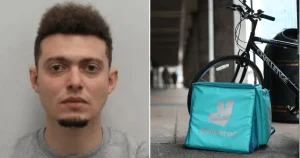


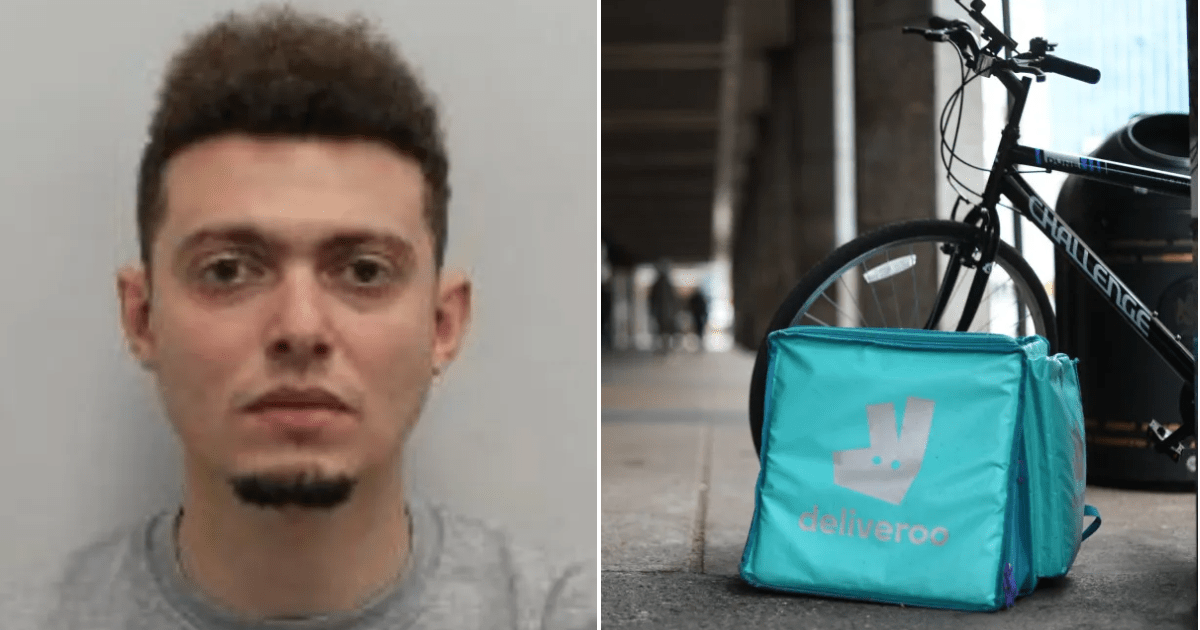
In the early hours of a summer morning in July 2024, a woman in her forties was heading home after spending time with friends. She had boarded a bus but began to feel unwell, so she got off somewhere along the route, hoping that fresh air or a moment of rest would help. Instead, she collapsed onto the pavement, semi-conscious and utterly vulnerable. That is where Salem Rekoub found her. Rekoub, a 28-year-old man who worked as a Deliveroo driver, was not a concerned stranger. He was a predator who saw an opportunity. Rather than offering help or calling for an ambulance, he leaned his delivery bike against a wall, took hold of the woman by her arms, and dragged her down a side street, away from the public eye. In the darkness between two parked cars, he raped her repeatedly over the course of seventeen agonising minutes. At Isleworth Crown Court, a jury found him guilty of three counts of rape and two counts of assault by penetration. The judge sentenced him to 21 years in prison, describing him as a public danger. For the victim, however, the sentence is only a small part of a much longer story of pain, fear, and recovery.
The attack itself was brutal not only in its physical violence but in its calculated cruelty. The victim later told the court that she had drifted in and out of consciousness throughout the ordeal. At times, she was only half aware of what was happening to her, trapped in a haze of confusion and terror. Rekoub, according to the prosecution, repeatedly told her, “You need to be quiet,” using his hands around her throat to enforce his control. The seventeen minutes must have felt like an eternity. When it was over, she was left with 33 bruises across her body, each one a mark of the violence she had endured. But the injuries went far deeper than the surface. In the months following the attack, she began to experience seizures, a condition she had never faced before. Her speech became slurred, and she felt completely numb and disassociated from her own life. The trauma rewired her body and mind in ways that will take years, perhaps a lifetime, to address. She described the attack as having “killed” her, leaving her feeling worthless and unable to cope. She even tried to take her own life because the weight of what had happened became too much to bear. This is the reality of sexual violence: it does not end when the attacker walks away. It stays with the survivor, echoing in every quiet moment, every sleepless night, every attempt to rebuild a sense of self.
The prosecution painted a clear picture of how Rekoub found and exploited his victim. Patricia May, the prosecutor, explained that the woman had been out with friends but had become unwell on her way home. She passed out on the pavement, and it was there that the defendant, a complete stranger, found her. Instead of walking away or seeking help, Rekoub made a deliberate choice. He positioned his Deliveroo bike against a wall, dragged her down a side road that was away from public view, and then pulled her between two cars. Throughout the assault, she was shifting in and out of consciousness, unable to fight back or call for help. The jury heard these details and still had to sit through the defence’s attempts to diminish her credibility. Rekoub’s barrister claimed that he had escaped violence in Algeria and was “eager to find a relationship again,” as if his past or his desires could somehow excuse what he had done. The defence’s approach was so distressing that the victim was left shaking in fear during the trial. At one point, she had to leave the courtroom because she could no longer bear to hear his claims. She later said that his words made her question herself and added to her trauma. It is a devastating reminder that the legal process, while necessary, can itself become another source of harm for survivors.
After the assault, Rekoub went to extraordinary lengths to avoid responsibility. He called 999, but instead of confessing, he told the operator what the prosecution later described as “a pack of lies.” He claimed that the woman had simply had too much to drink and that he was just a concerned passerby. He gave police a fake name, hoping to slip through the cracks. But his actions betrayed his true intentions. He followed the ambulance to Chelsea and Westminster Hospital, where the victim had been taken for urgent medical care. CCTV footage shown to the jury captured him walking through the hospital corridors, checking the emergency unit. The prosecution suggested he was looking for the woman again, perhaps to silence her or to see whether she had reported what had happened. When hospital staff confronted him, he said he was “here to find someone,” a vague and chilling response. Fortunately, the victim had managed to whisper to paramedics what had been done to her. Her words set in motion the investigation that would lead to Rekoub’s arrest nine days later. It is impossible to overstate the courage it took for her to speak, even in a whisper, after everything she had endured. That single act of bravery helped ensure that Rekoub would not be free to do this to anyone else.
The impact statement she shared with the court was harrowing. She spoke of a life completely destroyed, of no longer recognising herself in the mirror. “It has killed me and made me feel worthless,” she said. “I tried to take my own life because I felt like I could not cope.” She described living in a constant state of fear, unable to escape the memory of his hands around her throat, unable to forget his voice telling her to be quiet. She felt numb, disassociated, as though her body and mind were no longer connected. The seizures and slurred speech were physical manifestations of a psychological wound that had not yet begun to heal. Her testimony, and the way she endured the trial, moved everyone in the courtroom. But the case also raised troubling questions about how Rekoub came to be in a position to commit such a crime. The prosecutor noted that there were “incomplete checks” into whether he should have been working at all. He was in Britain on a tourist visa, yet he was delivering food for a major platform. This glaring gap in oversight points to a systemic failure that goes beyond one individual. It highlights how easily predators can slip through the cracks of the gig economy, where background checks are often superficial and where workers are frequently hired without proper scrutiny. The judge’s sentence of 21 years sends a clear message about the severity of the crime, but it cannot undo the failure to prevent it.
This case is a stark reminder that violence against women remains a deeply entrenched problem in our society. It happens in broad daylight, at bus stops, on streets, in places where people should feel safe. It is committed not by shadowy strangers lurking in alleys, but sometimes by the very people we see every day, delivering food, riding bikes, blending into the urban landscape. The fact that Rekoub was a Deliveroo driver is not the reason he committed this crime, but it is part of the context. It allowed him to move through the city unnoticed, to encounter vulnerable people, and to exploit them without raising suspicion. His conviction and lengthy sentence are a form of justice, but true justice would also mean creating systems that protect people before they are harmed. It would mean rigorous background checks for every worker who interacts with the public. It would mean better support services for survivors of sexual violence. It would mean a culture that believes women, listens to them, and holds predators accountable. For the woman at the centre of this case, the road ahead will be long. She is still living with the physical and emotional scars, still trying to piece together a life that was shattered in seventeen minutes. But she is also a survivor. Her willingness to speak, to endure a painful trial, and to confront her attacker in court is a testament to her strength. The 21-year sentence will keep Rekoub behind bars for a long time, but it will never give her back the person she was before. The least society can do is honour her courage by working to ensure that no one else has to suffer the same fate.