

In the close-knit streets of Derry, grief and anger rarely travel alone. On Monday morning, a convicted killer walked into St Mary’s Church in the Creggan area to bury his father, surrounded by mourners and family. He was expected to return to prison after the funeral and the cremation that followed in Letterkenny, County Donegal. Instead, four days later, Gary Anderson has vanished, and the quiet confidence of justice has been replaced by unease. The Police Service of Northern Ireland is now working with An Garda Síochána in a cross-border manhunt, while officers patrol streets, study CCTV footage, and appeal for sightings of a man who is not just an absconder but a convicted murderer. Anderson, aged 29, had been granted temporary release from Maghaberry Prison to attend his father’s funeral. It seemed, at first, a humane decision: even those who have committed terrible crimes are allowed to mourn. But somewhere between a church in Creggan and a crematorium in Donegal, Anderson vanished. Since then, no confirmed sighting has been made. Police have warned the public not to approach him. But behind the official appeals and the careful wording of police statements is a deeper emotional story: the family of Karol Kelly, the man Anderson was convicted of killing, are being forced to watch the man who took their loved one’s life walk free, even briefly, while they remain trapped in permanent loss. His father’s death is real, but so is their pain. This is not only a manhunt. It is a reminder that justice is held together by trust, and when that trust is broken, the wound spreads far beyond one family.
To understand the anguish, one must understand the crime. Karol Kelly was a father of five, a man with a family, friends, and a place in his community. In the early hours of March 4, 2018, he was involved in an altercation on Grafton Street in Londonderry. During that encounter, he was stabbed several times. He died there, leaving children without a father, a family without an anchor, and a community shaken by sudden violence. After years of investigation and legal proceedings, Gary Anderson and his brother, Sean Anderson, were sentenced in 2023 for Kelly’s murder. Gary was ordered to serve 15 years; Sean received a longer sentence of 17 years. For the Kelly family, those sentences were the end of a long and painful waiting period. They had sat through trials, listened to difficult testimony, and tried to rebuild their lives after an unimaginable loss. To hear that Gary Anderson was being allowed out of prison, even temporarily, must have felt like the past was being dug up again. The decision was not made lightly. Initially, Anderson was not granted leave to attend his father’s funeral. But that decision was overturned, despite opposition from prison authorities. His brother, Sean, who was also convicted for Kelly’s murder, was not given the same permission. So Gary alone was allowed to leave Maghaberry, a high-security prison, to stand beside his father’s coffin. Funerals are sacred, and no one should pretend that mourning a parent is easy. But when a convicted murderer is allowed to move through the world, even for a few hours, the scales of justice tremble. For the Kelly family, the funeral was not just a private matter. It became a public wound.
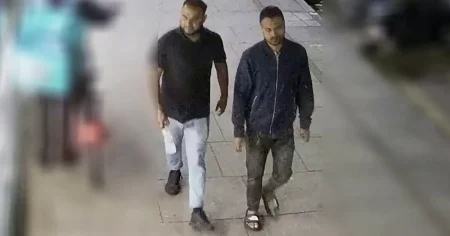
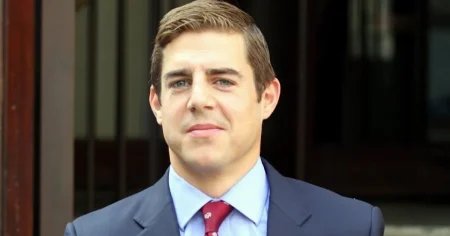
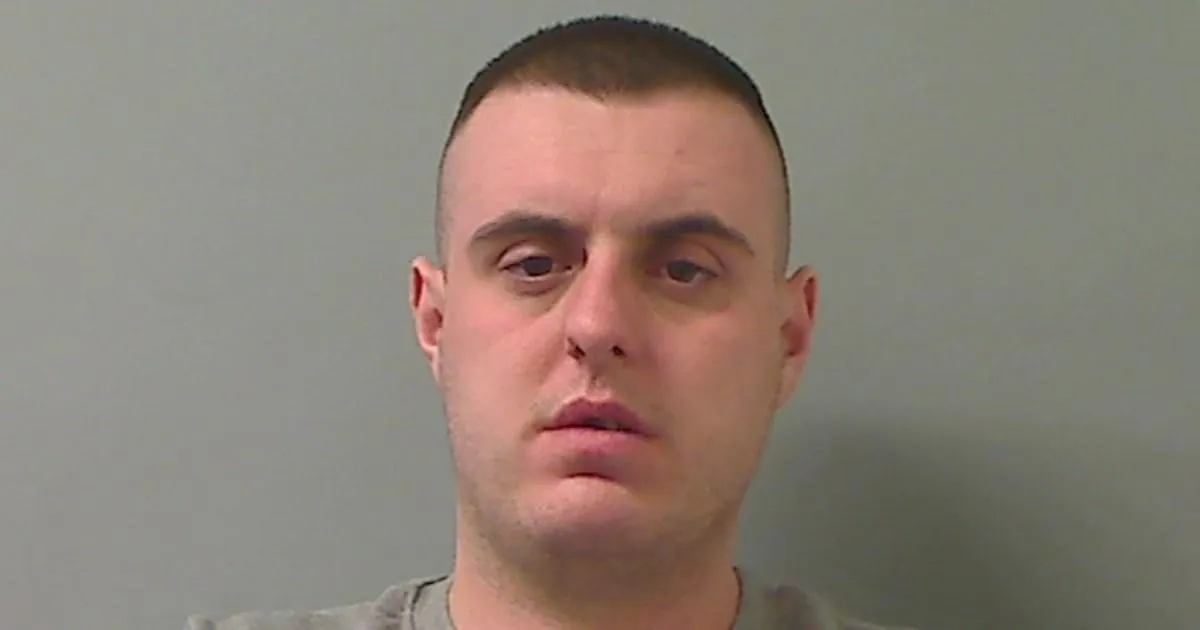
The temporary release system exists in many places, and in ordinary circumstances it is a sign of humanity. Prisons often allow trusted inmates to attend funerals, sometimes under escort, sometimes with strict conditions, especially if there is little reason to believe they would run. But Anderson’s disappearance shows how fragile that trust can be. On Monday, he attended the funeral at St Mary’s Church in Creggan. Later, there was a cremation in Letterkenny, just across the border in County Donegal. After that, he was expected to return to prison. Instead, he became a fugitive. The exact moment and method of his disappearance are still unknown. Police have asked anyone who was in the Eastway area on Monday, around the time Anderson was last seen, to check their memories, doorbell cameras, dashcams, or phone footage. They are also looking across the border, aware that a man who knows the terrain might try to blend in or slip away. The public warning not to approach him suggests that police believe he could be unpredictable or desperate. Anderson is described as roughly 5 feet 11 inches tall, of slim build, with brown hair. A more recent photograph has been released in the hope that someone will recognise him and contact authorities. There is something unsettling about seeing that face in a new photo: a man who is someone’s son, someone’s brother, someone who now must be captured and returned to prison. He is all of those things, but he is also someone who was convicted of taking a life. The community is left with a difficult emotional question: compassion for a man burying his father, or solidarity with the family of his victim? The police have made their position clear. Do not approach him. Do not try to help him. Tell them where he is.
Detective Inspector Gareth Lavery has become the public voice of this search, and his words carry both official authority and an honest sense of plea. He said that the police are grateful for information already received following the public appeal on Monday. He assured the public that every report is being investigated and that officers are doing all they can to locate Gary Anderson. But, as of now, Anderson has not been found. The inspector then made a direct appeal not only to the public but to Anderson himself, urging him to hand himself in. He described Anderson again as about 5 feet 11 inches, slim, with brown hair, and released a more recent photograph. There is a strange intimacy in that appeal. It speaks directly to a man who may be watching television, listening to the radio, or reading about himself online. The detective’s words are not angry; they are almost simple and human. They ask someone to do the right thing after doing the wrong thing. But the seriousness is still there. Anyone who knows where Anderson is, or has information about his movements, is urged not to approach him directly but to contact police as soon as possible. Officers are also keen to hear from anyone who was in the Eastway area on Monday, especially those with relevant footage. Behind these words lies hours of hidden work: officers knocking on doors, studying faces, following leads that go nowhere, waiting for the one piece of information that changes everything. A manhunt is not always dramatic. Often it is slow and grinding, made of small details and repeated appeals. But every hour a convicted murderer remains missing chips away at public confidence. And for the victim’s family, every appeal is a painful reminder that the person who killed their loved one is still out there.
The Kelly family has not remained silent, and their voices are important. According to reports, they are distressed, annoyed, and frustrated by the current situation. Those words seem too quiet for what they must actually feel. Mark H Durkan, a local politician, met the family and spoke about their concerns. He said they have questions that need to be answered. He also pointed to what he called systemic issues, saying that the matter needs to be examined alongside the relevant minister, and that there are huge questions about how this happened, how it was allowed to happen, and what will be done to prevent a repeat. Karol Kelly’s brother, Paul, also shared a deeply personal message on social media, promising that the family “will be trying our utmost to never allow this to happen to another family again.” That promise comes from a place of raw grief. Imagine being Paul Kelly. Imagine losing your brother to violence, waiting years for the legal process to play out, seeing the killers sentenced, and then learning that one of them is allowed to walk free for a day. Imagine the fury when he does not come back. The family has been pushed into the spotlight against its will. They did not ask for this. They are now part of a wider conversation about risk, compassion, and accountability, but for them this is not a political debate. It is personal. Anderson is not a topic to be discussed online. He is a living reminder that their loved one is gone and cannot be brought back.
As the search enters its fourth day, the practical path forward remains clear. Anyone with information is asked to call police on 101, quoting reference 555 of 14/09/26. Alternatively, information can be provided anonymously to the charity Crimestoppers on 0800 555 111. Those numbers are easy to repeat, but each call carries the weight of a community deciding what side of justice it stands on. The next few days could determine whether Anderson is quickly recaptured or becomes a longer-term fugitive. The border with the Republic of Ireland, with its winding roads and close communities, offers both refuge and exposure. Someone knows where he is. Someone has seen something, perhaps a familiar face, a strange car, a movement at the edge of sight. The police appeal is simple: let us find him before anyone else gets hurt. But this is not just an update in a news cycle. It is a story about the fragility of public trust. When a man convicted of murder is allowed to attend a funeral and then disappears, institutions are shaken. People ask why the risk was taken. They ask whether the prison system cared more about the feelings of a convicted prisoner than the safety of the public and the dignity of victims. There are no easy answers. Funerals should be sacred. Everyone deserves to mourn. But accountability must not disappear at the gates of a cemetery. Gary Anderson made a choice. He chose his freedom over the rules, over the promise, over the law. In doing so, he disrespected the system, his own family’s grief, and the family of the man he killed. The search continues, with officers on patrol, phones ringing, and a family sitting in a room trying to understand the impossible. And somewhere, perhaps, Gary Anderson is breathing the cold air of freedom, while a father of five lies in a grave, and another family waits for the world to make sense again.