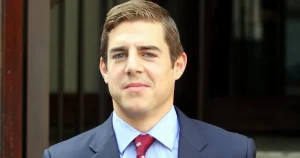
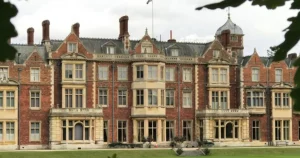


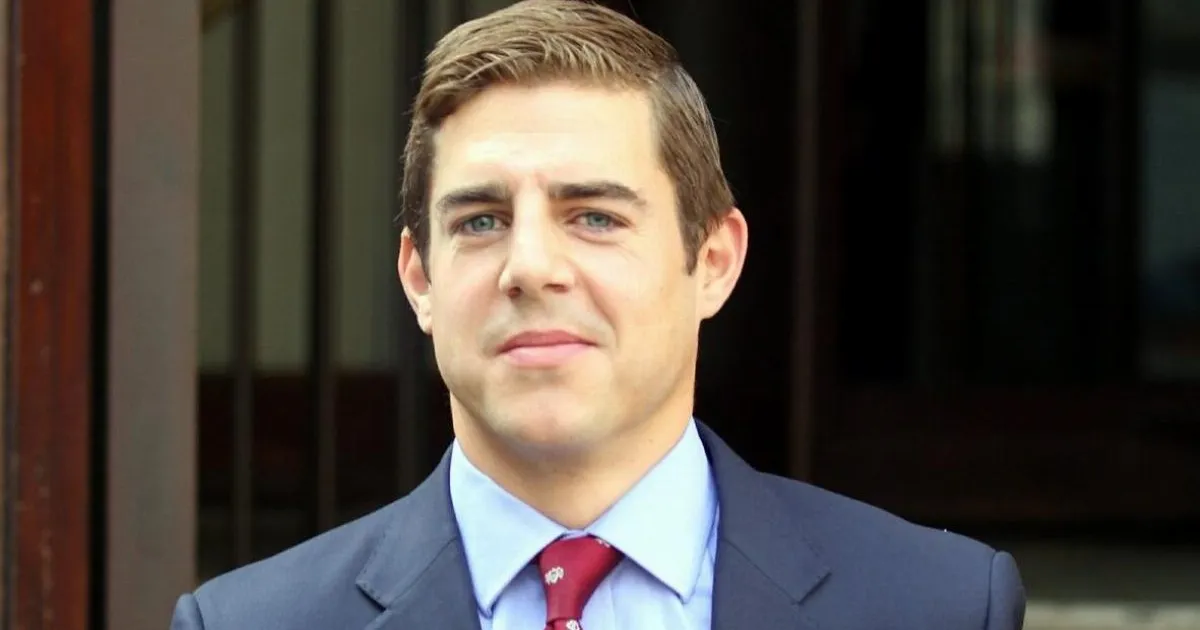
In the quiet aftermath of an unimaginable loss, the family of Nicholas Brandram are left not only grieving a brother, a son, and a former soldier, but also grappling with the haunting belief that the weight of a public accusation may have contributed to his death. Nicholas was found dead at his home in West London on a Tuesday, days after months of mounting pressure and scrutiny had taken an evident toll on his mental state. To the outside world, he was a man arrested on suspicion of being the so-called “Putney Pusher,” the shadowy figure caught on CCTV pushing a woman into the path of a bus on Putney Bridge in 2017. But to his sisters, Alexia Hicks and Sophie Voelcker, he was a man of quiet dignity, a former captain in the British Army who had served in Afghanistan and Bosnia, a grandson of Princess Katherine of Greece and Denmark, and a banker at HSBC’s private branch. He was also, they insist, innocent. And now, instead of being able to fight to clear his name, his family must bury him and wonder whether the system that was supposed to protect him instead failed him in the most profound way possible.
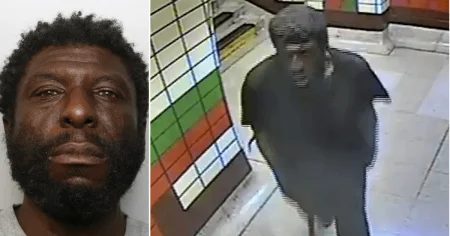
The original incident that gave rise to the nickname “Putney Pusher” was one of those rare moments of random urban horror that sears itself into the public imagination. In May 2017, a 33-year-old woman was walking across Putney Bridge when a stranger, captured on grainy CCTV, appeared to lunge at her and push her directly into the path of an oncoming bus. The bus driver managed to swerve just in time, and the woman escaped with her life, but the footage was shocking enough to spark a years-long investigation and a fevered public fascination. The unknown attacker became a kind of bogeyman, immortalized in headlines, endlessly shared and discussed, and the search for him went cold for years. For the victim, the trauma must have been indescribable; for the public, the idea of a random, motiveless push was deeply unsettling. But for the family of Nicholas Brandram, the case would eventually become a personal nightmare. When detectives finally made an arrest in June of this year, it was not the beginning of justice, but the beginning of a new and devastating chapter in their lives. The arrest was carried out with what the family describe as a “film crew” and members of the press present, a spectacle that felt less like a lawful procedure and more like a public execution of reputation.
The sisters were clear and measured as they spoke on BBC Radio 4’s Today programme, yet the pain in their voices was unmistakable. They explained that their brother’s physical profile simply did not match the description given by the victim. The police had been told that the suspect had brown eyes, but Nicholas’s eyes were blue. He also had a withered leg from childhood, a distinguishing physical condition that would have been difficult to miss, and a military tattoo on his forearm that linked him to a lifetime of service rather than random violence on a bridge. Perhaps most importantly, the family had evidence that Nicholas was at his office on Bond Street when the attack happened in May 2017, miles away from Putney and with no connection whatsoever to the area where he had grown up? He lived in Notting Hill, worked in the heart of London’s financial district, and had never been linked to the incident in the nine and a half years that had passed since it occurred. The sisters stressed that there was absolutely nothing connecting their brother to the attack, and yet the arrest was made with a swiftness that suggested certainty. They accused the Metropolitan Police of being reckless and negligent, pointing out that while officers were eager to handcuff their brother, they were far less eager to investigate the anomalies in their own case. The DNA sample Nicholas voluntarily provided was never tested, or at least its results were never shared with him, despite his family chasing the force for an answer. He was left in a state of limbo, accused in the court of public opinion before he had ever been given a chance to prove his innocence.
The aftermath of the arrest was, by all accounts, brutal. Nicholas’s name began to circulate online and then across social media, and with it came a wave of vitriol. He was no longer a person to the strangers who typed angry words into their phones; he was a symbol of something monstrous, a man who had allegedly shoved a woman into the path of a bus. His family watched helplessly as his mental health began to deteriorate, the weight of public shame pressing down on him even as he tried to maintain some semblance of ordinary life. HSBC suspended him from his job at the private banking branch, a career that had given him structure and purpose after his years in the military. The arrest itself was made on suspicion of attempted grievous bodily harm, and he was released on bail, only to be re-arrested a day later on charges related to Class A and Class B drugs. That second arrest, his sisters suggested, felt almost like an afterthought, a way to keep him pinned down while the larger investigation stalled. They described a man who had served his country in Afghanistan and Bosnia, who had answered the call of duty in dangerous places, only to find himself completely alone and vulnerable in his own city. The same city that had once celebrated his service was now happy to believe the worst of him without evidence. And the police, the sisters argued, showed no urgency to clear his name once they had destroyed it.
In the days since his death, the family have demanded answers, and their public testimony is a plea for accountability not just for Nicholas, but for every person whose life can be overturned by a careless accusation. They pointed to the fact that detectives confirmed last week that another unnamed suspect had been released under investigation while “outstanding enquiries were being completed.” That revelation, coming so soon after their brother’s arrest, raises painful questions about why Nicholas was singled out in the first place. If there was another suspect, if the investigation was ongoing, why was it necessary to allow Nicholas’s name to be dragged through the mud? Why were there no safeguards to protect his mental health, no recognition that a man with no prior connection to the case might be devastated by the weight of public suspicion? The sisters’ words were not born of anger alone, but of a deep, abiding grief that has now been compounded by the finality of death. They wanted their brother alive and exonerated, but instead they are left with memories, with unanswered letters to the police, with a DNA test that was never returned, and with the cruel knowledge that their brother died under a shadow he did not deserve. The Metropolitan Police have said they will not comment further in response to the interview, but silence in the face of such pain is not an answer. It is an admission that something went terribly wrong.
Above all, this is a human story, not just a crime story. It is the story of a family who loved a man and believed in his innocence, and who watched him being consumed by a process that was supposed to be fair. It is a reminder that behind every headline, every sensational nickname, every viral video, there is a human being whose life can be shattered in an instant. The “Putney Pusher” case was never just about catching a villain; it was about the fragile nature of reputation, the power of social media to destroy, and the way that justice can sometimes be blinded by its own urgency. Nicholas Brandram was a man with a complicated history, a distinguished military career, a privileged lineage, and also, at the end of his life, a terrible vulnerability. His sisters do not excuse whatever personal struggles he may have had, but they insist that he was not the monster the public was invited to hate. They are left with a grief that no verdict can ever ease, and a determination to ensure that the mistakes made in his case are not buried with him. As they speak, it is impossible not to feel the weight of their loss, or to wonder what might have been if the police had been more careful, if the media had been more compassionate, if the public had been less quick to judge. Nicholas Brandram is gone, but his family’s questions remain, and they echo far beyond the banks of the Thames, a painful reminder that justice must never be more important than truth, and that a person’s name is the most precious thing they can possess.