

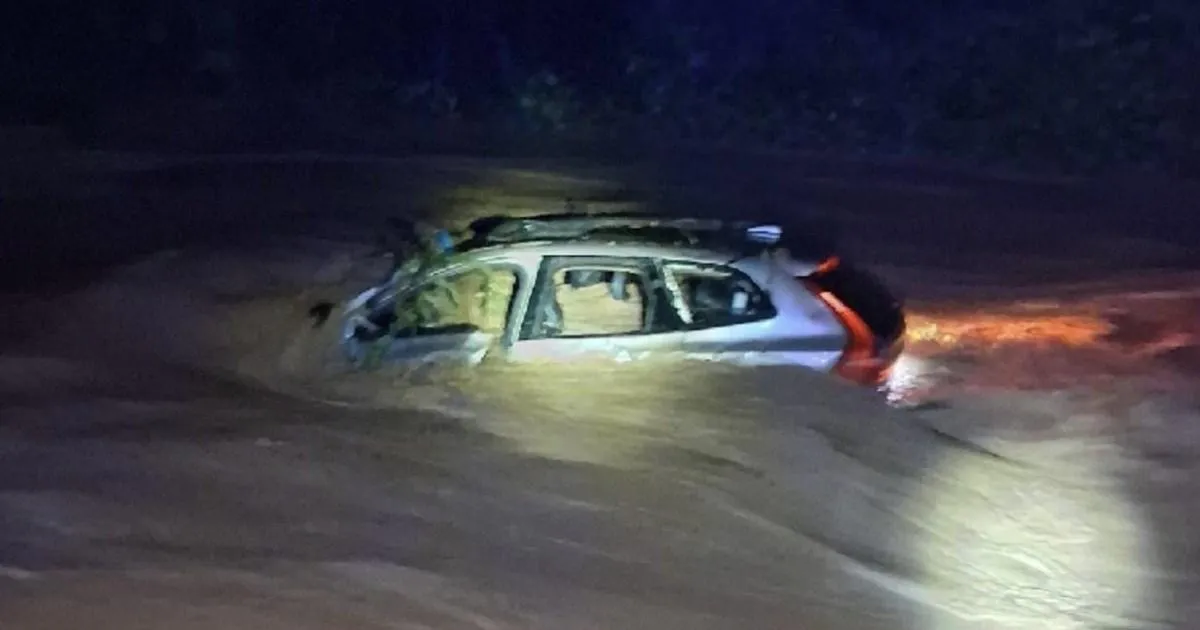
Through the relentless curtain of rain, on a winding rural road in northeastern Spain, a grey Volvo approached a narrow bridge over the Begues river. It was late on Wednesday night, just after 11pm, and the landscape around the tiny village of Olivella, in the province of Barcelona, had already been transformed by hours of extreme flooding. What was normally a quiet, unremarkable crossing had become a violent, swollen torrent, and the car was no match for it. The water rose, surged, lifted the vehicle, and pulled it into the dark, churning current. A British man was inside, and he did not survive. It is impossible now to know exactly what his last thoughts were, or why he had been out on that road in such weather. Maybe he was heading home, maybe visiting someone, maybe caught out by a journey he had made a hundred times before. Human lives so often turn on small decisions, and on that particular Wednesday night, a man made a decision to cross a bridge as the river waited to take him. The village of Olivella, tucked into the hills near the coastal resort of Sitges, woke the next morning to the news that a stranger had died in its waters, and everything felt a little differently from then on.
The emergency response began almost immediately, and it was extraordinary in its scale and determination. Some eleven teams were involved in the search operation, including special aquatic officers and drones, all sent out into the night to find the man and the missing Volvo. The conditions remained dangerous long after the car went in, with the river still high and the rain still falling. It was not until around 2.25am on Thursday that rescuers discovered a lifeless body, approximately 500 metres from where the car had been swallowed by the water. The vehicle itself was later recovered, a grey, mud-covered reminder of the ordinary journey that had ended in catastrophe. The man was confirmed to be a British national by the mayoress of Olivella, Marta Verdejo, in a statement to La Vanguardia. She described the incident as “an exceptional case”, words that seemed to capture both the rarity of such a death in a small community and the strange helplessness that comes with seeing a life taken by nature itself. On Thursday, the village gathered to observe a minute’s silence for the victim. It was a simple and moving gesture: people standing in silence, on streets still damp from the storm, united by the memory of a man most of them had never met. They did not know his name, they had not seen his face in life, but they mourned him all the same, because they had witnessed the trace of his passing and because every life deserves to be acknowledged.
While this human tragedy was unfolding in Olivella, the wider region of Catalonia was under enormous pressure. The storm had upended transport and public services across a large part of the northeastern coast of Spain, turning roads into rivers and daily routines into emergencies. In Barcelona, the primary beltway known as the Ronda de Dalt was partially closed as water gushed through its tunnels, with clips shared online showing cars negotiating deep, surging water while trying to make it through. In Girona, major roads were also affected, and across the region commuter railway lines reported severe delays. At Barcelona’s El Prat airport, at least 23 flights were cancelled because of the conditions, leaving travellers stranded and forcing hundreds of people to rearrange their plans at a moment’s notice. Airports are supposed to feel like places of order and efficiency, but on that night the departure boards turned into a sea of red, and the hum of the terminal was punctuated by the frustration and anxiety of people who had nowhere to go and no way to know when they would get out. For those on the roads, the dangers were even more immediate. A normal commute became a careful, terrifying crawl. Every underpass could be hiding deep water, every stretch of road might suddenly disappear beneath a rising flood. The storm had made the landscape unrecognisable, and it reminded everyone that the systems and infrastructure people depend on can be overwhelmed in a matter of minutes.
The coastal resort of Sitges suffered its own share of the catastrophe, with a burst river leaving a campsite completely overrun by water. Some 270 campers had been staying there, and they were evacuated to safe areas as the water rushed through the site, destroying what should have been a carefree holiday in the Spanish sun. According to local authorities, many of those who were brought to safety decided to return home rather than wait out the rest of the storm. It is easy to imagine the chaos and fear of that evacuation: the sound of floodwater moving through tents and caravans, the frantic packing of belongings, children crying in the dark, and the strange, sudden ending of a holiday that had promised relaxation but delivered terror. Meanwhile, in Barcelona, firefighters were responding to an equally worrying emergency at the Vall d’Hebron University Hospital, where the basements of three buildings had flooded and the ceiling of a paediatric ward had collapsed because of the storms. For the children being treated there, and for their parents, that must have felt like the world falling in both literally and emotionally. For the hospital staff, it was a terrifying test of resilience, as they tried to keep vulnerable patients calm and safe while water poured through the building. The fact that no harm came to those children, and that the hospital continued to function, is a testament to the professionalism and courage of the people who worked through that night, even as their own place of work was being battered by the elements.
Further south, in Valencia, the flooding was equally severe and equally disruptive. The airport there was temporarily closed as water turned surrounding roads into waterways, and photographs showed cars half-submerged and abandoned where their owners had been forced to leave them. For a time, the airport looked less like a transport hub and more like a scene from a disaster film, with floodwater reflecting the grey sky and no clear path to safety. The region was also hit by torrential showers so intense that hailstones the size of one-euro coins fell from the sky. One resident shared a picture of the ice drops, their size almost beyond belief, and the image quickly became a symbol of just how extreme this weather had become. Everywhere, people were being forced to adapt. Normal routines had disappeared. Businesses shut their doors. Shops closed early. Families stayed indoors, watching water rise. There is a kind of collective trauma that comes from seeing your environment turn dangerous, and for many people in Valencia and Catalonia, the storm will not be easily forgotten. The political and scientific debates about climate change and extreme weather will continue, but for the people who lived through this flood, the arguments are theoretical. The water was real. The damage was real. The grief, too, was real. And the question of how to live with a changing climate is no longer abstract, but urgent and local and deeply human.
In Olivella, the minute’s silence held for the British man was more than a formality. It was a peaceful, powerful act of solidarity from a village that had no connection to the man but refused to let his death pass unnoticed. It said that he was not alone, that his life mattered, and that in the middle of destruction there is still room for tenderness. The Volvo has been recovered. The river will slowly return to its normal level. The waters will recede, and the damaged roads and flooded buildings will be repaired. But the memory of the man who died crossing that bridge will remain, carried in the quiet spaces of a small Catalan village and in the hearts of a family somewhere in Britain who are, even now, waiting for news. There is a particular ache that comes with not being able to say goodbye, especially when the end came in a faraway place, in the dark, in the middle of a storm. As the days pass, more details will emerge, maybe a name, an age, a story. But even without those facts, the man has already been honoured by a community that stopped to acknowledge him. As the world faces more frequent and more violent storms, there will be more evacuations, more disruptions, more terrible decisions at bridges and roadsides. There will be more emergency workers risking their own safety, more neighbours helping strangers, more quiet moments of shared grief. Human beings cannot fully control the weather, but they can control how they respond to it. The people of Olivella showed that on the worst of nights, they cared for a man from elsewhere as if he were their own. That is the human spirit in its simplest, noblest form, and it is the only way forward into a future that will surely demand more of us all.