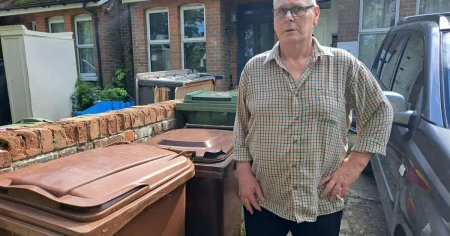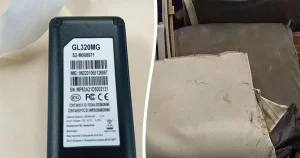

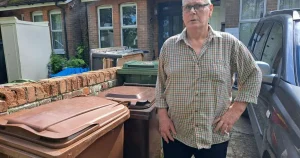

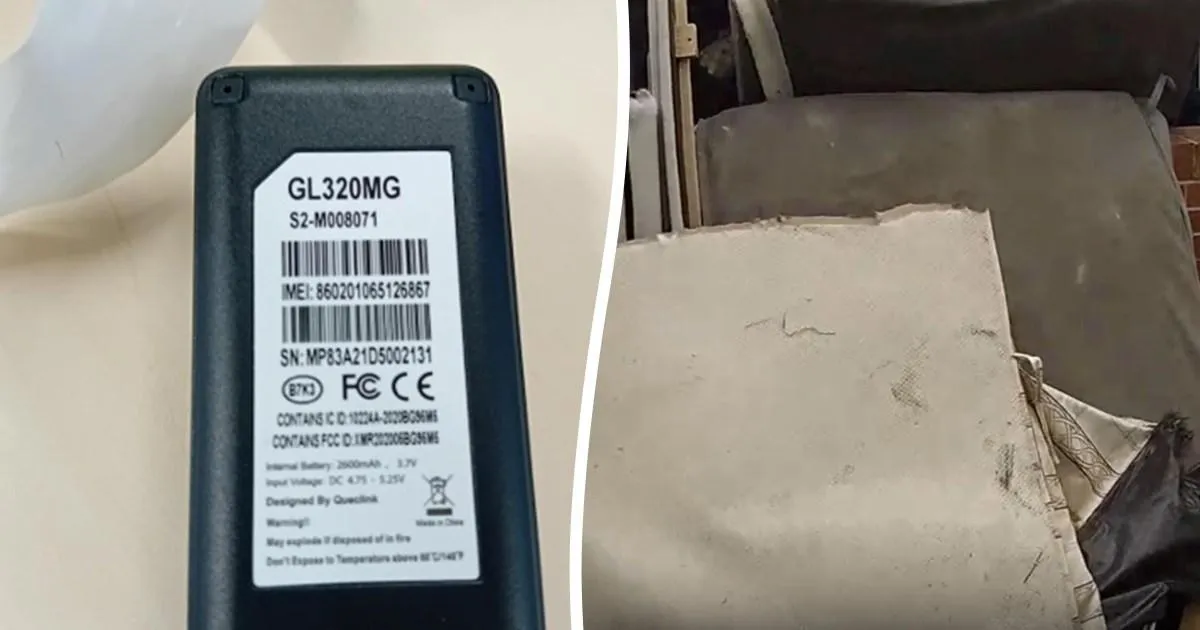
It began with a hot tub, of all things—a bulky, unwanted relic of suburban life, left out for collection like so many others across the country. But this particular hot tub was not just rubbish. Hidden inside its lid was a small GPS tracking device, placed there by council officers who suspected that the man coming to collect it was not the legitimate waste remover he claimed to be. The trap was set in Castleford, West Yorkshire, in April, when investigators posed as customers and asked Kacper Kruk to take away the discarded item. Kruk, 26, arrived with another man in a white van, accepted £200 for the job, and even handed over his business card before driving off. What he did not know was that every turn of that van was being followed, not by a tail car, but by the silent signal from the device tucked into the lid. The vehicle was tracked to Wakefield, where officers found the hot tub dumped next to ordinary household wheelie bins on a residential street. It was a scene familiar to anyone who has ever seen fly-tipped waste appear overnight on a quiet road—except this time, the person responsible had been caught in the act, and the rubbish itself had become the bait.
The sting operation did not happen by accident. It came after members of the public reported paying what they believed to be a legitimate waste company, only to discover that their rubbish was being illegally dumped instead of properly disposed of. Wakefield Council had been investigating Kruk for some time, and the hot tub job was a carefully planned way to gather evidence. After the first successful sting, officers decided to try again. Kruk quoted £400 for another waste removal job, but when he arrived to collect it, he was apprehended by officers waiting for him. In court, he admitted that he did not hold a waste carrier’s licence, which is a legal requirement for anyone transporting waste as part of a business. He pleaded guilty to depositing controlled waste without an environmental permit and transporting controlled waste without a licence. Kirklees Magistrates’ Court ordered him to pay a total of £2,421, made up of a £480 fine, £1,456 in court costs, and £292 in compensation to the council. For a man who had charged just £200 for the first job, the financial penalty was more than ten times what he had earned—and the damage to his reputation as a businessman was far greater.
Kruk’s case is one small corner of a much larger problem that has been growing across the United Kingdom. Illegal waste dumping has become an organised criminal business, with the Environment Agency receiving more than 10,000 reports of suspected waste crime last year alone. Yorkshire received the second highest number of complaints, with 1,068 suspected crimes reported, surpassed only by the West Midlands, which had 1,542. Behind each of those reports is a frustrated resident waking up to find a pile of rubbish where there should be a clean street, or a farmer discovering that someone has used their land as a dumping ground overnight. The scale of the problem is staggering. Waste crimes are thought to cost the UK economy at least £1 billion every year, and fly-tippers are estimated to avoid around £150 million in landfill tax annually. That is money that should be going into public services, but instead it is being pocketed by people who treat the environment as their personal rubbish bin. The hot tub that Kruk dumped was not just an eyesore; it was part of a pattern of behaviour that affects every community, from inner-city streets to quiet countryside lanes.
In Yorkshire, the problem has taken on an even more dramatic scale in some places. One of the most high-profile cases in the county involved a huge illegal dump of several thousand tonnes of mixed household and commercial waste on a piece of land on Midland Road in Bradford. That site was not a single hot tub or a few bags of rubbish; it was a mountain of waste, the kind of thing that makes local people feel abandoned by the system and angry at those responsible. It is easy to imagine the scene: piles of old furniture, broken appliances, construction debris, and household rubbish all mixed together, attracting rats and flies, creating a health hazard, and making life miserable for everyone living nearby. Cleaning up such sites costs councils and landowners enormous sums of money, money that could have been spent on schools, roads, parks, or social care. And while the people who dump this waste often disappear without a trace, the consequences remain for years. The Bradford case was a stark reminder that fly-tipping is not a victimless crime. It is a deliberate act of theft—theft of public space, theft of public money, and theft of the sense of safety and pride that people have in their own neighbourhoods.
The true cost of fly-tipping cannot be measured in fines alone. It is felt in the health risks posed by hazardous materials, in the harm done to wildlife and natural habitats, and in the sheer frustration of residents who are left to deal with someone else’s mess. A discarded hot tub might seem harmless compared to industrial waste, but it is still a bulky item that is difficult to move, expensive to dispose of properly, and completely out of place next to a row of wheelie bins. When Kruk dumped that hot tub on a residential street in Wakefield, he was not just breaking the law; he was showing contempt for the people who live there. He was treating their neighbourhood as a dumping ground because he thought he could get away with it. What he did not count on was the determination of council officers who were willing to think creatively, to hide a tracking device in a piece of rubbish, and to follow the evidence wherever it led. Their work is a reminder that fly-tipping is not an unavoidable part of modern life. It is a crime, and it can be stopped when communities and authorities work together.
For Kruk, the sting operation was a harsh lesson in the consequences of cutting corners. What started as an easy £200 job ended with a court appearance, a criminal record, and a bill for £2,421. It is unlikely that he will be handing out his business card to strangers again anytime soon. But his case also sends a message to others who might be tempted to do the same thing: you never know what might be hidden in the rubbish you collect. That discarded mattress, those old boxes, that broken hot tub—they might all be part of a trap. The officers who set up the sting did not just catch one man; they showed that illegal dumping is being taken seriously, and that no dump is too small to investigate. There is something deeply satisfying about the image of a fly-tipper being caught by his own greed, tracked by a device hidden in the very item he thought he was stealing away. It is a small victory, but an important one. Every time a council catches a fly-tipper, it sends a ripple of hope through the community, a reminder that someone is watching, that the rules matter, and that the places we call home are worth protecting. The hot tub may have been dumped, but the message it carried was clear: if you treat the streets like a rubbish tip, you will be held accountable.