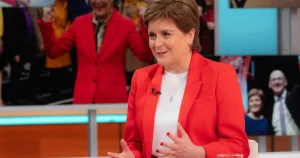

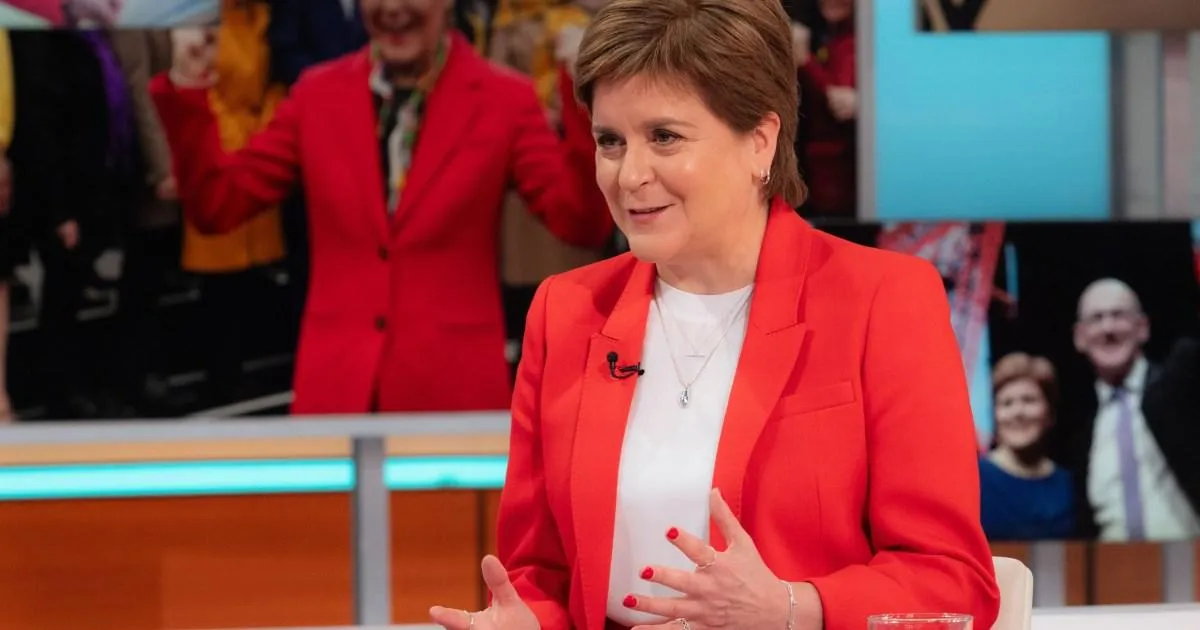
At the heart of any serious conversation about the British monarchy is a tension between centuries-old tradition and the simple, complicated reality of human lives. It is exactly that tension that Nicola Sturgeon addressed in a new Channel 4 documentary, The Royals: Time To Go, when she posed a provocative question: is it time to let the royal family go? The former Scottish First Minister, who has met members of the royal family on multiple occasions, did not frame her argument in terms of political ideology alone. Instead, she offered something more unexpected: a deeply human reason for abolishing the monarchy. For Sturgeon, the institution is not only about power, privilege, or national identity—it is also about the children born into it, especially those who have no say in the futures they are given. Prince George, the young heir to the throne, became the focus of her concern. She described having “huge sympathy” for members of the royal family, while simultaneously suggesting that the kindest thing the country could do might be to remove the monarchy altogether, thereby freeing future royals from a destiny they never chose. It is a striking point of view, one that reframes a constitutional debate as a matter of personal freedom, childhood, and the weight of expectation.
Sturgeon’s argument is built on a simple but powerful observation: Prince George is a child who has had his entire life planned for him without ever being consulted. “I would say one of the arguments for getting rid of the monarchy is for the sake of members of the royal family, like Prince George, for example,” she told presenter John Humphrys. She went on to note that the young prince “doesn’t know any different,” a phrase that carries a quiet sorrow. He has been raised inside a system that assigns him a fixed role, one he cannot step away from without causing seismic consequences for the institution itself. “He has a certain life ahead of him that he has no choice over. Is that really fair?” she added. These are not the words of someone who is unsympathetic to royalty; they are the words of someone who sees the Crown as a form of burden. For Sturgeon, the monarchy is not just an outdated political structure—it is also a mechanism of constraint, shaping the lives of individuals from birth and giving them very little room to simply choose who they want to be. By framing the abolition of the monarchy as a way to “free the future members of the royal family from carrying that burden,” Sturgeon invites us to imagine what Prince George’s life could look like if he were allowed to be just a boy, not a future king.
Sturgeon is far from alone in her thinking. The conversation around the monarchy has been growing louder in Scotland for years, and the documentary taps into a real and measurable shift in public opinion. Last year, The National, Scotland’s only pro-independence newspaper, published a poll that revealed 53 percent of Scots supported removing the monarch as Scotland’s head of state and becoming a republic instead. That number is significant in itself, but the breakdown tells an even more compelling story. Of that majority, 36 percent said the royal family should be removed as soon as possible, 12 percent believed it should happen within the next ten years, and 5 percent favored a longer timeline. The remaining 47 percent said Scotland should never remove the monarchy. In other words, the country is deeply divided, but a clear and active republican sentiment is no longer a fringe position. The poll suggests that many people in Scotland are questioning not just the existence of the monarchy, but its relevance to modern democratic life. It also points to a broader shift in how institutions, especially unearned ones, are evaluated. In an age where transparency, accountability, and equality are increasingly central to public life, the idea that one family should inherit a role of national significance simply by being born feels, to many, increasingly difficult to justify.
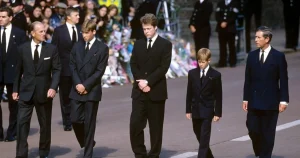
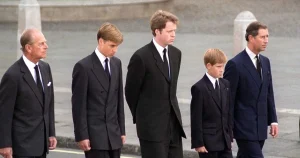
Perhaps no royal has embodied the human cost of this system more vividly than Prince Harry. In January 2020, he and his wife Meghan Markle stepped down as senior royals and moved to the United States, hoping to build a life away from the pressures of the institution. Their decision was shocking to many, but to others it was a deeply understandable act of survival. Harry, who has recently moved back to the UK with his family, has spent the years since his departure speaking openly about the experience of being inside the royal machine. In his and Meghan’s 2021 interview with Oprah Winfrey, he described feeling “trapped” by a system he was born into. “I was trapped within the system, like the rest of my family are,” he said at the time. “My father and my brother, they are trapped. They don’t get to leave, and I have huge compassion for that.” Those words carry a striking resonance in the context of Sturgeon’s comments about Prince George. Harry was not talking about a distant historical burden; he was talking about his own life, his own family, and the ongoing reality of being born into a role that allows little room for personal choice.
Harry’s testimony offered an intimate and often painful look at what it means to be caught between duty and selfhood. He reasoned that he would never have left the royal family without Meghan, explaining that he “didn’t see a way out.” When he reflected on his own state of mind, he spoke with devastating honesty: “I wouldn’t have been able to, because I myself was trapped as well… I was trapped, but I didn’t know I was trapped.” That last phrase is particularly haunting. It suggests not only a lack of freedom, but a lack of awareness of that lack—a kind of quiet internal captivity that can be difficult to name, let alone escape. For Harry, the moment of clarity came only through the support of an outside perspective, someone who could see the cage for what it was. His story does not necessarily provide an argument for republicanism in the traditional political sense, but it does expose the emotional reality of life inside a powerful institution. It strips away the glamour and the ceremony, revealing a family that is also a system, one that demands conformity, silence, and placement. Watching Harry’s journey, it becomes easier to understand why Sturgeon looks at Prince George and wonders whether it is fair to give him a destiny he never chose.
In the end, the question of whether to abolish the monarchy is about more than constitutional arrangements or historical precedent. It is about whether we believe that human beings should be born into predetermined paths, especially paths that come with such immense pressure, scrutiny, and lack of personal agency. Sturgeon’s comments in The Royals: Time To Go are striking not because they are aggressively anti-royal, but because they are deeply human. She acknowledges her sympathy for the royal family, even as she challenges the institution that defines them. She asks us to consider the wellbeing of the individuals behind the titles, and to ask whether the country’s desire for continuity and spectacle is worth the cost placed on real people. The debate is unlikely to be resolved anytime soon. Monarchy remains deeply embedded in British life, supported by many, cherished by some, and defended by tradition. But the conversations sparked by Sturgeon, the growing republican sentiment in Scotland, and the very public story of Harry and Meghan have changed the terms of discussion. It is no longer enough to say that the monarchy simply exists and therefore should continue. Increasingly, people are asking harder questions: What does this institution ask of those inside it? What does it ask of the rest of us? And if the answer is that it demands the freedom of its own children, then perhaps it is not only a political institution, but also a deeply personal one—one whose future may depend far less on pomp and pageantry than on our collective capacity for empathy.