

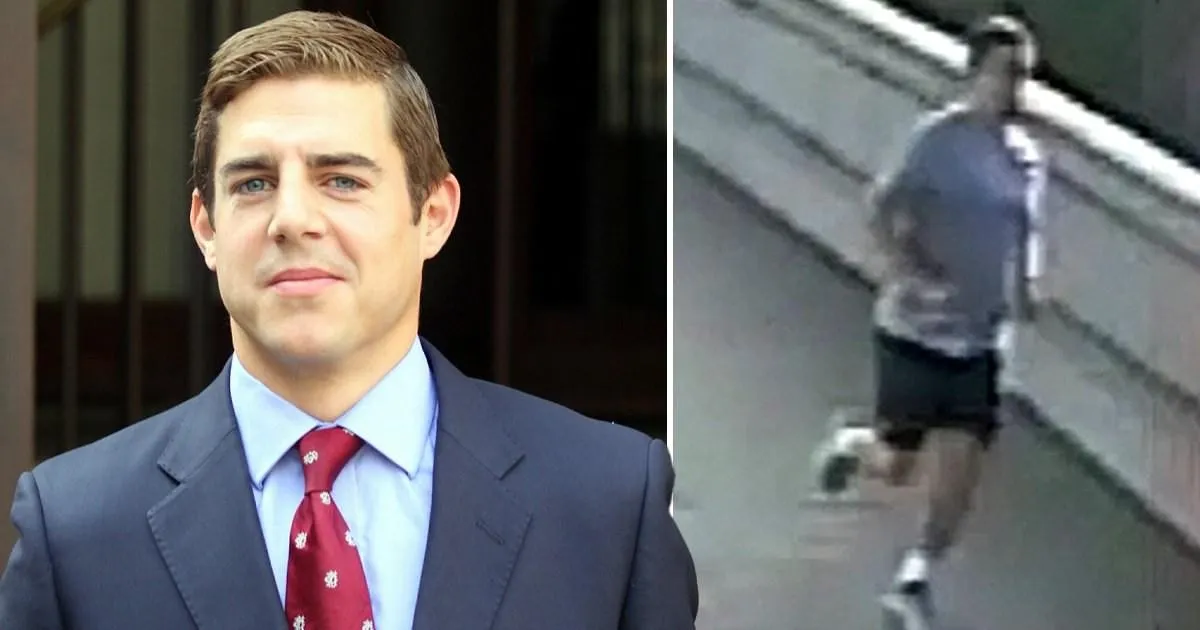
The death of Nicholas Brandram has left a wound that his family refuse to let heal quietly. In a deeply emotional and angry public statement, they have insisted that he was not the so-called “Putney pusher,” and they have pointed their grief squarely at the Metropolitan Police. Brandram was found dead in his West London home just three months after being arrested in connection with the infamous 2017 attack, in which a jogger was caught on CCTV shoving a woman into the path of an oncoming bus on Putney Bridge. His relatives say he took his own life after enduring “months of immense pressure caused by a Metropolitan Police investigation.” For them, this is not simply a case of a man who was wrongly suspected; it is a story of a life lost because an institution refused to see what was in front of it. They describe a man crushed by the weight of an accusation that the evidence, in their words, proved was wrong. And they are not just mourning his death—they are demanding that the police answer for the choices they made.
The family’s statement was unflinching in its account of the investigation’s flaws. “There was no forensic evidence linking Nick to it, no evidence placing him on Putney Bridge at that time, and no credible evidence that he was the man shown in the footage,” they said. “In fact, the evidence proved the opposite.” Despite that, the police chose to arrest Brandram rather than invite him for a voluntary interview. They searched his home, and then the Met’s own press team released information that, in the family’s words, inevitably led to speculation and to Nick being identified in subsequent reporting. What made this even harder to accept was how easily his family believes the case against him fell apart. They say his lawyers ended up doing the basic investigative work that should have been done by the police. They pointed out that the published images of the man on the bridge bore no resemblance to Nick. The victim had described her attacker as having brown eyes; Nick had striking blue eyes. Nick also had a visibly wasted and disfigured calf, a condition dating back to his time serving with the British Army, while the man in the footage showed no such injury. And Nick had a prominent forearm tattoo that was nowhere to be seen on the man in the pictures. These were not subtle differences, the family argued. They were obvious, visible, and easily checked. Yet the investigation continued.
Nick himself, according to his family, was determined to clear his name. He made it clear he was eager to take part in an identification parade, but the police never organised one. He provided email evidence sent from his office in the West End of London, demonstrating that he was not even on Putney Bridge when the assault happened. His loved ones described a pattern: once the evidence began to show that the police may have had the wrong man, the urgency on the part of officers seemed to disappear. But for Nick, the consequences did not disappear. He was left for months carrying the stigma of an appalling allegation, an allegation that the police themselves, the family say, clearly recognised was unsupported by evidence. He lived with the shame, the anxiety, the humiliation, and the extraordinary pressure created by what they described as a wholly unnecessary investigation. This was not just a legal inconvenience; it was a slow, tearing emotional collapse. His family say they repeatedly warned the police about the impact the investigation was having on his mental health. They asked the police to end their inquiries. But the investigation was not brought to an end. And in the end, the family’s words are devastating in their simplicity: “As a result, Nick is dead.” The Metropolitan Police has since referred itself to the police watchdog, the IOPC, over its contact with Brandram, but for his family, that is little comfort when a man is already gone.
To understand why this matters so deeply, it is important to remember who Nicholas Brandram was beyond the headlines. He was not a shadowy stranger in a grainy video. He was a grandson of Princess Katherine of Greece and Denmark, born into a life of quiet privilege but also one shaped by duty. He served as a British Army captain, deployed to Iraq, Bosnia, and Afghanistan—places that leave marks on people, both visible and invisible. The wasted and disfigured calf that his family referenced was not a secret; it was a visible reminder of his service and sacrifice. After leaving the military, he worked in HSBC’s private banking branch, a world that demanded composure and discretion. He was, by all accounts, someone who had built a life of discipline and order. Then, in a single moment, that life was turned inside out. He was arrested on suspicion of attempted grievous bodily harm and released on bail in June. A day later, he was re-arrested after having Class A and Class B drugs in his possession. Those drugs, his family imply, may have been a symptom of the very breakdown the investigation was causing. He was suspended from his job. His name began appearing in the press, linked to one of the most shocking and widely shared viral crime stories in London in recent years. There was nowhere to hide. The man who had served his country in some of the most dangerous places on earth was now trapped in a nightmare that followed him home.
The original crime itself remains a haunting piece of London folklore. In May 2017, a 33-year-old woman was walking across Putney Bridge when a man jogging towards her suddenly shoved her with both hands, sending her stumbling into the path of a bus. She was extraordinarily lucky: the bus driver swerved in time, and she escaped serious injury. But the CCTV footage was terrifying, and it ignited a years-long manhunt. The identity of the man in the footage—a white male in athletic clothing, his face partially obscured—became a mystery that obsessed the public and the press. Countless armchair detectives pored over the footage. The police chased hundreds of tips. And yet, the man was never definitively identified. Brandram was arrested in connection with the case years later, in June, but detectives confirmed last week that a suspect they did not name had been released under investigation while “outstanding enquiries were being completed.” That unnamed suspect, it later emerged, was Brandram. The Metropolitan Police says the investigation remains ongoing. But for Brandram’s family, the ongoing investigation is part of the problem. They believe he was a man sacrificed to the public hunger for an arrest in a case that had gone cold. They believe the police put pressure on him because they wanted someone—anyone—to connect to that famous footage, even if the evidence did not fit.
This is where the family’s plea becomes a broader warning. Their statement is not merely an attack on police procedure; it is a reminder of the human cost of investigation when it is conducted without care, without proportion, and without compassion. Nick was not just a suspect. He was a son, a brother, a friend, a former soldier, a man with a history of service and a body that already carried the scars of sacrifice. His family watched him unravel in real time. They watched the Metropolitan Police insist they were right, even as the evidence seemed to point away from him. They begged the police to stop, and they were ignored. They now face the rest of their lives without him, knowing that his final months were filled with shame, anxiety, and hopelessness. In their words, there is not just anger, but sorrow—a sorrow made worse by the knowledge that this could have been avoided. They are not asking for pity. They are asking for accountability. They want the world to know that Nicholas Brandram was not the Putney pusher. They want the world to know that he died because an investigation went wrong. And they want the world to remember that behind every police file, every press release, and every headline, there is a human being whose life can be broken by an accusation. The Metropolitan Police has been contacted for comment, and the IOPC will now examine what happened. But no review can bring Nick back. All that remains is a family’s grief, a stack of unanswered questions, and a desperate hope that his death will not be in vain. In their final words, they ask for one thing above all: that no other family should have to endure what they have endured.