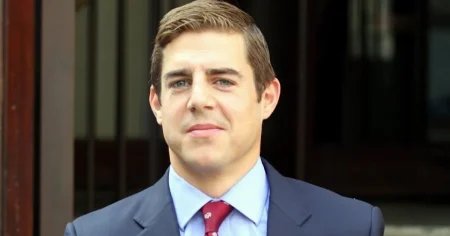


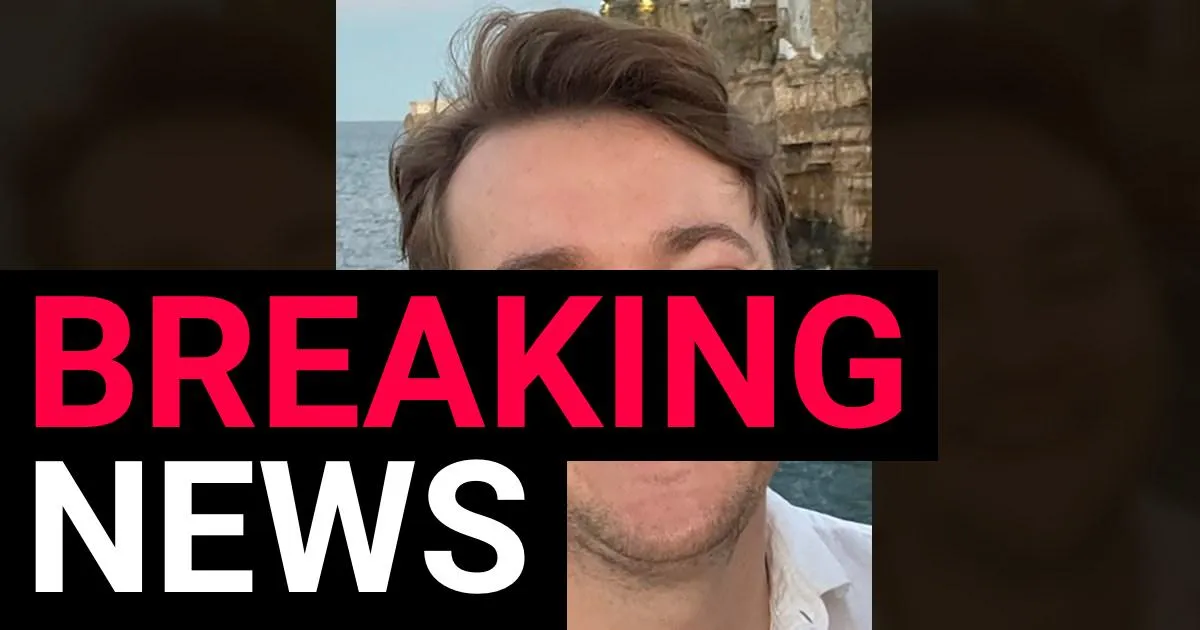
The vibrant, colorful chaos of Notting Hill Carnival had finally subsided on that balmy late-August evening, leaving behind a city steeped in the lingering echoes of soca, reggae, and the joyful chatter of thousands of revelers. Among the vast crowds making their way homeward was Thomas Jewitt, a 32-year-old man who had spent the day soaking in the festival’s celebrated “family day”—a time dedicated to unity, music, and community spirit. As the clock crept toward 11pm, Thomas descended into the fluorescent-lit depths of Liverpool Street Underground station, one of London’s busiest and most impersonal transit hubs. He was likely tired, perhaps content, carrying the sensory memories of the day—the scent of jerk chicken, the thrum of steel drums, the warmth of shared laughter. In that ordinary, transient space where commuters shuffle past one another with little thought, an extraordinary and senseless act of violence occurred. A “serious assault” on the Circle line platform left Thomas with catastrophic head injuries, instantly transforming a night of celebration into a desperate fight for survival. He was rushed to a nearby hospital in a critical condition, where medical teams fought tirelessly to save his life, but the damage was too severe. Three days later, on the second of September, Thomas Jewitt tragically succumbed to his injuries, leaving behind a gaping void in the lives of everyone who knew him. The news of his death sent shockwaves through his community, his professional network, and the wider city, forcing people to confront the horrifying reality that a young man, simply trying to get home after a joyful event, never made it. The platform, once a place of fleeting transit, became a grim crime scene—a chilling testament to how swiftly and brutally life can be altered in a single, random moment.
In the wake of this devastating loss, Thomas Jewitt’s family released a heartfelt statement that painted a vivid portrait of a man whose life was defined by warmth, generosity, and an unwavering commitment to others. They described him as “fun-loving, caring and kind,” a person who “always looked out for others, and made them feel better.” These are not mere platitudes, but the foundations of a character that radiated positivity into the lives of countless people. Thomas was not just a face in the crowd at a carnival; he was a cornerstone of his family, a loyal friend, and a dedicated professional who had carved out a successful career in the affordable housing sector. His work in this field speaks volumes about his values—he was someone who genuinely cared about the well-being of others, who sought to make a tangible difference in the world by ensuring people had safe, secure places to live. His family noted that he had “a bright future that was taken away from him too soon,” a painful reminder of the countless milestones and achievements that will now never come to pass. Most heartbreakingly, the family revealed that Thomas was “excited about marrying his fiancée next year.” The image of a man joyfully planning his wedding—choosing venues, tasting cakes, imagining the look on his partner’s face as she walked down the aisle—is rendered unbearably poignant now that those dreams have been shattered. He was a man on the precipice of a beautiful new chapter, his life brimming with promise, love, and purpose. Instead of celebrating his nuptials, his loved ones are left to plan a funeral, their grief compounded by the cruel irony of a future stolen in an instant.
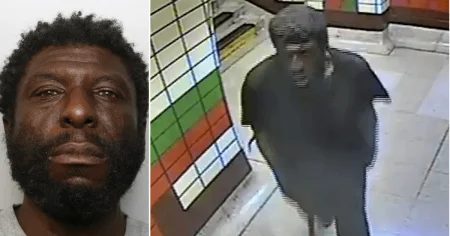
The circumstances surrounding the assault are as shocking as they are senseless. British Transport Police (BTP) launched an immediate investigation following the incident on August 30th, appealing for witnesses and scouring CCTV footage from the station. Their efforts led to the swift arrest of Jeremiah Maximo, a resident of Barking, who was subsequently charged with grievous bodily harm (GBH) in connection with the attack. However, given the tragic turn of events, the police confirmed that they would be applying to amend the charge to one of murder, reflecting the fatal outcome of the assault. This legal escalation underscores the gravity of what occurred on that platform—a violent confrontation that has now resulted in the loss of a human life. Detective Superintendent Sam Blackburn, speaking on behalf of the BTP, expressed his condolences, stating, “First and foremost our thoughts are firmly with the loved ones of the young man who has sadly died.” He also confirmed the context of the incident, noting, “We know the victim was travelling back from Notting Hill Carnival at the time of the incident.” The detective’s words carry the weight of an investigation that is now focused on delivering justice for Thomas and his family. As the legal process unfolds, the public is left to grapple with a deeply unsettling narrative: a peaceful festival-goer, making his way home on public transport, becomes the victim of a violent attack that would ultimately prove fatal. The randomness of this tragedy is perhaps its most terrifying aspect, highlighting the fragility of safety in shared urban spaces and the devastating impact of unchecked aggression.
For Thomas’s family, the grief is all-consuming, a relentless wave of disbelief that crashes over them with every passing moment. In their public statement, they poignantly expressed their anguish: “We can’t believe that Tom has been taken from us.” These words encapsulate the profound shock that accompanies sudden, violent loss—the sense that reality has somehow fractured, that the world is off-kilter. They spoke of drawing “what strength we can from the wonderful memories we have of Tom,” a testament to their resilience, even as they navigate the darkest days of their lives. Those memories are undoubtedly numerous: family holidays, shared jokes, quiet moments of support, and the simple, unremarkable moments that, in hindsight, become priceless treasures. His “many, many friends” and his work colleagues are equally devastated, mourning a man who was not just a colleague but a source of light and encouragement in their daily lives. The ripple effect of his death extends far beyond his immediate circle, touching everyone who had the privilege of crossing his path. The planned wedding next year is now a source of profound sorrow rather than anticipation. His fiancée, who was poised to become his wife, is now left to navigate a future without her partner, stripped of the shared life they had meticulously planned. The couple’s dreams—of a home, of growing old together, of building a family—have been cruelly extinguished, leaving behind only memories and the hollow echo of what might have been. The grief is not just for the man he was, but for the life he will never live.
The police and the wider community have responded with a mixture of sorrow and resolve. Detective Superintendent Sam Blackburn’s acknowledgment of the victim’s journey from the carnival serves as a stark reminder that such events are not abstract statistics but real tragedies that occur in the midst of everyday life. The Notting Hill Carnival, which is meant to be a celebration of Caribbean culture, music, and joy, has now become irrevocably linked to this tragedy for Thomas’s family. The juxtaposition of the festival’s exuberant spirit with the somber reality of a hospital room is almost too painful to comprehend. The case has also reignited conversations about safety on London’s public transport network, a system used by millions of people daily. While the vast majority of journeys are completed without incident, incidents like this serve as a chilling reminder that violence can erupt anywhere, at any time, often without warning. The public has been left to ponder the senselessness of the attack—what could have possibly justified such brutality? Was there an argument? A misunderstanding? Or was it entirely unprovoked? These questions haunt the investigation and the public consciousness alike. As the legal proceedings against Jeremiah Maximo move forward, there is a collective hope for justice, a desire to see accountability for the life that was lost. Yet, no conviction can ever bring Thomas back, and no sentence can truly repair the damage inflicted on his family and friends.
Ultimately, the story of Thomas Jewitt is a heartbreaking reminder of the preciousness and fragility of life. He was a man who embodied kindness, who dedicated his career to helping others find shelter, and who was on the verge of marrying the love of his life. His death is a profound loss, not only to his family and friends but to society as a whole—a bright light extinguished by an act of inexplicable violence. As his loved ones prepare to say their final goodbyes, they are left to cling to the “wonderful memories” they have, finding solace in the knowledge that Thomas lived his life with love, generosity, and purpose. He made others feel better; he looked out for those around him; he was deeply loved. In the face of such senseless tragedy, the only response is to honor his memory by holding onto those qualities—to be kinder, to be more caring, to cherish our loved ones a little more fiercely. The train that Thomas took from Liverpool Street never carried him home that night, but his spirit will live on in the hearts of all who knew him. The platform may return to its usual rush-hour chaos, and the carnival will come around again next year, but the void left by Thomas Jewitt will remain a permanent, painful reminder of a life taken far too soon. May his family find the strength to carry on, and may his fiancée, his parents, his friends, and his colleagues find peace in the knowledge that Thomas’s time on earth, though tragically short, was filled with the love and laughter he so generously shared with others.