


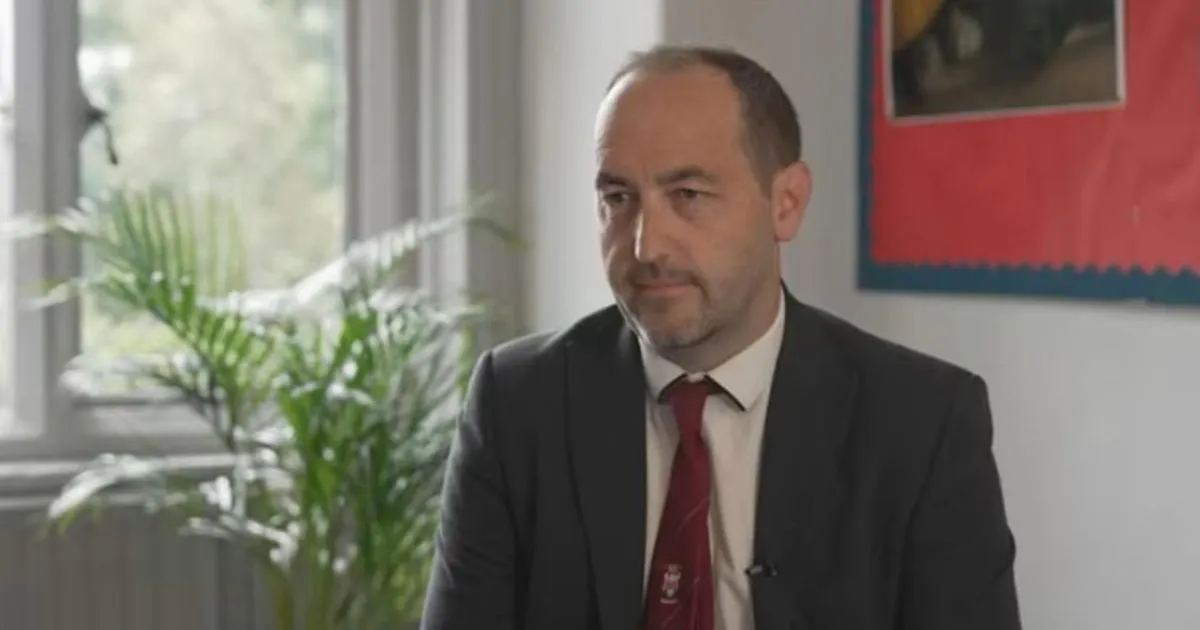
The start of a new school year is supposed to bring a sense of renewal—new uniforms, fresh stationery, and the quiet hope that this term will be better than the last. But at Frome Community College in Somerset, the first week of September felt less like a beginning and more like an occupation. Within days of taking over as interim principal, Dan Jeffries had suspended 25 students. The reason given was “persistent disruption,” but the examples soon made parents and pupils raise their eyebrows in disbelief: zipping a bag too loudly, arriving one minute late to class, and looking out of a window. For a school of around 1,400 students, Mr Jeffries was quick to defend the numbers, saying that the suspended pupils were not a “wide-spread number” and that all suspensions came after at least four repeated incidents. Yet no matter how the statistics were framed, the human impact was immediate and raw. The new principal had made an unforgettable first impression—not for a warm welcome or an inspiring speech, but for a disciplinary regime that many described as cold, authoritarian, and strangely obsessive about the smallest details of teenage life. In the hallways, students began to feel as though they were being watched, not taught. Parents began to use words like “military base” and “crazy.” A school community that needed to come together after a long summer was instead being torn apart by a wave of exclusions that felt disproportionate, impersonal, and deeply unsettling.
Perhaps the most painful story to emerge from that chaotic week involved a mother whose daughter has special educational needs. The girl, the mother explained, was suspended for “nervously laughing.” She was not being rude, defiant, or loud on purpose; she was overwhelmed, anxious, and struggling to navigate an unfamiliar situation. For a child who becomes easily overwhelmed by new settings, being sent home from school was more than a punishment—it was a “massive setback.” It told her that the very vulnerabilities she cannot control made her unacceptable. Her mother’s plea was simple and heartbreaking: “We want the kids’ needs to be met and not be treated like it’s a military base.” Another parent added that the school had become overly focused on appearance, policing things like hair and nail color, and that her daughter’s needs were equally being ignored. These stories are not just complaints about rules; they are cries for empathy. Schools are not just institutions where students are expected to be silent and still. They are places where children are supposed to grow, ask questions, make mistakes, and learn how to become human. When a nervous laugh is treated the same as a deliberate act of defiance, something essential has been lost. The children who most need support are often the ones whose behavior does not fit neatly into a behavioral flowchart, and punishing them for struggling only deepens their wounds and widens the gap between them and their education.
Ann-Marie Ramsey, another concerned parent, did not hesitate to call the new principal’s approach “crazy.” She suggested a more humane alternative: instead of sending misbehaving pupils home, the school could offer time out, quiet spaces, and the kind of support that helps a child calm down and reflect. That may seem like a small distinction, but it makes a world of difference. Sending a child home might remove the short-term problem from the classroom, but it also removes their access to learning, their connection to peers, and their sense of belonging. It turns a rough moment into a long-term setback. Sixth form student Liam Backhurst echoed that concern, describing many of the suspensions as “outrageous.” He said students were becoming “demotivated” and “mentally affected” by the decisions. Imagine starting the school year with one goal in mind—doing well, making friends, learning something new—and then spending your energy trying to avoid punishment for things as natural as a wandering glance toward the window. That is not a healthy learning environment. That is a place where fear becomes the loudest voice in the room. Students need boundaries, yes, but they also need to know that the adults around them see them as individuals, not as potential troublemakers waiting to be caught. The emotional toll of this disciplinary approach is not something that appears in statistics; it shows up in silent classrooms, anxious faces, and the growing belief that school is something to survive rather than enjoy.
Not everyone was critical of the new regime, however. Liz Halliwell, another mother, said she supported the new rules “as long as it’s fair and consistent for everybody involved.” That condition is important. Fairness and consistency do not mean treating every child exactly the same, because every child is not the same. A pupil with special needs who laughs nervously is not behaving in the same way as a student who is deliberately being aggressive in class. Fairness means taking context into account. It means understanding that one child’s bad behavior might be another child’s way of saying “I’m struggling.” Mr Jeffries, for his part, insisted that his rules allowed teachers to take a consistent approach to poor behavior, and that every pupil deserves an “interruption-free” environment. He said a “small minority” of children were disrupting other pupils’ education, and that the school had to act to ensure everyone felt “safe to learn.” Those are reasonable goals. No teacher wants to spend an entire lesson managing disruption. No student wants to suffer because one classmate will not let them focus. But the examples that have come to light—loudly zipping a bag, being a minute late, looking out of a window—do not exactly sound like dangerous threats to safety. They sound like normal, slightly imperfect human behavior. If those are the offenses that lead to suspension, then the system has lost its sense of proportion, and the very idea of “safety” has been twisted into something sterile and unforgiving.
Mr Jeffries acknowledged, almost in passing, that “a number of children did find returning to school more complicated, and that does happen some Septembers.” That may have been the most honest thing he said. Returning to school is not always easy. The transition from the freedom of summer to the structure of the classroom can be jarring, especially for young people who are carrying heavy emotional baggage from home, from social pressures, or from the lingering effects of a world that has become more anxious and uncertain. Some children come back to school with bright smiles and new backpacks; others come back with frayed nerves and quiet fears. The ones who struggle may not always ask for help in the right way. They may fidget, talk, laugh at the wrong moments, or stare out the window for far too long. They may arrive late because mornings are difficult or because the bus was delayed or because their home life is chaotic. And when they do, they need an adult who sees them, not a policy that punishes them. Mr Jeffries’ own words suggest that he knows some children have a harder time returning to school than others. That is precisely why discipline should be flexible enough to respond to the individual child, not rigid enough to crush them. To truly create a place where students feel safe to learn, the adults must first make them feel safe to be imperfect. That is not a philosophy of leniency; it is a philosophy of reality.
So what does this first turbulent week at Frome Community College teach us? It reminds us that discipline without compassion becomes control, and that control, when applied too strictly, can damage the very children it is meant to serve. The 25 suspensions may be defended as a necessary response to persistent disruption, but each suspension represents a story: a child who felt rejected, a parent who felt unheard, a classroom that learned a lesson in fear rather than in accountability. The school community is not asking for chaos. Parents are not demanding that bad behavior go unpunished. They are asking for a school that treats their children like human beings—with all their quirks, struggles, and fragile moments—rather than like soldiers who must never make a sound. The interim principal has a chance now to listen. He can walk through the school and see the faces behind the statistics. He can talk to the nervous laugher, the one-minute-late student, and the child who looked out of a window to see if the world was still there. He can build a discipline policy that holds children accountable while also holding their hands. That would not make him weak. In fact, it might make him the strongest leader the school has ever had. The term is still young, and trust can still be rebuilt. The best way to ensure an interruption-free environment is not to remove the interrupters; it is to give them reasons to belong. Because at the end of the day, children do not remember every rule they were forced to follow. They remember how they were made to feel. And right now, too many of them are feeling like mistakes. Let them know, instead, that they are valued, and education will take care of itself.