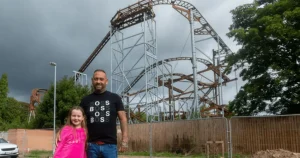


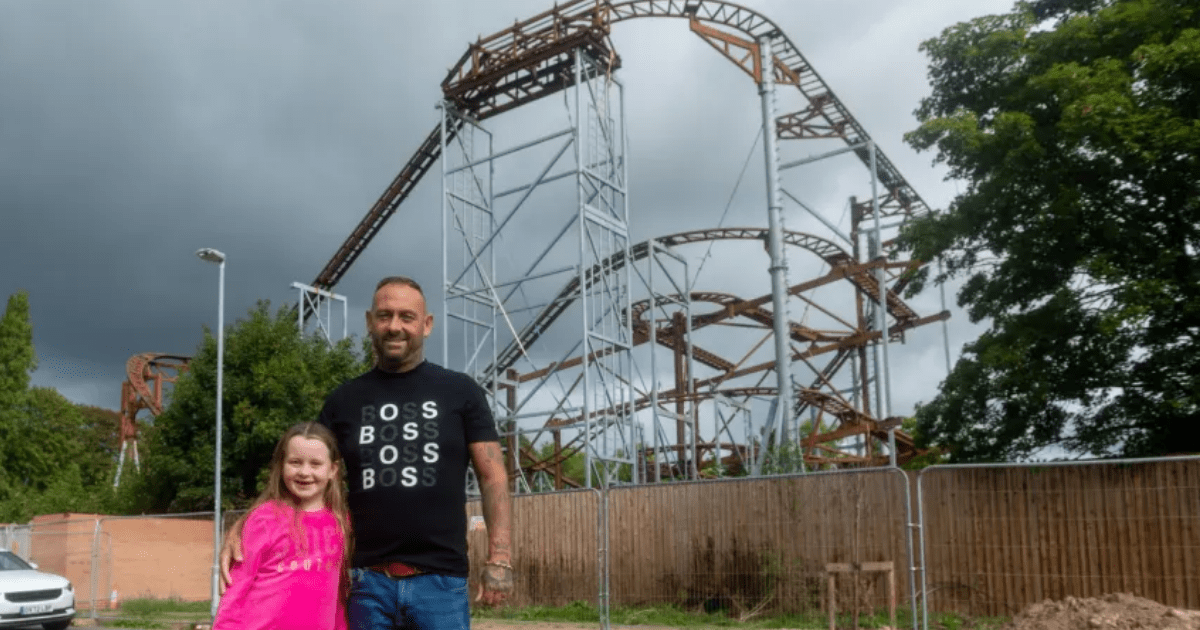
In the quiet, newly built enclave of Sandford Lane in Hucknall, Nottingham, the residents have become accustomed to an unusual neighbor: a towering, 50-foot-high rollercoaster that looms over their back gardens like a steel beast from a fairytale. For the past eighteen months, this unfinished amusement park ride has dominated the skyline, its tracks and loops rising above the rooftops of the twelve-house estate. Some locals have branded it an “eyesore,” a monstrous intrusion that ruins the view and invades their privacy, while others, like the Welsh family, have come to embrace it as a source of endless fascination and even joy. The ride, which is being tested by Mellors Group, a Nottinghamshire-based company that builds and tests thrill rides for international buyers, often springs to life with carts whizzing along its tracks, turning an ordinary suburban street into a place where daily life meets the surreal spectacle of a theme park. For the residents, it is a daily reminder that their idyllic, peaceful neighborhood is also a working depot for global amusement engineering—a strange coexistence that has sparked both grumbles and giggles.
Father-of-six Jack Welsh, a 45-year-old tattoo shop owner who moved into his home with his wife Kirsty nearly two years ago, sits in his living room and can see the amusement structure through the window. He admits that while some might find it overwhelming, he is “actually not bothered by it” and has found it a pleasure to watch the ride take shape over the months. “It’s been a pleasure to watch it grow over the months,” he says, reflecting on the construction process that turned an empty plot into a soaring maze of steel. There was a ride beforehand, but not on this scale—“this one is massive,” he adds. For his eight-year-old daughter, Sapphire, the rollercoaster has become a source of endless entertainment. Because she loves Alton Towers and rides in general, she is captivated by the sight of test carts racing around the track, especially when there are people up there, which happens during testing sessions. Jack appreciates the novelty, arguing that he’d sooner have a rollercoaster next door than “a block of flats with antisocial behaviour,” a sentiment that reveals a pragmatic acceptance of the unusual arrangement. For him, the rollercoaster is not just a structure; it is a living, moving spectacle that adds a dash of whimsy to everyday life.
Kirsty, 43, shares her husband’s enthusiasm, finding the constant activity more engaging than the television. “It’s interesting to watch out your window; you can see them whizzing around on occasion, and it’s fun. It can be more fun to watch than the TV,” she confesses. The couple believes the mega-ride—which is believed to be the first of its kind in the world—is destined for Dubai, though they are not entirely certain. While they understand why some neighbors might object, particularly because the ride shadows their gardens and looms over the properties, it does not upset them. The only real nuisance, they claim, is when the crew leaves the safety straps out overnight. The wind catches them, and the straps make a crashing sound that can be annoying, especially on stormy evenings. That minor irritation aside, the Welsh family has welcomed the rollercoaster, even finding a certain charm in its presence. The ride has also made the area a magnet for urban explorers, who have been seen climbing onto the structure, adding an element of adventure and mischief to the neighborhood that some adults find less than amusing.
Yet not everyone on the small road shares the Welshs’ lighthearted view. Several residents have expressed their discontent, complaining that the rollercoaster “ruins the views” from their homes. One man grumbled that “it’s been there for ages, and it just makes you feel like you’re living next to a funfair,” which is exactly what it is, after all, but not what they signed up for when they bought their new-build houses. The broader issue, he explains, is a lack of privacy: “When the workmen are repairing it, they can see right into your gardens and bedrooms, which is a bit intrusive. We shouldn’t feel like we’re being watched in our homes.” Another neighbor echoed that sentiment, saying that the structure spoils the views from “almost every window” and that they were supposedly told it “wouldn’t be here as long as it has been.” The initial promise of a temporary inconvenience has turned into a prolonged reality, and the disappointment is palpable. For these families, the rollercoaster is not a whimsical attraction but a permanent, intrusive fixture that alters the character of their community and diminishes their quality of life.
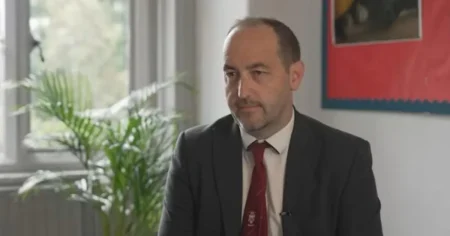
In response to the criticism, James Mellors, director at the family-owned Mellors Group, acknowledged that the rollercoaster has been up longer than “anticipated” but insisted that it is temporary. “It’s the first one in the world, and it’s just not quite been going together as well as it should,” he explained. The engineering challenges, he said, have caused delays, which is frustrating because “rides don’t make any money when they’re in storage.” He emphasized that the company’s aim is to be a good neighbor: “We’re not there to try and cause a nuisance. It’s not a fairground; it’s a work depot. We want people to appreciate what we do, and we appreciate their concerns.” Mellors’ words reflect a genuine effort to bridge the gap between the company’s industrial needs and the residents’ desire for a peaceful home environment. While the ride remains a point of contention, his acknowledgment of the community’s feelings offers a measure of understanding. The situation highlights the challenges of operating a global business in a residential area, where the line between workplace and home is blurred, and where the very thing that makes one person smile can make another feel unsettled.
Ultimately, life next door to a rollercoaster is a study in contrasts—a tale of how a neighborhood forges an uneasy peace with a steel giant that both enchants and annoys. For the Welsh family, the rollercoaster is a source of delight, a constant source of entertainment for their young daughter, and a reminder that even in the most ordinary of places, a touch of the extraordinary can appear. For others, it is a flawed promise, a structure that has overstayed its welcome and altered the essence of their home. But regardless of which side they fall on, the residents of Sandford Lane have had to adapt to a reality that few homeowners ever anticipate. They have become unwilling—and sometimes willing—spectators to the testing process of a wonder of engineering, watching as carts loop and twist against the sky, a testament to human creativity and ambition. And as the ride awaits its eventual journey to Dubai or wherever its final destination may be, the neighborhood remains suspended in a peculiar moment of limbo, caught between the mundane rhythms of suburban life and the thrilling, almost surreal presence of a monster rollercoaster right at their doorstep. In the end, as Ronan Keating famously sang, “life is a rollercoaster,” and for the residents of Sandford Lane, that has never been more literally true.