

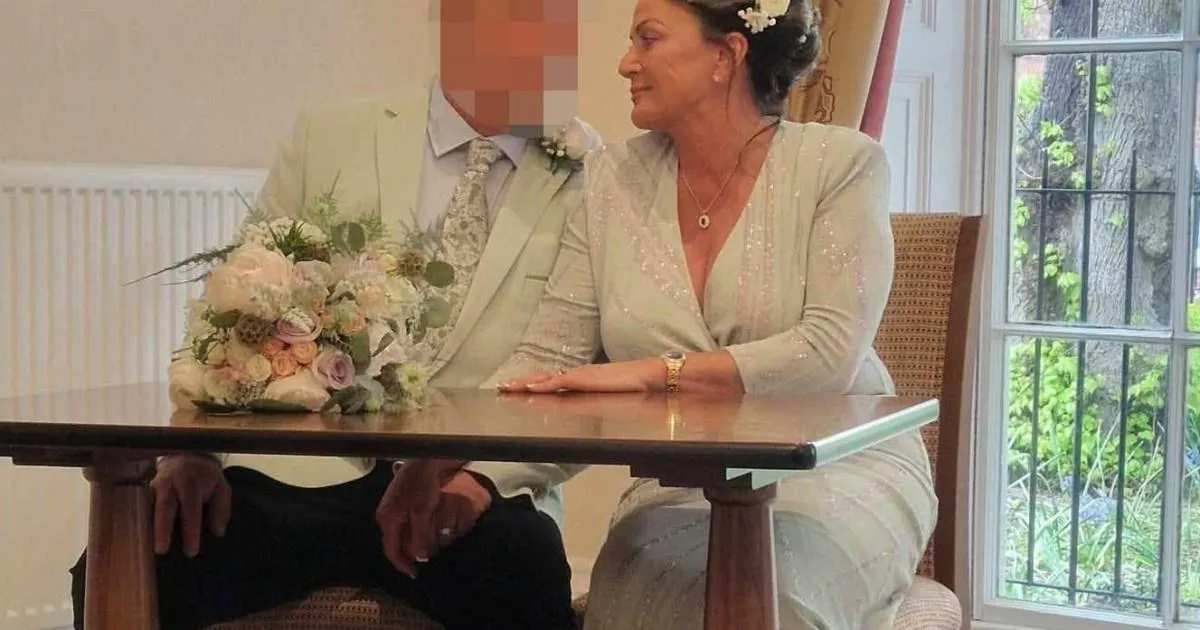
In a twist of irony that would not feel out of place in a novel, Judith Blackmore’s carefully maintained fiction began to crumble not because of a forensic audit, a jealous neighbour’s tip-off, or a sudden change in banking records, but because of something she chose to share on Facebook. The 64-year-old stood before Hull Crown Court having fraudulently claimed more than £40,000 in benefits by pretending she was single, with no money and no savings, when in reality she was living with the man who would eventually become her husband. For years she presented to the Department for Work and Pensions and East Riding of Yorkshire Council a story of isolation and financial hardship, receiving universal credit and a council tax discount on the basis that she was entirely on her own. But her own social media profiles told a different story. Investigators found photographs of a wedding reception, images from a honeymoon, and a timeline of affection that stretched back years. Her Facebook page showed that she had been in a relationship with the man since 2013. In the end, it was a classic case of self-inflicted exposure, proof that even the most disciplined deceiver can be undone by the human urge to celebrate love, joy, and new beginnings in front of friends and strangers alike.
The court heard the full scale of the deception in painstaking detail. Holly Thompson, prosecuting, explained that the Department for Work and Pensions had made inquiries into Blackmore’s social media profiles, and what they found was devastating to her case. Far from being a solitary woman scraping by, Blackmore appeared in photographs at a wedding reception and on honeymoon, clearly living a shared life. The total over-claim came to £44,415, a substantial sum that included £40,023 in universal credit and a further £4,392 in council tax discount. Blackmore admitted charges of fraud by failing to disclose information, relating to her dealings with both East Riding of Yorkshire Council and the Department for Work and Pensions between 2018 and 2024. When interviewed, she initially admitted that she had been living with her future husband for many years, but she denied that they had been in a relationship for all of that time. It was a distinction that seemed to stretch credibility, particularly given the photographs and the financial records that would later emerge. Eventually, she agreed that she should have informed the DWP as early as 2018 that she had a partner. The defence would later suggest that she had not mentioned her marriage because she “wasn’t asked about it,” and that she had accumulated debts from her new horsebox refurbishment business, but the court was in no doubt that this was not a simple misunderstanding or a technical oversight.
The evidence of financial interdependence made the case even clearer, and far more serious. Investigators found that Blackmore had reported moving to an address in Beverley and updated her housing costs accordingly, but she had failed to disclose the true nature of her living arrangements. Bank statements showed money moving between the couple in ways that only a shared life can explain. Her partner had transferred a remarkable £96,000 into Blackmore’s accounts over the period, while she had moved £73,000 into his. This was not the financial picture of two independent strangers sharing a house; it was the portrait of a couple whose lives, money, and future plans were entirely intertwined. The pair had even presented themselves to their landlord as a couple when they began their tenancy. A marriage certificate later confirmed that they had tied the knot in May 2024, a ceremony that was not just a private celebration but a public declaration of everything she had denied to the authorities. It was, in a way, a second kind of exposure: not just the images on Facebook, but the legal document that made the relationship official. For a woman who had so carefully insisted on her single status in official forms and interviews, the wedding was a spectacular contradiction.
Blackmore’s defence barrister, Julia Baggs, did her best to frame the defendant as a woman overwhelmed by her own actions, someone who had let things slip beyond her control. She told the court that Blackmore was “very, very sorry” for what she described as “entirely dishonest conduct.” She said that Blackmore felt a deep sense of shame, and that the fraud was something she had allowed to spiral out of control. It is possible to hear in those words the voice of a person who, for years, made a series of small, quiet decisions to keep taking money she knew was not hers, and then found herself too far in to stop. She had debts, she had a business, she had wedding bills to pay, and perhaps she told herself that she would make it right eventually, that nobody would notice, that the system could afford it. But the system is made of people, and the money she took came from hardworking taxpayers who contribute to a safety net meant for those who genuinely cannot cope. The defence’s plea of shame and remorse was a human attempt to soften the blow, but it could not erase the length of the fraud, which spanned six years, or the calculated decisions required to keep it going. Shame, in this context, is not the same as innocence.
The judge, Recorder Richard Wright, was measured but firm in his sentencing remarks. He told Blackmore that she had persisted in deliberately obtaining money which she knew full well she was not entitled to receive. That money, he noted, was not free money; it came from hardworking taxpayers and was meant to provide a safety net for those who needed it most. Over a persistent period of time, she had stolen somewhere in the region of £44,000, a significant sum by any measure. This was, he said, a case of multiple false declarations over a considerable period, not a moment of weakness or an isolated error. And yet, he accepted that she was ashamed and remorseful. Perhaps the most striking element of the sentence was its mercy. Blackmore was handed a 16-month suspended sentence, meaning she would not go to prison immediately, but she was also ordered to complete 120 hours of unpaid work. She will have to live with the shadow of that suspended sentence hanging over her, knowing that any further offence could send her to custody. She will also have to live with the public humiliation of having her story told in national newspapers, her wedding photographs described in court, and her marriage itself scrutinised as evidence of her crimes.
What makes Blackmore’s case so human, and so uncomfortable, is that she is not a cartoon villain. She was a woman of retirement age who wanted a partner, a home, a family life, and apparently the celebration of a wedding. She also wanted more money than she was entitled to, and she chose to lie to get it. The social media angle adds a contemporary moral to the tale: in an age where we curate our lives online, our own posts can become witnesses against us. The same photographs that brought Blackmore joy, and that she probably looked back on with fondness, were used to dismantle the false story she had told the state for years. In that sense, she was betrayed by her own happiness. But the broader lesson remains for everyone who relies on public support: the money is there to catch people when they fall, not to fund businesses, weddings, or a more comfortable lifestyle built on deceit. Judith Blackmore now has to face the consequences in the community where she lives, in the marriage that was meant to be a fresh start, and in the quiet moments of reflection that follow any great exposure. She is sorry, she is ashamed, and she is also, by the judgment of the court, a woman who knew exactly what she was doing. The safety net she abused was meant for the vulnerable, and while prison was suspended, the damage to her reputation is permanent. In the end, the story is not just about a fraudster caught by Facebook; it is about the uncomfortable distance between the lives we present to the world and the truths we keep hidden, and the cost that distance can exact when the two finally collide.