

There is a moment in every parent’s life when they look at their child and wonder if they are doing enough. For some families, that moment comes after a difficult conversation; for others, it comes after a knock on the door from the police. The British government has now made it clear that, in its eyes, parents are not just morally responsible for their children’s actions — they may soon be legally and financially responsible too. Justice minister Jake Richards has said that parents could face prison sentences or have their benefits docked if their children commit crimes. This is not a vague warning. Richards explained that the government wants to put “the onus on parents” to do more to keep children out of trouble, and that those who fail will be “held to account.” He added that “the justice system should hold parents to account in a proportionate way for ensuring that they play their role in keeping communities safe.” For anyone who has ever stood in a shop and watched a group of teenagers cause chaos, or listened to neighbours complain about antisocial behaviour, this may sound like a long-awaited answer. But behind the policy lies a much harder human question: How do you punish a mother or father without punishing the child even more? What about single parents working two jobs, or families dealing with addiction, poverty, or a child with undiagnosed mental health issues? The phrase “proportionate way” is easy to say and hard to deliver. And yet, the message is unmistakable: the era of looking away is over. Parents, the government seems to be saying, are the first line of defence, and if they fail, they will face the consequences themselves.
Richards didn’t present this as a distant theory. He spoke about his own constituency, where antisocial behaviour and young people making life miserable in town centres have become everyday problems. “When I knock on doors, people say we need more police,” he told the Times. “But they also say, ‘Well, what are the parents doing?’” That question has become central to the government’s agenda. In May, ministers published a white paper calling for more parenting orders to be used. These are court-imposed requirements that force parents to take an active role in addressing their child’s offending. The new proposals would strengthen them, making them more common and more demanding. Richards was blunt about the consequences for parents who refuse to engage. “Parenting orders are going to make sure that parents are more involved in the process by which we try to turn around young offenders,” he said. “Yes, that will have some stick. It could be custodial, or docking benefits — ultimately it will be up to a judge. But we want them to be more involved and that comes with responsibilities as well.” The word “stick” is telling. It suggests that the government has little patience for explanations or excuses. Supporters say this is exactly what society needs: a clear signal that parenting is a job, and failure has consequences. Critics worry that prison or benefit cuts will not make a struggling parent more capable; they will simply make a chaotic home more desperate. A mother who loses her income because her teenage son keeps stealing is not suddenly going to gain control over him. She is going to be more stressed, more frightened, and less able to provide stability. Still, for many voters, the question “What are the parents doing?” feels like the only one that matters. It is a question that cuts to the heart of modern Britain, where communities feel less connected and families are often left to cope alone.
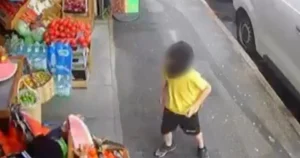
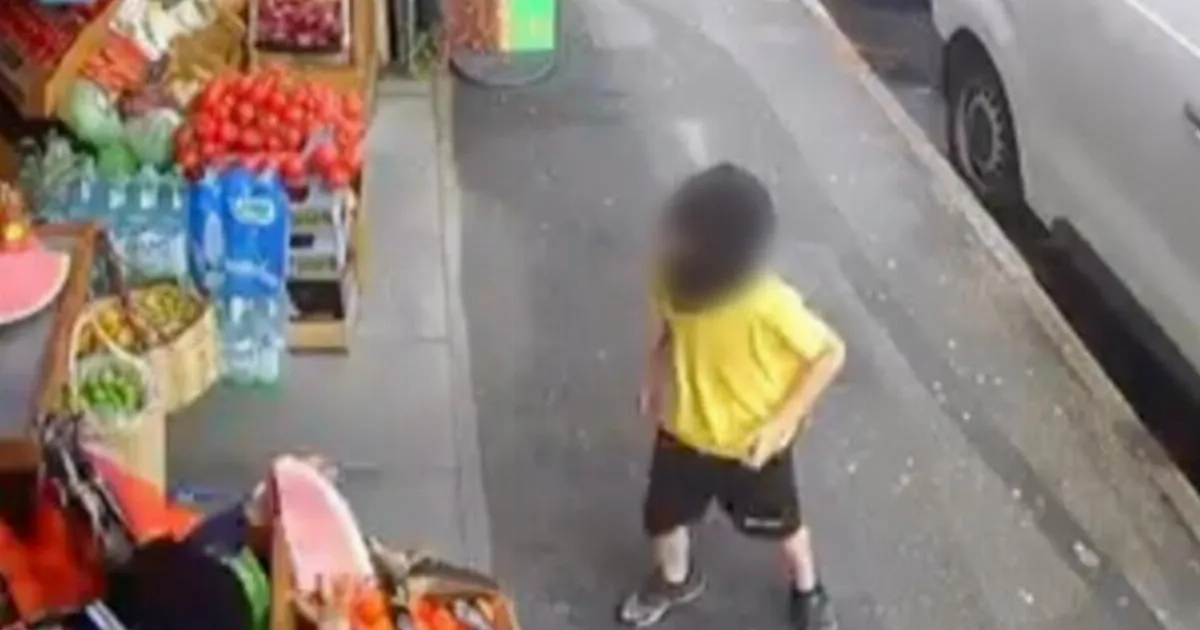
The urgency of this conversation becomes visceral when you listen to someone like Erdogan Yigitoglu. He is a 52-year-old shopkeeper in Dorset, and for months he has been documenting a strange and deeply unsettling pattern of theft. His security cameras have captured children who appear to be as young as five, wearing balaclavas, walking into his shop and calmly emptying shelves. The footage shows them taking piles of chocolate bars, disposable BBQs worth £120, fruit, and an assortment of other goods. It is a “rogue gallery” of tiny criminals, but Yigitoglu doesn’t describe them with anger. He describes them with sorrow. The most shocking moment came when he watched one of these children return to an adult waiting outside. The woman — clearly the child’s mother, he believed — patted the child on the head as if congratulating a job well done. “The incident with the young children in balaclavas was particularly shocking for me,” he said. “What was even more disturbing was seeing the children take things from the shop and then go back to their mother, while she appeared to treat the situation as if it was normal, even smiling and patting the child on the head. As a father myself, I found that extremely upsetting. I would never want children to grow up thinking that stealing is acceptable or something to be proud of.” There is something uniquely heartbreaking about that image: a small child in a balaclava, being praised for stealing. It is not just a crime; it is the deliberate destruction of a child’s moral compass. Yigitoglu’s footage has become a powerful symbol for those who believe parents must be held responsible. If a mother can use her own five-year-old as a shoplifter, what hope is there for that child? And what should the law do to that mother? It is easy to say “send her to prison.” It is harder to imagine what happens to the child when she goes.
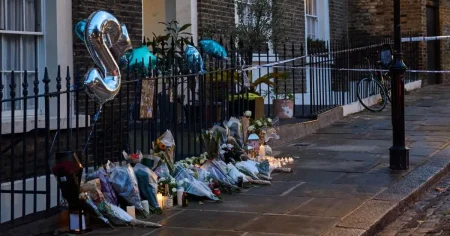
The consequences of failing to intervene early can be catastrophic, and recent tragedies have made that painfully clear. In Middlesbrough, a head-on collision on August 22 killed five young men and two police officers. The officers, PC Tom Clough, 38, and PC Matthew Blades, 37, were in a marked response vehicle when it was hit by a Volkswagen Passat driving the wrong way down a dual carriageway. The Passat was carrying Cole Worthy, 17, Theo Rae, 17, Makai Saddington, 18, and 23-year-olds Michael Cahill and Jakub Matusiak. All five died at the scene or shortly afterwards. Nearly 30 people have been arrested in connection with the crash, and investigators have been looking into reports that the young people were driving dangerously, seemingly for social media likes. It is a horrifying thought: a group of young people, possibly filming themselves, taking a risk that ended in seven deaths. Across the Irish Sea, the first report from the inquiry into the Southport attack found that Axel Rudakubana’s parents could have acted sooner to stop him from killing three young girls at a Taylor Swift-themed dance workshop. That finding is almost too painful to process. Three children went to a dance class and never came home. The parents of the attacker saw warning signs, the report suggests, and did not stop him. In both cases, the public is left with a wrenching question: Could this have been prevented if the parents had done more? It is the same question at the heart of the government’s new parenting orders. But these cases also show how complicated that question is. Teenagers can hide dangerous behaviour from even the most attentive parents. Young drivers can make lethal decisions in a split second. No amount of parenting classes can undo a culture that rewards risk and cruelty online. Still, the government is betting that the threat of prison or benefit cuts will force parents to look harder, ask more questions, and refuse to turn a blind eye.
The same week as these emotional debates, another story emerged from Westminster that touched on family finances in a different way. The government is reportedly considering lowering the threshold for the so-called mansion tax to homes worth £1.5 million, in an effort to raise £10 billion in the upcoming Budget. Last year, former chancellor Rachel Reeves announced that homes worth £2 million would face an additional tax of between £2,500 and £7,500 every year. Now, according to the Times, plans being considered by John Healey for the Budget on October 28 could bring more homes into scope, doubling the number of households affected. A Treasury spokesperson responded with the usual caution: “As has always been the case, decisions on tax are a matter for the Chancellor to set out at fiscal events, rather than routinely commenting on rumour, speculation or proposals.” At first glance, this has nothing to do with parenting orders. But it is part of the same complicated relationship between the state and families. The government is sending a message that it expects parents to take responsibility for their children’s behaviour, and it is also looking for ways to raise money from households that own expensive homes. Both policies are about setting boundaries, enforcing obligations, and making families feel the weight of the state in their daily lives. For a family living in a £1.5 million house, an extra tax bill is an annoyance, not a catastrophe. For a family relying on benefits, the threat of having those payments docked because a child committed a crime could be devastating. That imbalance is uncomfortable to acknowledge, but it lies at the heart of the debate. How much can the state demand of parents who are already struggling? And when does accountability become punishment that hurts everyone?
In the end, the conversation about parents and crime is really a conversation about childhood and responsibility. The shopkeeper in Dorset didn’t want the children in his footage to end up in prison. He wanted their parents to stop using them as tools. The families of the police officers killed in Middlesbrough didn’t want revenge; they wanted answers. And the nation that has been forced to confront the Southport attack wants to believe that such a tragedy can never happen again. Parenting orders, with their threat of custody and benefit cuts, may offer a rough form of justice. But they cannot replace the slow, patient, often invisible work of supporting families before things fall apart. If the government is serious about making parents “more involved,” it will need to give them something to hold onto: better mental health services for children, youth clubs that give teenagers a sense of belonging, police officers who know their communities, and a benefits system that doesn’t push families to the edge. Punishing parents who are overwhelmed or manipulated by criminal adults may feel satisfying, but it rarely solves the problem. The mother in Dorset who patted her child on the head after a shoplifting run did not become a criminal overnight. She was likely a victim of poverty, exploitation, or her own broken childhood. That doesn’t excuse her actions, but it explains why a prison sentence might not change her — or her child. The child, meanwhile, is still five years old, still wearing a balaclava, still learning that love and crime can go hand in hand. If we truly want to break the cycle, we need to reach that child now, not just punish the adults around him. The government’s new parenting orders may be a start, but they are only a start. The rest is up to all of us: to notice the warning signs, to help struggling families, and to build communities where no child feels they have to steal to be loved.