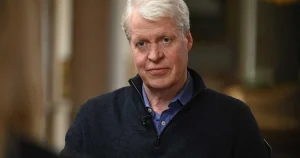


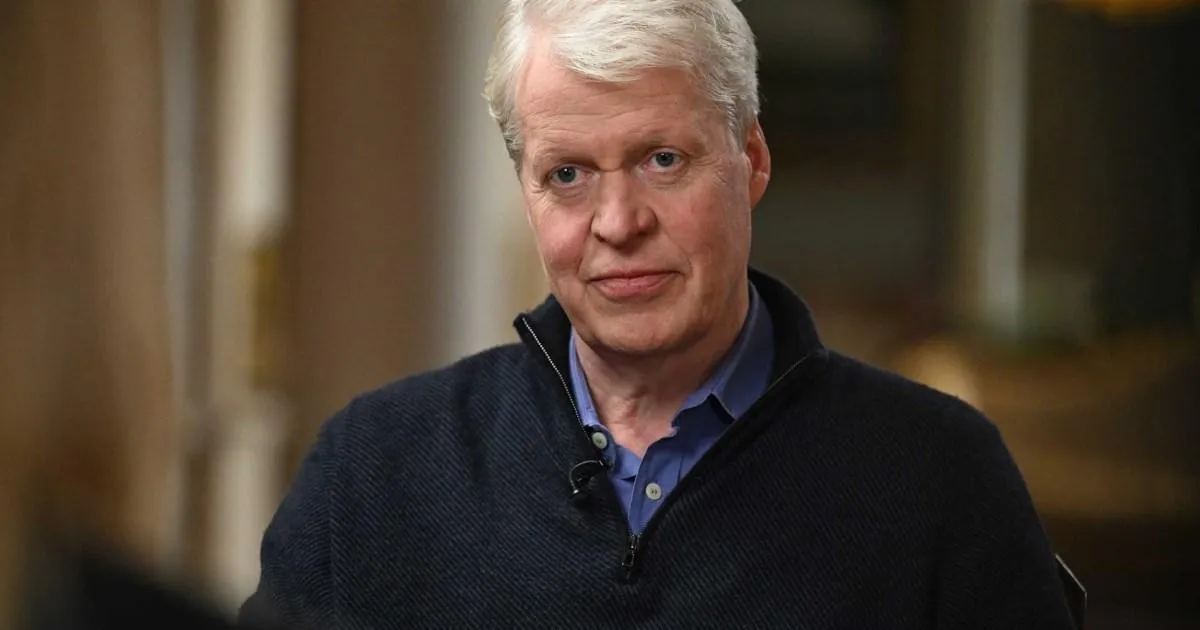
In a quiet but devastating escalation of an already painful public reckoning, Earl Spencer has once again turned his gaze toward the royal family, this time with a fury that feels less like scandal and more like grief finally finding its voice. The brother of Diana, Princess of Wales, has spent decades guarding her memory, but in his new memoir he has opened a door that Buckingham Palace clearly hoped would remain shut. He alleges that King Charles, then the Prince of Wales, dismissed Diana’s death with the chilling phrase, “we’ll forget her soon enough.” The words, attributed to a conversation about whether her two young sons should walk behind her coffin, have now become the flashpoint of a bitter war of words between the Spencer family and the monarchy. Buckingham Palace responded with a carefully worded statement, suggesting that “the pain of fraternal grief can cloud reason.” It was a diplomatic attempt to soften the blow, but Earl Spencer was having none of it. In a new interview with the BBC’s Laura Kuenssberg, he called the palace’s response “monstrous,” refusing to let the institution reframe his memory as a symptom of sorrow. This is not, he insists, a brother’s imagination running wild. This is a man telling the truth about the moment his sister died, and about the coldness that he says surrounded her final days.
The alleged comment itself, if true, is the kind of remark that would stop any sibling cold. To hear that your sister, the mother of your nephews, the most famous woman in the world, would be casually “forgotten soon enough” is not merely unkind; it suggests a profound emotional disconnect between the man who would one day be king and the human wreckage left behind by a marriage that had ended in public disaster. Earl Spencer says he told close friends and family about the comment immediately, because “it was so monstrous.” There is a raw credibility in that admission. People do not sit on a moment like that. They whisper it in kitchens, in hushed phone calls, in the sleepless hours after a funeral. They hold it close because it feels too terrible to be true, and yet too true to let go. The context makes it even more painful. The discussion was not about politics or protocol, but about two boys, William and Harry, then aged fifteen and twelve, and whether they should have to endure the brutal spectacle of following their mother’s coffin through the streets of London. To hear that the future king was more concerned with public perception than with the emotional damage being done to his own sons is something that Earl Spencer says he could not and would not forget.
What emerges from the earl’s account is a portrait of the royal family that is not so much villainous as it is tragically unequipped for the messiness of human emotion. In the days after Diana’s death, the institution seemed to go into a kind of defensive overdrive. Earl Spencer writes that Charles went “nuts” over the funeral arrangements, accusing his own family of having “no bloody sense of duty” when the earl suggested that Diana would never have wanted her sons to walk behind her coffin. It is a jarring image: a man consumed by rage and ceremony while a mother is being laid to rest, and her children are being asked to perform one of the most harrowing rituals imaginable. The earl’s chief memory of the train journey from London to Althorp, where Diana was to be buried, is not the scenery or the silence, but his “concern at the lack of obvious care for Harry, as he decompressed from the ghastliness of the morning.” That phrase, “lack of obvious care,” is devastating because of what it implies. Here was a twelve-year-old boy who had lost his mother in a horrifying accident, who had walked behind her coffin in front of the world, who was expected to absorb his own grief while also absorbing the grief of a nation. And the adults around him, the family that should have been wrapping him in love and protection, seemed to be looking elsewhere.
The image of Harry at that funeral has never left the collective memory. Earl Spencer writes of giving his young nephew an “encouraging hug” and being unable to get over “how tiny, and slight, and bereft, Harry looked.” He describes him as “too small to be doing this,” a heartbroken child being asked to bear an ordeal that no age could make bearable. Harry himself has since echoed that sentiment, saying in 2017 that no child “should be asked to do that under any circumstances.” And yet, in another interview the same year, he also said he was “glad to be part of” his mother’s procession. That contradiction is the very essence of grief. There is no single feeling. There is no clean line between duty and trauma, between pride in honoring a loved one and the psychological cost of doing so in front of the entire world. The young prince was not a performer; he was a son. And the fact that he has spent much of his adult life trying to untangle that morning speaks to how deeply it cut. Earl Spencer’s recollections give us not just a glimpse of the funeral, but of the emotional vacuum that surrounded it. He is not telling readers that Harry was unloved. He is telling us that in the most crucial moment, when a child needed to be held and sheltered, he was instead observed, criticized, and pushed forward for the sake of appearances.
Even the late Queen Elizabeth II does not escape the earl’s unflinching memory. He writes that after learning Diana had been involved in a car accident, the Queen asked “tetchily,” “What is she up to now?” The phrase suggests an exasperation that would quickly turn to shame as the seriousness of the accident became clear. It is a human moment, perhaps even an understandable one. The royal family had spent years dealing with Diana as a force of nature, a woman who commanded headlines and hearts in equal measure, and there must have been a weary reflex to assume that the drama would continue. But the earl’s point is not to demonize the Queen. In fact, he also recalls that she made a “very kind” offer to restore Diana’s Royal Highness title, a gesture he refused. That complexity matters. It reminds us that the royal family, like any family, contains multitudes. There is coldness and warmth, cruelty and kindness, often within the same person, sometimes within the same day. The earl is not painting a cartoon villain. He is painting a human institution that failed, in its own way, to understand the depth of what had happened. And he is doing so with the painful clarity of a man who has spent a lifetime revisiting the same days, the same words, the same moments of silence.
The palace’s suggestion that “the pain of fraternal grief can cloud reason” may have been intended as a gentle dismissal, but to Earl Spencer it is another insult. Grief does not cloud his memory; grief sharpened it. When his sister died, he became the keeper of her story, the protector of her boys, and the witness to the family that had both loved and wounded her. His memoir is not simply an act of revenge; it is an act of testimony. He is telling the world, and perhaps his nephews, what really happened in those chaotic, unbearable days. The royal family may wish to move on, to box Diana into a past that slowly fades, but Earl Spencer will not allow that. He remembers the words, the looks, the silences. He remembers the twelve-year-old boy who looked too small to walk behind his mother’s coffin. He remembers the brother-in-law who allegedly said the world would soon forget her. The debate between the earl and the palace is not just about a quote. It is about who gets to control the story of Diana, Princess of Wales. Is she a fairy tale to be remembered with soft focus and solemn ceremonies, or is her life and death a mirror held up to the royal family, forcing them to confront their own emotional failures? Earl Spencer has made his choice. He is telling the truth, as he saw it, as he lived it, and he is not going to let palace spin rewrite it. In doing so, he has turned his personal grief into a powerful, painful, and ultimately necessary challenge to the monarchy itself.