

A 28-year-old man has died after being stabbed on Lloyd Baker Street in Clerkenwell, a quiet and sought-after residential road in the heart of Islington, London. The attack happened at around 11.20pm on Wednesday, when emergency services were called to reports of a stabbing on the street, which is lined with elegant Georgian homes and is known as one of the more expensive places to live in the capital. When police and paramedics arrived, they found the young man suffering from serious stab wounds. He was rushed to hospital, where he was treated through the night, but sadly succumbed to his injuries on Thursday. His next of kin have been informed, and specialist officers are now supporting them through what must be an unimaginably painful time. The victim has not yet been publicly named, but the shock of his death has already rippled far beyond the immediate scene. Lloyd Baker Street is not the kind of place where violent crime is expected. It is a residential street, a place where people live their everyday lives, walk their dogs, and come home after work. To have it transformed into a murder scene is deeply unsettling for everyone who knows the area. Detectives have now launched a murder investigation, and no arrests have been made so far. The investigation is in its early stages, with forensic teams and officers working to piece together what happened, why it happened, and who is responsible.
The emergency response was swift, but despite the best efforts of paramedics and hospital staff, the young man’s injuries were too severe. There is something profoundly tragic about a life ending in this way, surrounded by strangers fighting to save him, far from the comfort of family and home. The victim’s family have been told that he did not survive, and they are now being supported by specialist officers who will help them navigate the difficult days ahead. Behind the formal language of a police statement is a human story of grief, disbelief, and heartbreak. Someone has lost a son, perhaps a brother, a partner, a close friend. Someone will have to plan a funeral instead of celebrating a future. The hospital vigil, the desperate wait for news, the moment when doctors confirm the worst—these are images that will stay with the family forever. Meanwhile, detectives are working methodically to understand the events leading up to the stabbing. They will be reviewing CCTV footage from surrounding streets, speaking to residents, and tracing the victim’s final movements. They will also be trying to establish a motive. Was this a targeted attack, or was the victim in the wrong place at the wrong time? Did he know his attacker, or was he a stranger? These are the questions that will guide the investigation. In a case like this, every piece of evidence matters, and even the smallest detail could prove crucial. Police are urging anyone with information to come forward, knowing that the public often hold the key to solving violent crime.
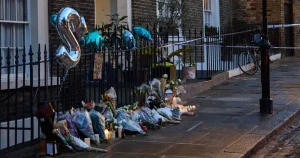
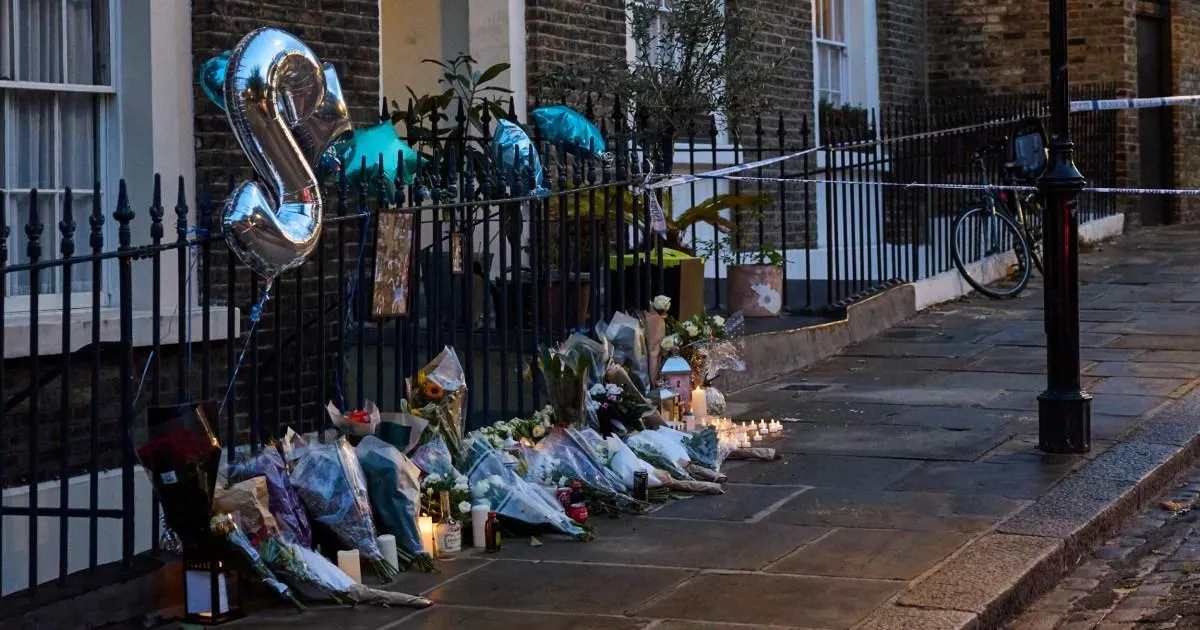
The grief of the community has become visible on Lloyd Baker Street, where dozens of floral tributes, candles, and balloons have been tied to the fence. The makeshift memorial is a heartbreaking sight, a collection of colours and messages left by people who may never have known the victim but who feel the loss deeply all the same. The balloons, in particular, feel symbolic—bright and full of hope, yet tethered to a place of tragedy. Neighbours have stopped to read the messages, some pausing to leave their own flowers, others standing quietly in reflection. The tributes are a way of saying that a life mattered, that a young man was here, and that his death will not be ignored. Clerkenwell is a part of London that often feels like a village, with its mix of old pubs, creative studios, and close-knit communities. A murder on a residential street breaks the sense of safety that people rely on. It makes them look at their surroundings differently and wonder if the same thing could happen again. The memorial is also a message to the attacker. It says that this community is watching, that they will not forget, and that they want justice. Flowers will eventually wilt, candles will burn out, and balloons will deflate, but the memory of the young man will remain. His face may not be on the news, and his name may not yet be known to the public, but he was someone’s world, and the tributes reflect that.
Detectives are now hunting the attacker with urgency, and the investigation has led to a significant increase in police powers in the surrounding area. Enhanced stop-and-search powers have been granted, covering locations including Caledonian Road, Clerkenwell, and Hoxton. These powers, which were in place from Friday afternoon until 6am the following morning, allow officers to stop and search people and vehicles without the usual requirement of reasonable suspicion. This is a serious step, and it reflects the gravity of the situation. The goal is twofold: to disrupt any further violence and to find the person responsible for the stabbing. Officers will be stopping people on the streets, searching cars, and looking for weapons or other evidence. They will also be engaging with local residents, checking doorbell cameras, and looking for any footage that might show the attacker before or after the incident. Lloyd Baker Street is close to main roads and transport links, which means the suspect may have fled quickly, possibly on foot, in a vehicle, or on public transport. Detectives will be examining escape routes and trying to identify anyone who was seen leaving the area in a hurry. Despite these efforts, no arrests have been made, and the investigation remains very much open. The stop-and-search powers send a clear message that the police are doing everything they can, but they also remind the public that a dangerous person may still be at large. The community is on edge, and the presence of extra officers is intended to provide reassurance while the search continues.
Chief Superintendent Jason Stewart, who leads policing in the local area, has spoken publicly about the tragedy and the importance of the community’s help. He said: “This is a tragic incident, and our thoughts remain with the family and friends of the young man who has lost his life. You can expect to see additional officers in the area providing visible reassurance and working with partners to keep the public safe. The victim was found in a residential street, and members of the public may have information of vital importance to our investigation. If you can help, please come forward.” These words carry a deep sense of responsibility. After a murder, fear can spread quickly through a neighbourhood, and the promise of extra officers is meant to offer some comfort. But the Chief Superintendent also knows that the police cannot solve this case alone. Somewhere, someone has information. Maybe they saw a confrontation and did not realise how serious it was. Maybe they heard shouting or running footsteps. Maybe they saw a person fleeing the area and assumed it was unrelated. That person may be reluctant to get involved, worried about reprisals, or unsure whether their information is useful. The police are asking them to find the courage to speak. In many murder investigations, a breakthrough comes from a member of the public who decides to share what they know. The appeal is urgent, and the stakes could not be higher. The victim’s family needs answers. They need to know that the person who took their loved one’s life will be held accountable. The extra patrols and stop-and-search powers are important, but the information held by ordinary people is just as vital. It could be the difference between justice and a killer walking free.
This killing is yet another painful reminder of the devastating impact of knife crime in London. The victim was only 28 years old, a young man with his whole life ahead of him. He may have had plans for the future, dreams he was working toward, and people who loved him more than words can express. Now all of that has been taken away in a sudden act of violence. The candles and flowers left on Lloyd Baker Street are symbols of that loss, but they cannot bring him back. The investigation continues, and detectives are determined to find the attacker, but the public also has a role to play. If you know something, say something. It might seem small or unimportant, but it could be the piece of information that solves the case. The police have asked for help, and that request remains open. No arrests have been made, which means the attacker may still be living among us, perhaps even walking the same streets, acting as if nothing happened. It takes courage to come forward, but justice demands it. The victim’s family deserves to see the person responsible brought before a court. They deserve closure, as much as closure is possible after such a loss. In the meantime, the community mourns. The tributes on the fence will eventually fade, but the memory of this young man will not. He was more than a victim, more than a headline, more than a statistic. He was a human being. And his death must mean something. It must lead to justice, to change, and to a shared determination that no other family should have to endure this pain. For now, on a quiet street in Clerkenwell, candles burn in the dark, remembering a life that ended far too soon.