

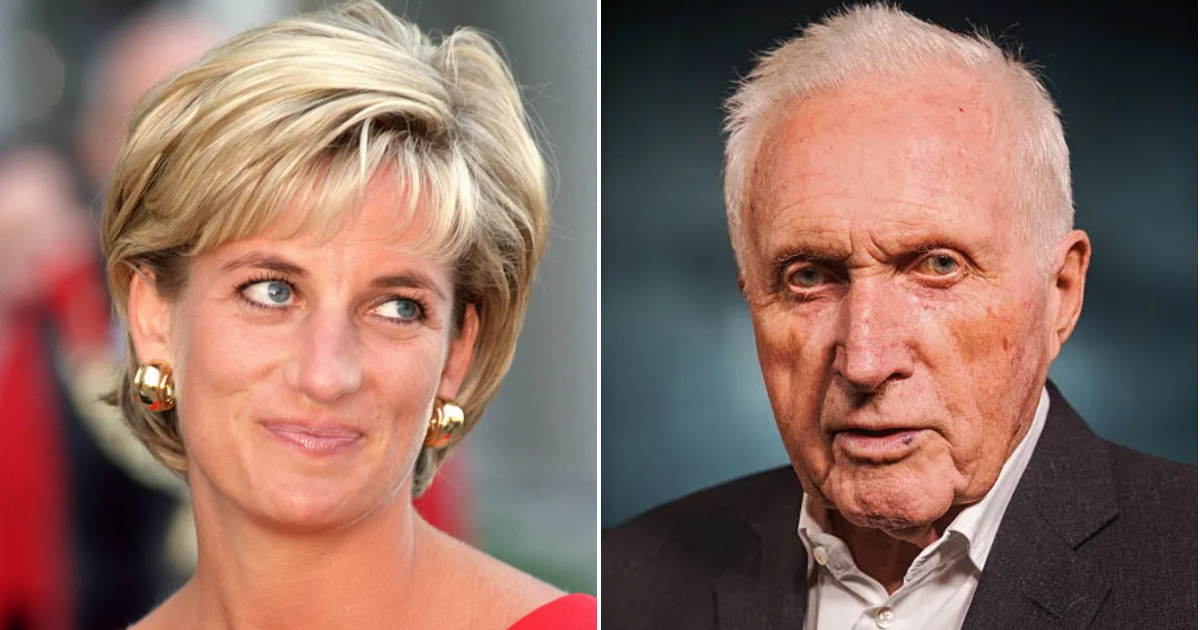
Princess Diana remains one of the most complicated figures in modern British history, and according to veteran broadcaster David Dimbleby, she is still deeply resented by Buckingham Palace because of the extraordinary adoration she received from the public. For three decades, Dimbleby watched the Royal Family from the inside as a journalist, and he believes that Diana’s ability to connect with ordinary people was never forgiven by the institution she married into. She didn’t act like the rest of the Firm. She was fresh, warm, and genuinely exciting to a public that had grown used to formality and distance. People saw themselves in her. They saw vulnerability, humor, and a willingness to break the rules. And that, Dimbleby argues, was precisely the problem. The palace thrives on control, on image, on the careful management of royal mystique. Diana shattered that mystique simply by being herself. She hugged children in hospitals, she knelt beside landmine victims, she spoke candidly about her own pain and depression. In doing so, she made the monarchy feel human at a time when it desperately wanted to remain untouchable. But that humanity came at a cost. It exposed the emotional stiffness of the institution and made the contrast between Diana and the rest of the family painfully visible. According to Dimbleby, this created a deep and lasting bitterness. “She was fresh, new and exciting to the public, and they really adored her,” he told BBC Radio 4’s Today programme. “And that was deeply resented in the palace. And still is.” Those words are striking because they suggest that the tension surrounding Diana did not end with her death in 1997. It lives on, buried beneath the grandeur and ceremony, still unresolved after all these years.
Now, more than ever, that unresolved pain has been brought back into the spotlight by Diana’s brother, Earl Spencer, whose memoir has reignited old wounds. In extracts serialised in the Daily Mail, the Earl made a series of explosive claims about how the Royal Family, including King Charles, behaved in the aftermath of Diana’s death. Perhaps the most damaging allegation was that King Charles told him, during an argument about the involvement of Princes William and Harry in the funeral procession, that “we’ll forget her soon enough.” The Earl also described the then Prince Charles as being “giddily elated like a lottery winner” in a phone call just days after Diana was killed. These are painful, bitter memories, and they cut straight to the heart of a family tragedy that was played out on the world stage. The image of two young boys, William and Harry, aged just fifteen and twelve, walking behind their mother’s coffin is one that still haunts the collective memory. Millions watched in silence as they followed the casket through the streets of London, their faces pale and stricken, accompanied by their father, their uncle, and their grandfather, Prince Philip. It was an almost unbearably cruel moment, a child’s grief transformed into public spectacle. Earl Spencer has long believed that the family failed Diana in life, and his memoir suggests that they continued to fail her in death. His claims are not just about one conversation or one phone call; they are about a pattern of coldness, self-protection, and a desperate desire to control the narrative. For him, this is about telling the truth as he remembers it, even if it means reopening wounds that the palace would rather leave closed.
Unsurprisingly, Buckingham Palace has responded with an unusually firm rebuttal, disputing the Earl’s account and suggesting that grief has clouded his “reason, judgement and memory.” It is a carefully worded dismissal, designed to cast doubt on the memoir’s reliability while avoiding a direct accusation of lying. But Earl Spencer has refused to back down. In an interview with the Daily Mail, he insisted that his recollection is accurate: “I can tell you here, and now, those are exactly the words he said.” This is the familiar clash between personal memory and institutional reputation, between the raw pain of a grieving brother and the carefully preserved dignity of the crown. And it is precisely this clash that David Dimbleby believes will reignite the bitterness the palace once felt toward Diana. When someone is adored by the world, their critics often wait for the moment when they can say, “You see, she wasn’t that perfect.” But Diana’s imperfections were part of her appeal. She was messy, complicated, and deeply human. The palace, by contrast, is an institution that demands perfection, or at least the appearance of it. That fundamental mismatch is why the resentment never really disappeared. Every new revelation, every new book, every new interview forces the Royal Family to confront a chapter of their history they would rather forget. But the public does not want to forget Diana, and the Earl’s memoir is a reminder that her story is still being told, still being fought over, and still causing pain.
Beyond the specific allegations about Diana’s death, Dimbleby has used the renewed attention to make a broader point about the monarchy’s place in modern Britain. He has suggested that the Royal Family is still not facing up to the biggest questions about its future, including its wealth, its failure to pay tax, its privileges, and the direction it is heading. “All those things get talked about, but nothing ever gets done,” he said. This is a damning observation from someone who has spent decades covering the institution. It suggests that the monarchy is content to drift along, dealing with crises as they arise, but never seriously addressing the structural issues that undermine its credibility. Dimbleby described the Royals as “a bit of a soap opera,” and warned that they risk being trapped in a cycle of gossip and scandal. Alluding to the ongoing problems surrounding Prince Andrew, he noted that this family, which is set up on a pedestal as the leaders of the country, has problems just like everyone else. But that is precisely the tension. The monarchy wants to be seen as both ordinary and extraordinary. It wants the warmth and relatability of a family, but also the reverence and distance of an institution. Those two desires are fundamentally incompatible. When the family’s private troubles become public, as they so often do, the soap opera takes over. And in that soap opera, Diana remains the most compelling character of all. Her absence is felt more strongly than many royal appearances, and her memory serves as a constant reminder of what the monarchy could have been if it had been willing to embrace change, transparency, and emotional honesty.
Perhaps the most heartbreaking part of Earl Spencer’s memoir is not the political maneuvering or the palace drama, but his description of the funeral itself. He wrote about the day Diana was buried, and the image of young Prince Harry walking behind his mother’s coffin is one that he has never been able to shake. “I could not get over how tiny, and slight, and bereft, Harry looked,” he wrote. “Too small to be doing this, I thought, and wondered how on earth this heartbroken child could bear the ordeal of that moment or how he could possibly be expected to deal with the agony that the day ahead would insist upon.” These words capture the sheer, unbearable weight of that day. A twelve-year-old boy, walking in front of the world’s cameras, forced to say goodbye to his mother in the most public way imaginable. It was a moment that should never have happened, and yet it did. The Earl also recalled an emotional visit to the Chapel Royal, where Diana’s coffin was placed before the funeral. He sat down beside it and began to talk to his sister, expressing love and grief, and making promises on her behalf. It is a deeply intimate image, a brother saying goodbye to a sister who was taken far too soon. In that quiet moment, away from the cameras and the crowds, there was no palace protocol, no royal image management, no careful words. There was only grief, raw and honest. And in that grief, there was also a commitment. The Earl promised his sister that her sons would be protected, that her memory would be honored, and that her story would be told. It is a promise that has shaped his life ever since.
In the end, the story of Diana is not really about resentment or scandal. It is about the collision between a living, breathing woman and an institution that could not contain her. David Dimbleby’s observation that the palace still resents her says more about the monarchy than it does about Diana. It reveals an institution that remains uncomfortable with the very qualities that made her beloved: authenticity, vulnerability, and the courage to be herself. The Earl Spencer’s memoir may reignite old tensions, and Buckingham Palace may push back with statements about clouded memory, but the public’s fascination with Diana shows no sign of fading. She remains a symbol of everything the monarchy struggles to be, and perhaps everything it fears. Her legacy is not just a series of charitable causes or iconic photographs. It is the simple, radical idea that royalty can be human, and that humanity is not a weakness but a strength. Until the Royal Family understands that, the resentment Dimbleby speaks of will continue to fester. And every new book, every new interview, every new revelation will bring it bubbling back to the surface. Diana’s story is not finished. It may never be finished. Because as long as there is a monarchy, there will be a comparison between what it is and what it could have been, and Diana will always be the reminder of that gap. Her memory, like her presence, is impossible to ignore. And perhaps that is the most fitting tribute of all.