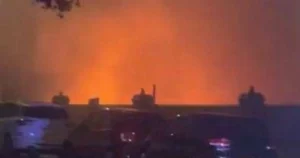


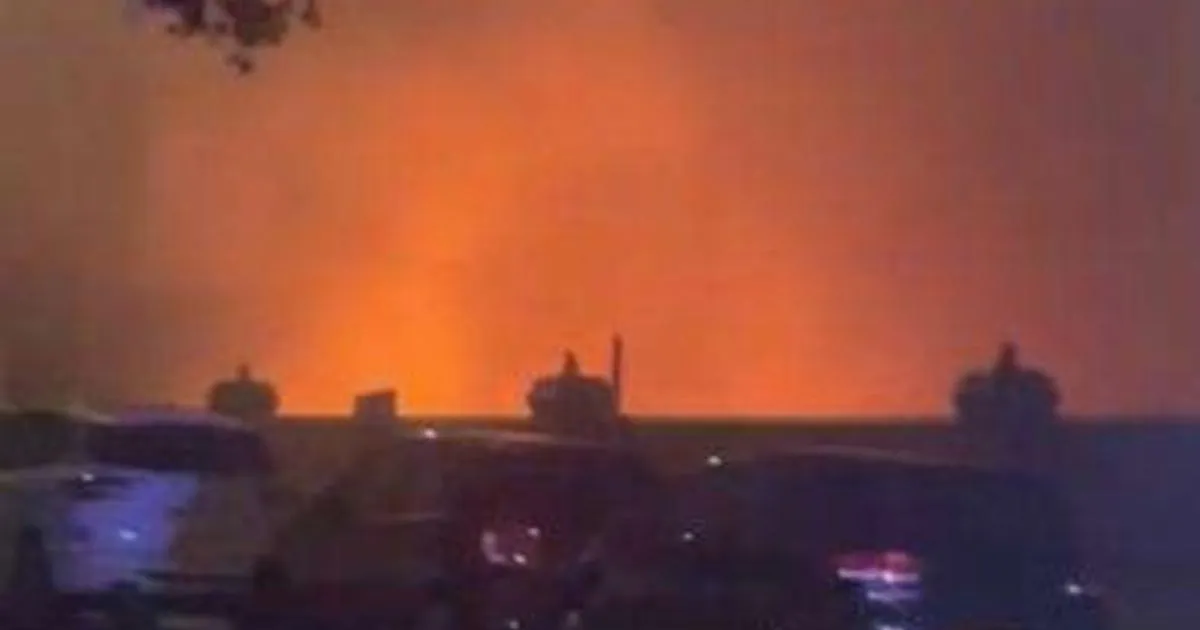
There are moments when a hotel, that most ordinary and reassuring place of rest, turns suddenly into a scene of fear and urgency. For the guests at the Grand Burstin Hotel in Folkestone, that moment came in the dead of night, when fire alarms shattered the silence and forced nearly 280 people from their beds. The hotel, a sprawling 550-room property overlooking the seaside town, had felt like a safe haven for travellers, holidaymakers, and people passing through Kent. But sometime before 1am, a fire broke out in the basement, below the floors where so many people were sleeping. Smoke began to creep through the building, and the alarms began to scream. Guests stumbled into corridors, many in pyjamas, some without shoes, trying to understand what was happening. Within minutes, what should have been a quiet night had become a major emergency, with flames and smoke forcing hundreds of people to flee into the cold darkness outside. It was not an orderly, calm departure; it was a desperate scramble to get out of a building that was no longer safe. The image of barefoot guests standing on pavements, watching smoke pour from their hotel, would stay with them long after the fire was brought under control.
The response from the emergency services was swift and overwhelming, as firefighters and police understood immediately how serious the situation was. At its peak, 26 fire engines and dozens of firefighters were on the scene, working desperately to extinguish the blaze before it could spread further. Kent Fire and Rescue Service led the operation, while Kent Police and South East Coast Ambulance Service provided support. The fire was described as “very severe” by fire station manager Lawrence Pater, who explained that inspectors needed to examine whether the blaze had damaged the hotel’s structural integrity. That was a chilling thought for the guests standing outside: the building they had slept in that evening might now be unsafe to enter, its walls and foundations compromised by heat and smoke. As the fire raged in the basement, the emergency services had to think not only about putting out the flames but also about protecting everyone nearby. Firefighters in heavy gear pushed forward into smoke-filled corridors, while paramedics checked evacuees for injuries and signs of smoke inhalation. One person was assessed at the scene and taken to hospital with minor injuries, a reminder that even a well-executed evacuation can still leave casualties. Meanwhile, Folkestone and Hythe District Council set up a welfare centre to accommodate the displaced guests, offering them a place to sit, warm up, and try to process what had just happened. For the hundreds of people who had been forced out of their rooms, the night was far from over, and the waiting was agonising.
As dawn came, the immediate danger began to fade, but new questions took its place. Kent Fire and Rescue Service announced that an investigation was underway to establish the cause of the fire, and that the blaze was being treated as suspicious. Kent Police went further, saying that officers now believed the fire may have been caused deliberately. Those words changed the nature of the entire event. What had seemed like a tragic accident, a random disaster that could happen to anyone, was now something darker: a possible act of arson that had endangered hundreds of lives. The thought that someone might have started this fire on purpose, knowing that a hotel full of sleeping guests was directly above, was almost impossible to accept. The police made it clear that their enquiries were continuing, and they urged anyone with information, CCTV footage, or dashcam footage from the area, particularly from 10pm on Friday to 12.30am on Saturday, to come forward. Fire crews remained at the scene throughout the rest of the day, with four fire engines, a height vehicle, and a technical rescue unit still in attendance later that evening. The basement, where the fire was believed to have started, became a focus of intense scrutiny, as investigators searched for clues among the charred debris. For the guests, the knowledge that the fire might have been deliberate added a layer of shock to an already terrifying experience; they had not just survived a fire, they had survived something that perhaps should never have happened at all.
Among those who lived through the ordeal was Ross Honeycomb, a 39-year-old guest who described waking up to the sound of fire alarms at about 1am. In an interview with the BBC, he said he thought he was dreaming, but it was horrifying. The confusion of being pulled from a deep sleep by blaring alarms while smoke begins to fill the air is almost impossible to describe until it happens to you. Ross spoke of seeing smoke billowing from the underground car park, and then hearing explosions as the fire took hold. The noise, the heat, the fear, all of it combined into a surreal and terrifying experience. He spent the night outside, barefoot, like so many others who had not had time to grab their shoes, coats, or phone chargers. “It has just been madness,” he said, and that simple word captured the chaos of the night. Fire alarms. Smoke. Explosions. Crowds of confused guests. The flashing blue lights of emergency vehicles. For him, and for the other 280 people evacuated, the memory of standing outside in the dark, watching the building where they had planned to sleep burn from the inside, was not something that would fade quickly. The psychological impact of such an event can be as significant as the physical injuries, and many guests would carry the anxiety and fear of that night with them for years.
In the hours after the fire, the hotel’s operator, Britannia Hotels Group, issued a statement confirming that there had been an incident at the Grand Burstin Hotel in Folkestone. The company said it was taking immediate action to ensure the safety and wellbeing of all guests and team members. For the guests, that reassurance was necessary, but it could not undo the shock of being driven from their rooms in the middle of the night. They still needed to find somewhere to sleep, to contact friends and family, to retrieve any belongings that had been left behind, and to begin the slow process of figuring out what to do next. The welfare centre set up by the district council became a lifeline, offering hot drinks, information, and a place to wait for news. In moments like these, the response of the wider community matters enormously. People who live in Folkestone may have watched from a distance, their own homes safe and warm, but they knew that the guests standing outside the Grand Burstin had lost more than just a night’s sleep; they had lost their sense of security. The hotel, a familiar landmark on the Folkestone seafront, had always seemed permanent and solid, and suddenly it was at the centre of an emergency, its rooms empty and its future uncertain. For the Britannia Hotels Group, the immediate priority was supporting those affected, but the longer-term challenge of repairing the building and restoring the confidence of future guests would take time.
As the investigation continues, the full story of the Grand Burstin Hotel fire may not be known for some time. The cause, the precise sequence of events, and the question of how the fire began in the basement and spread enough to force an entire hotel to be evacuated will all need to be examined carefully. But for the people who were there, the most important facts were already clear: they had escaped, they were safe, and they had survived the night. The fire may have damaged the hotel’s structure, but it could not take away the courage shown by the firefighters, the kindness of the volunteers at the welfare centre, or the resilience of the guests who supported one another as they stood outside in the dark. The police are still appealing for witnesses and footage, hoping that someone will come forward with the piece of information that explains everything. For now, the people of Folkestone and the guests who fled the Grand Burstin are left to reflect on what happened. A fire in a hotel is one of the most frightening things imaginable, because a hotel is supposed to be a place where people rest, let down their guard, and relax. When that safety is shattered, the impact goes far beyond the physical damage. It affects everyone who was inside, everyone who watched, and everyone who responded. The investigation will continue, but the memory of that terrifying night in the Grand Burstin Hotel, and the relief of walking out into the morning air, will remain with the 280 guests for the rest of their lives.