


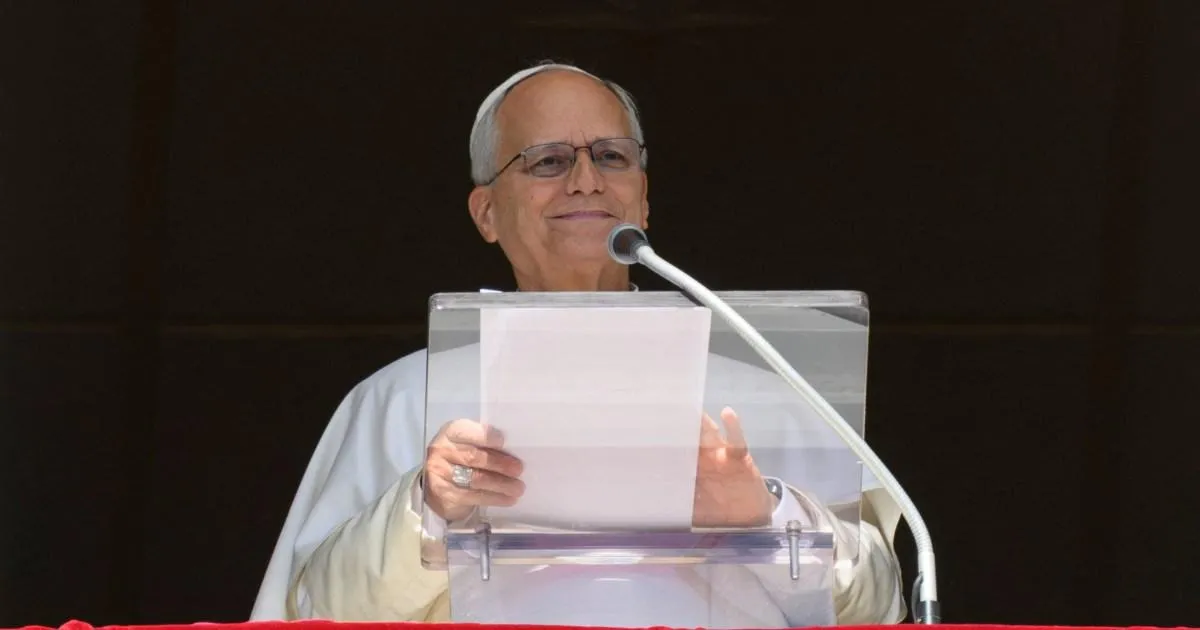
On the evening of October 11, the familiar image of Pope Leo XIV at the window of the Apostolic Palace took on a different meaning. He had come out for the Angelus prayer, as he always does, and St. Peter’s Square below was filled with pilgrims holding phones, flags, and rosaries. But instead of a homily about peace or hope, the Pope began to speak about his own body. He told the crowd that during recent medical tests doctors had found “a localised nodule in my lung,” and that he would soon go to the hospital for surgery. The words landed with unusual weight because he was not speaking about someone else’s suffering; he was announcing his own. The Vatican later released a statement that confirmed the worst fears and offered a measure of comfort at the same time. The 71-year-old pontiff—born Robert Francis Prevost in Chicago, made a cardinal by Pope Francis in 2023, and elected the first American Pope in 2025—had undergone a 90-minute operation to remove the lower lobe of his right lung. The tissue was diagnosed as lung adenocarcinoma, the most common form of lung cancer. “The surgery was successful, and there were no complications,” the Vatican said. “After the operation, the Pope awoke normally and returned after a brief period of observation to his room on the 10th floor.” It was a clean, clinical update, but the underlying message was enormous: the Pope had cancer, the cancer was serious enough to require surgery, and the next chapters of his papacy would now be written in hospital rooms and pathology reports.
Every word in the Vatican statement had been chosen with care, and the most telling word was “radical.” The medical report described the removal of the lobe as radical, meaning that the surgeons had taken out the entire lower lobe of the right lung along with all suspicious tissue in the area. It was an attempt to eliminate the cancer completely, to draw a line around the disease and cut it away. The same statement noted that the Pope’s lymph nodes had also been removed and sent for testing. There was no word yet on what those tests showed, and that silence was full of meaning. Lymph nodes are the body’s first checkpoints for traveling cancer cells. If they are clean, the chance that the cancer is truly confined to the removed lobe is high, and the surgery itself may be enough to cure the Pope. If they contain cancer cells, the disease has begun to spread, and the next phase will involve additional tests and likely more treatment. The Vatican did not try to hide that uncertainty; it simply said the Pope had woken up normally and was back in his room on the 10th floor. For the people who had gathered in St. Peter’s Square, the announcement turned a routine Sunday into a day of prayer. Many stayed long after the Angelus ended, looking up at the window where the Pope usually appears, holding rosaries and whispering intentions. The image of a pope in a hospital bed is something the church has seen before, but it never becomes ordinary. It reminds Catholics that the man who wears white is as human as the people who come to see him, and that the same vulnerability that marks every human life touches even the highest office in the church.
Lung adenocarcinoma is not a term most people hear every day, but it is a diagnosis that affects hundreds of thousands of people around the world. It is the most common type of lung cancer, and it begins in the glandular cells that line the lungs and normally produce mucus and other protective substances. It is often associated with smoking, and smoking remains a major risk factor, but adenocarcinoma is also the most common lung cancer in people who have never smoked. That may surprise people who think of lung cancer as a smoker’s disease, but it is one of the reasons this particular form of cancer has received so much research attention. Adenocarcinoma tends to grow more slowly than some other lung cancers, which gives doctors a slightly better chance of catching it early, but it can still metastasize, or spread, to the lymph nodes, bones, liver, brain, and other organs. The symptoms can be vague and easy to dismiss: a persistent cough, coughing up blood, shortness of breath, chest pain, recurrent chest infections, unexplained weight loss, and fatigue. Many patients ignore these signs for months, attributing them to age, stress, or a cold that will not go away. By the time the cancer is found, it has sometimes already spread. The Pope’s nodule was described as localized, which is a hopeful sign. It suggests the tumor was found while it was still in one place, before it had invaded nearby structures or traveled to distant parts of the body. But localized does not mean cured. It means the doctors have a better chance, not a guarantee, and the next steps will depend on details that have not yet been revealed.
Dr. Stephen Liu, a lung cancer expert at Georgetown’s Lombardi Comprehensive Cancer Centre, put the situation in perspective. “Adenocarcinoma is the most common [type of lung cancer], also with the most favourable prognosis,” he said. But, he added, “While we know the diagnosis we now need to know the stage. We now need to know how big it is, how many spots in the lung are involved. Is it just one nodule, or more than one, and the lymph nodes, are they cancerous?” That is the question at the center of the Pope’s recovery. The surgery has been completed and the tumor has been removed, but the full picture is still incomplete. If the lymph nodes are clean, the operation may have been curative, and Leo will need little more than rest, monitoring, and time to heal. If the cancer has spread, doctors will need to choose a treatment plan, and modern lung cancer treatment is no longer limited to one option. Chemotherapy remains a standard tool, but it is often combined with immunotherapy, which helps the body’s immune system recognize and attack cancer cells. There are also targeted therapies—oral pills designed to act on specific genetic mutations within the tumor—that have changed the outlook for many patients in ways that were unimaginable a generation ago. The Pope’s surgical team will likely perform molecular profiling on the removed tissue to look for those mutations, and that information will guide whatever comes next. There is real reason for hope, but it is a cautious hope, and the Vatican’s careful language reflects that.
Pope Leo XIV is a historic figure in more ways than one. He is the first American to sit on the throne of St. Peter, a fact that has shaped his papacy from the beginning. He was born in Chicago, served as a cardinal after being elevated by Pope Francis in 2023, and was elected in 2025 at age 71. His leadership has been marked by a willingness to speak directly to the issues of the day, and he demonstrated that again just before his surgery. This past week, the Pope declared capital punishment “inadmissible” at a moment when the United States was preparing to livestream an execution by firing squad. The statement was a moral intervention, an attempt to remind people that the state should not have the power to kill, and it drew attention because it was so clearly timed to a real event. Now the same pope is facing a very personal trial. His decision to announce the surgery during the Angelus was itself a reflection of his character. He could have waited until after the operation and released a statement through the Vatican press office. Instead, he stood before the crowd and told them what was coming, using his own voice to say that he had cancer. It was an act of transparency, but it was also an act of faith. He was asking the people of the church to do what he has always asked them to do: pray, trust, and not be afraid. In that moment, the distance between the pope and the faithful seemed to disappear, and the leader of the Catholic Church became, for many, simply another human being confronting the fragility of life.
The next few weeks will be a time of waiting. The Vatican will release the lymph node results when they are ready, and those results will say more about the future than anything that has been said so far. If the nodes are clear, the Pope can begin to plan a future that includes recovery, new medicines, and a return to the work of leading the church. If they are not clear, the road will be harder, but not without hope. Adenocarcinoma is the most common form of lung cancer, but it is also the form with the most favorable prognosis, and it is often treatable even in advanced stages. The radical surgery suggests that the surgeons believe they removed the entire tumor, and the Pope is already awake, in his room, and under the care of one of the world’s best medical teams. Those are not small things. Cancer is a disease that teaches patience, and the Pope will need the same patience that he asked of the crowd in St. Peter’s Square. He has already given the world a lesson in vulnerability by speaking openly about his diagnosis, and that lesson has not been lost on the millions of people who are praying for him. Whatever the next test results show, this moment has changed the shape of Leo’s papacy. It has made him more visible, more relatable, and more human. The surgery is over, but the waiting is not. The Pope, however, is not alone. He carries with him the prayers of a worldwide church, and that is a powerful medicine in itself.