
Paragraph 1
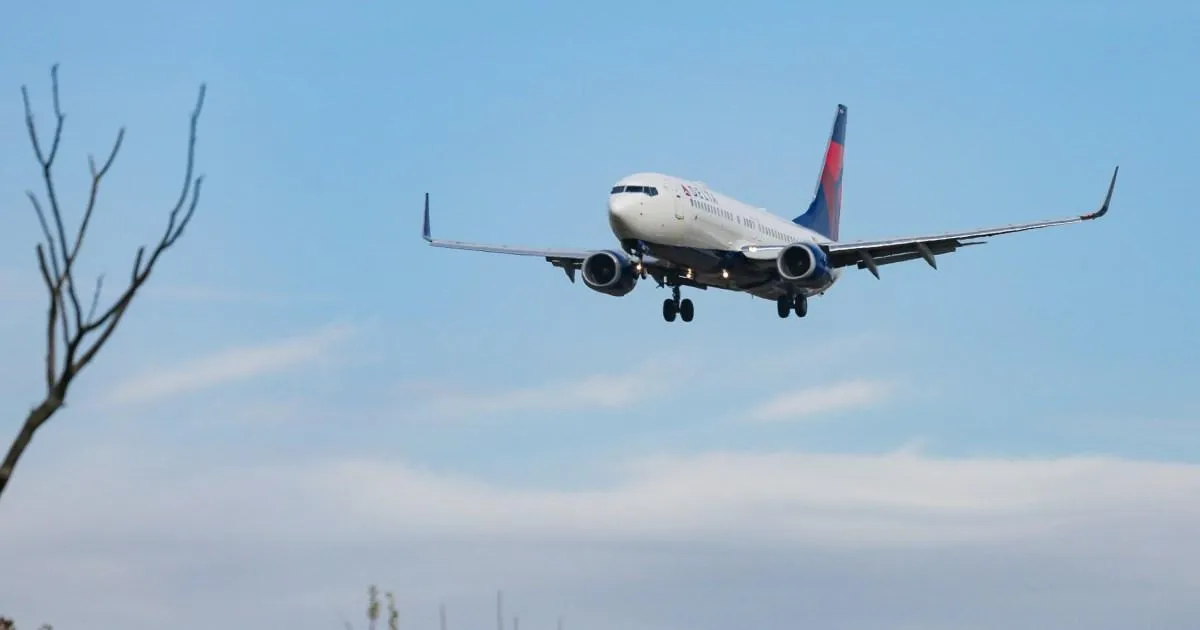
At first, it must have felt like any other long-haul flight coming to an end. The Delta Airlines jet had left New York with hundreds of passengers, many of them tired, hungry, and eager to feel solid ground beneath their feet. They had spent hours crossing the Atlantic, some watching films, others listening to music, and many simply staring out at the endless stretch of ocean and cloud. The destination was Tel Aviv, a city that has always known how to hold both ancient history and modern energy in the same breath. As the plane began its descent, passengers would have seen the pale buildings of the Israeli coast, the glittering sea, and the familiar grid of streets that meant they were almost home or almost on holiday. Then something changed. An anonymous bomb threat was received—a message claiming that an explosive was on board. In an instant, the routine arrival turned into a security operation. The Delta flight landed safely at Ben Gurion Airport, but it did not taxi toward a terminal where loved ones were waiting with flowers and welcome signs. Instead, it was ordered to an isolated part of the airfield, far from the main buildings. Emergency vehicles raced across the tarmac, and armed security personnel took up positions around the aircraft. Passengers were evacuated quickly, herded away from the plane with a mixture of urgency and calm that felt almost surreal. Some carried coats they would not need. Others left phones and passports behind in the chaos, their minds fixed only on moving, only on obeying, only on staying close to the strangers who had suddenly become fellow survivors. The search of the aircraft was painstaking and thorough. Every overhead locker, every seat pocket, every lavatory was checked and checked again. For the people standing on the tarmac, the minutes stretched into what felt like hours. And then, at last, the verdict came: no immediate danger. The threat was a false alarm. The plane was empty, the passengers were safe, and the relief was overwhelming. But for everyone involved, the emotional journey did not end when the emergency did.
Paragraph 2
False alarms leave a mark that is difficult to measure. On one hand, the Delta incident ended without violence, without injury, without even the discovery of a suspicious device. On the other hand, the passengers who were pulled from that plane will not soon forget the fear that gripped them when the doors opened and uniformed officers appeared. They will remember the way their hearts pounded, the way their mouths went dry, and the way they looked at the faces of strangers and wondered if this was the moment when everything went wrong. Ben Gurion Airport staff acted exactly as they should have: they treated the threat as real. In an era when aviation security is measured in multiple layers of scanning, questioning, and surveillance, it is impossible to dismiss a bomb threat simply because it seems unlikely. The cost of a false alarm is inconvenience, fear, and a significant amount of emergency resources. The cost of ignoring a genuine threat is unimaginable. So the airport did what it had to do, and the passengers paid the price in anxiety. This particular false alarm did not happen in a vacuum. It came just one week after a terrifying incident aboard a FlyDubai flight, one that exposed the vulnerability of the cockpit in a way that had not been seen in years. That earlier event had already put nerves on edge across the aviation world. It had made pilots think about their colleagues in new ways. It had made passengers wonder about the person sitting near the front of the plane. And so the Delta bomb threat, even though it was ultimately a hoax, struck with extra force. It tapped into a visible and raw fear that had been simmering since the moment a co-pilot allegedly attacked his own captain. In that sense, the false alarm was not just a bureaucratic procedure. It was a grim echo of a much darker story, and it reminded everyone that flying, for all its convenience and beauty, still requires constant vigilance.
Paragraph 3
That darker story began one week before the Delta scare, when FlyDubai flight 1073 was bound for Tel Aviv and found itself at the center of a terrifying airborne crisis. According to reports, the co-pilot, a 29-year-old Omani national named Hammam al-Hammami, attacked the plane’s captain in a violent attempt to take control of the aircraft. The flight deck, which is supposed to be the most protected and secure space on any plane, became the scene of a struggle between a man who was supposed to be a professional and a captain who was trying desperately to save his aircraft and everyone on it. The altercation caused the plane to enter a sudden dive, and for a terrifying moment, it seemed as though the aircraft might be lost. There were 182 people on board, many of them likely unaware of exactly what was happening but aware that something was deeply, horribly wrong. Cabin crew would have seen the panic in the faces of passengers. Passengers would have felt the lurching movement of the aircraft, heard the unusual sounds, and sensed that the people in charge were not okay. The situation was saved by two off-duty pilots who happened to be travelling on the same flight. They rushed to the cockpit, helped the Indian captain, Smit Machchhar, regain control of the aircraft, and prevented what could have been a catastrophic tragedy. The plane was diverted to Saudi Arabia, where it landed safely. Yet the emotional impact of those minutes must have been enormous. For the passengers, the ordeal was probably a blur of fear, confusion, and relief. For the crew, it must have been a harrowing reminder of how quickly trust can be shattered and how thin the line between survival and disaster really is.
Paragraph 4
The details that emerged about Hammam al-Hammami only added to the unease. Investigators revealed that he was a 29-year-old Omani national who had previously trained with his country’s flag carrier in 2024. At some point, however, he was moved to an administrative role after being found in possession of extremist materials. Red flags were raised about his radical views, and yet he was still able to find his way into the cockpit of a commercial aircraft. The weapon allegedly used in the attack was a crash axe, a tool kept in the cockpit specifically for emergencies, intended for breaking through panels in the event of a fire or a forced landing. The thought of that same axe being turned against the captain is chilling. It turns a safety instrument into a weapon, and it reminds us that the very tools designed to protect flight crews can be used to harm them. Israeli Prime Minister Benjamin Netanyahu described the incident as a result of “Islamist radicalisation,” and the accusation carried with it a heavy political and social weight. Al-Hammami had reportedly completed a distance-learning degree in aviation management at Buckinghamshire New University in 2023. There is nothing inherently suspicious about that, but it adds to the picture of a man who had been trained in the language of aviation, who understood how planes worked, and who was embedded in a system that depends on mutual trust. The fact that he had been flagged before, moved away from operational duties, and then somehow still ended up on a flight deck, raises uncomfortable questions about the gaps in aviation screening, about how reports of radicalisation are followed up, and about whether the industry is doing enough to identify potential threats before they turn violent.
Paragraph 5
Taken together, the Delta bomb threat and the FlyDubai attack form a sobering reminder of the pressures facing modern aviation. The false alarm at Ben Gurion Airport on the Delta flight was almost certainly a hoax, but it could just as easily have been real. The FlyDubai incident was real, and it came within a hair’s breadth of disaster. Security experts will examine both events for lessons. They will ask how an anonymous message reached the airline, whether there were any clues that the threat should have been taken differently, and how a concerned pilot can safely intervene in an attack without putting the aircraft at greater risk. They will also ask broader questions about radicalisation, about the effectiveness of background checks, and about the need for better mental health and behavioural monitoring within the profession. For the public, however, the message is more emotional than technical. Every time a plane takes off, there is a universe of uncertainty in the cabin: a mother travelling alone with a baby, a businessman staring at his laptop, a couple celebrating an anniversary, a young person flying to study abroad. All of them place their lives in the hands of pilots they have never met. They trust that the person in the cockpit is sane, trained, and committed to safety. When that trust is betrayed, as it allegedly was on the FlyDubai flight, it sends a shiver through the entire travelling world. And when a bomb threat turns out to be false, it can be easy to mock the panic and say that nothing happened. But something did happen. People were afraid. Resources were deployed. Hearts were racing. Even a false alarm is a real experience, and it can alter the way a person feels about flying for a long time.
Paragraph 6
Yet amid the fear and the warnings, there are also stories of courage and resilience. On the FlyDubai flight, it was not only the two off-duty pilots who became heroes. It was also the captain who fought to maintain control, the crew who kept the cabin calm, and the passengers who dealt with a situation that no one could have expected. On the Delta flight, it was the emergency responders who did their jobs with professionalism and the passengers who followed instructions even while terrified. These moments remind us that, for every person who wishes to do harm, there are countless others who wish to protect, to rescue, and to heal. They remind us that the sky is still a place of connection, bringing families together, reuniting old friends, and opening new horizons. The Delta passengers who eventually walked out of Ben Gurion Airport might have been delayed, exhausted, and shaken, but they were also alive. The FlyDubai passengers who continued their journeys after landing in Saudi Arabia will carry the memory of that flight for the rest of their lives, but they will also carry the knowledge that strangers rushed forward to help them. That is the human story behind the headlines. It is a story of vulnerability and strength, of fear and gratitude, of the fragility of life and the determination of people to protect one another. In the weeks and months ahead, aviation authorities will review the details and try to close the gaps. They will scan backgrounds more carefully, improve cockpit security, and remind pilots that they must always be aware of the people around them. But no system can ever be perfect. The real protection lies in the human instinct to care, to notice when something feels wrong, and to act with courage when the moment demands it. The false alarm at Ben Gurion and the near-tragedy above the skies of the Middle East both ended with planes on the ground and passengers safe. That is a outcome to be grateful for, and a reason to keep watching, keep learning, and keep hoping.